Good Books On Cosmology
Ever wondered about the universe's origins and our place within it? Understanding cosmology basics can feel daunting, but it doesn't have to be. For those seeking cosmology explained simply, finding the right starting point is key. That's why we've compiled these cosmology book recommendations, featuring a mix of must read cosmology books from leading physicists and science communicators. These good books on cosmology break down complex ideas like the Big Bang, dark matter, and the nature of time into accessible, awe-inspiring insights. Curated by the VoxBrief team.
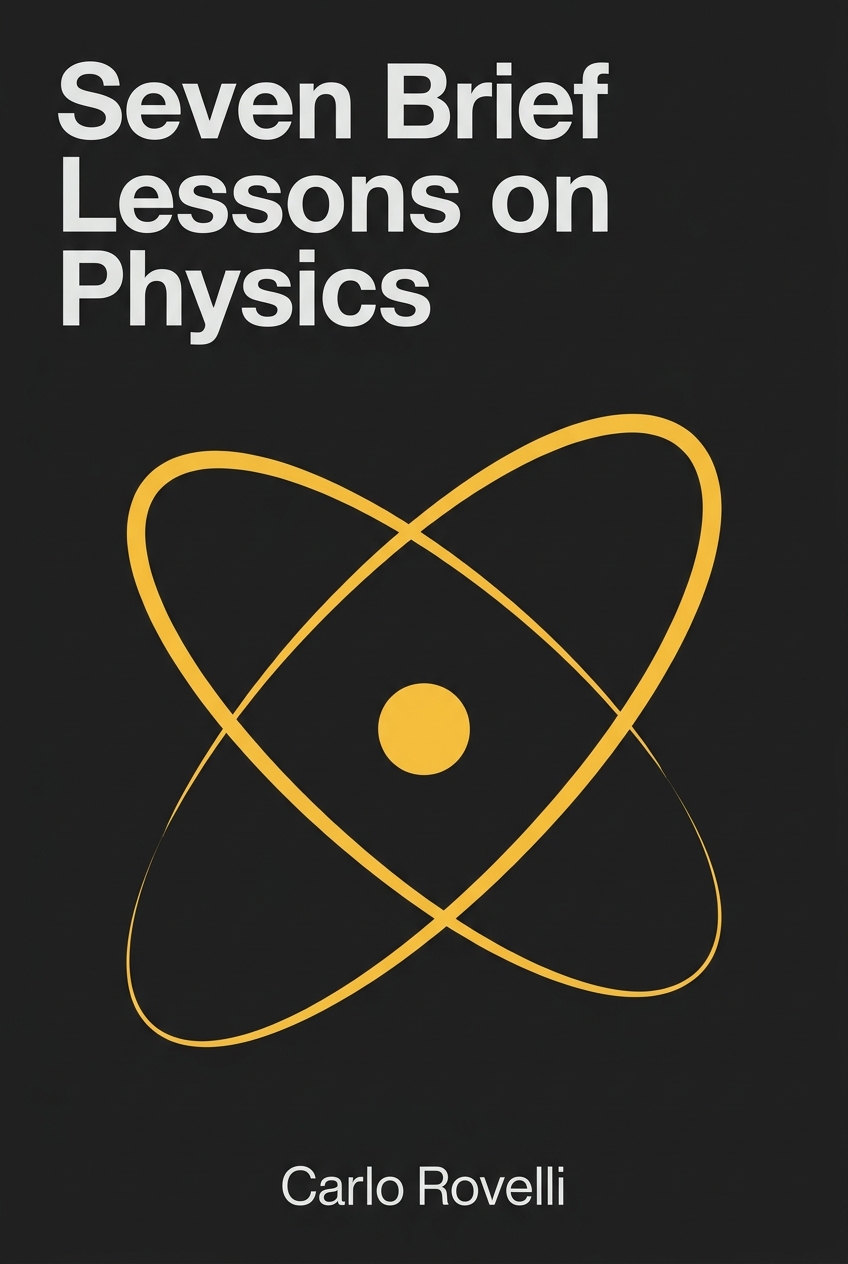
Seven Brief Lessons on Physics
Demystifies modern physics from relativity to quantum mechanics in seven simple lessons.
- General relativity describes gravity as the beautiful curvature of spacetime.
- Quantum mechanics reveals a strange, probabilistic reality at the smallest scales.
- The universe is not a collection of things, but a network of interactions.
Anyone curious about physics who feels intimidated by dense textbooks.
Demystifies modern physics from relativity to quantum mechanics in seven simple lessons.
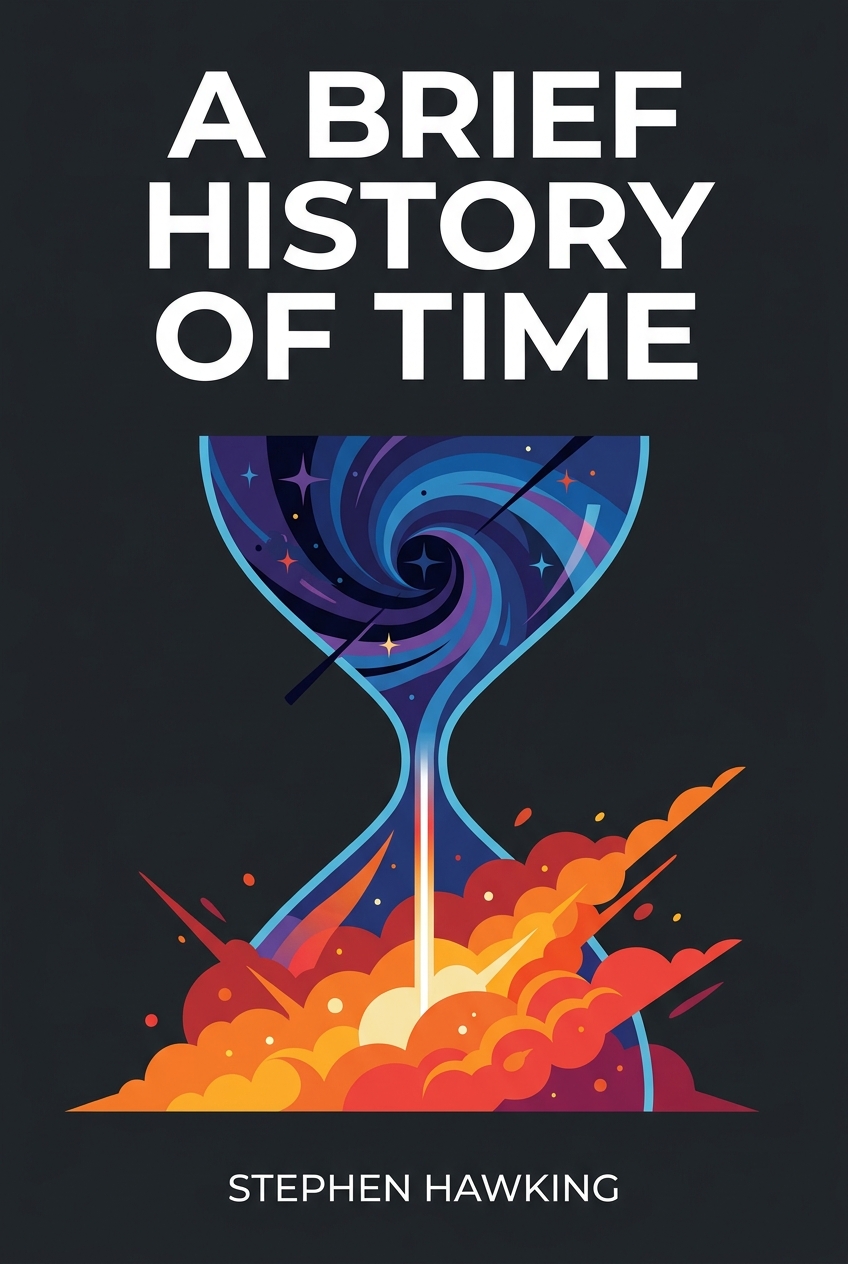
A Brief History of Time
Unravels the universe's greatest secrets, from the Big Bang to black holes.
- The universe began with an infinitely dense point known as the Big Bang.
- Black holes aren't entirely black; they emit Hawking radiation and can evaporate.
- Time is not absolute and has a clear direction, known as the arrow of time.
Readers seeking a foundational understanding of the universe's origins and laws.
Unravels the universe's greatest secrets, from the Big Bang to black holes.
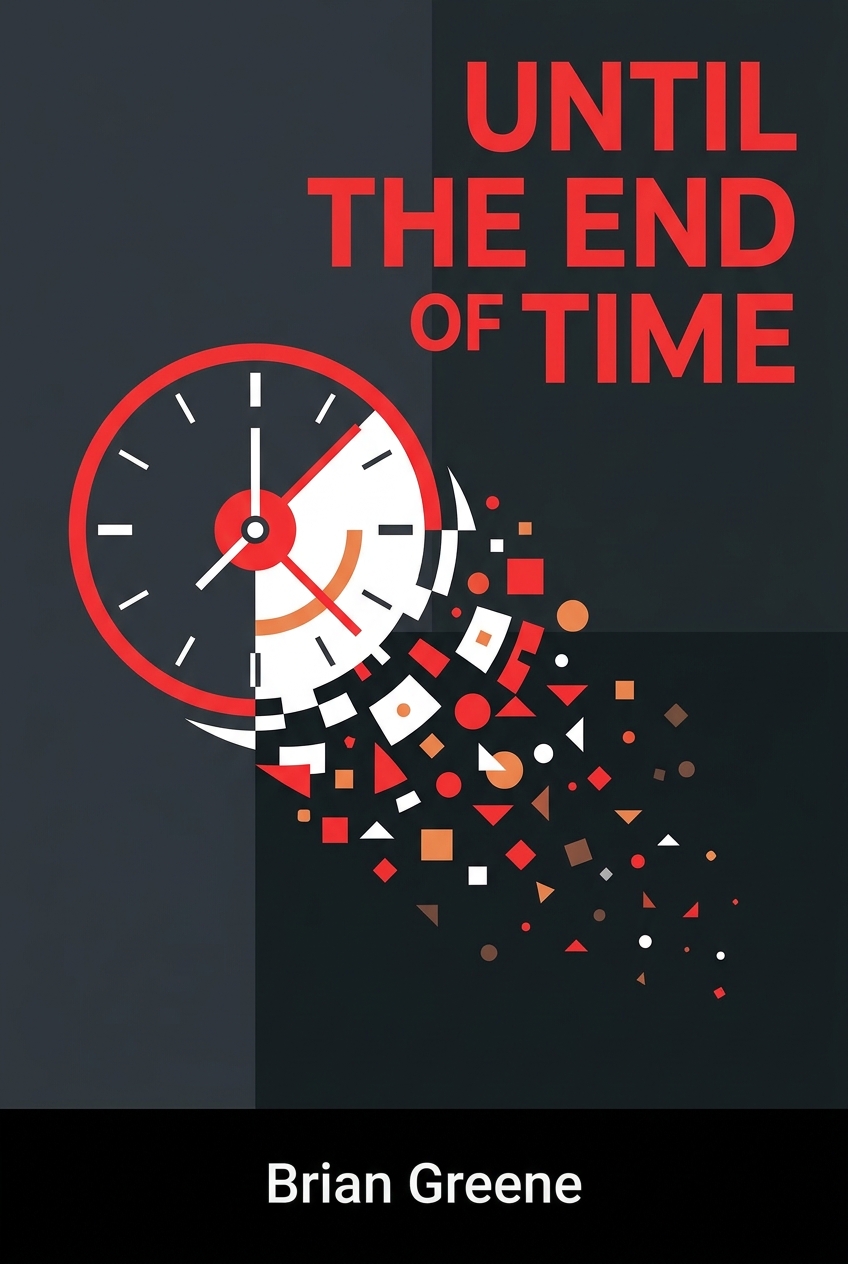
Until the End of Time
Traces the epic story of existence, from cosmic origins to ultimate entropy.
- Life and consciousness are emergent properties arising from simple physical laws.
- Entropy, the universe's tendency toward disorder, governs its ultimate fate.
- We can create meaning and purpose within our fleeting moment in the cosmos.
Reflective thinkers curious about science, meaning, and our cosmic purpose.
Traces the epic story of existence, from cosmic origins to ultimate entropy.
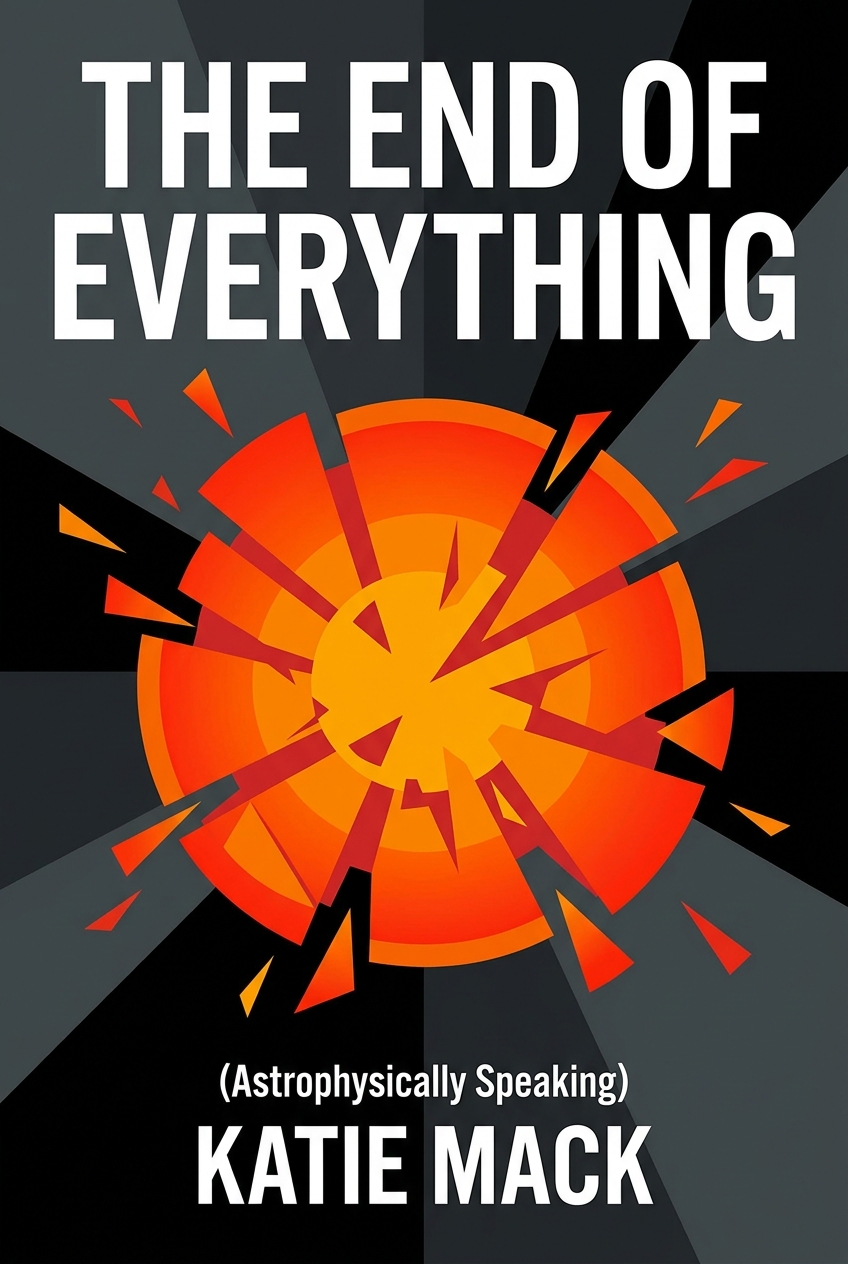
The End of Everything
Explores five thrilling doomsday scenarios for the ultimate fate of the universe.
- The "Big Crunch" describes a potential future where the universe collapses back on itself.
- "Heat Death" is a scenario where the universe expands and cools until all activity ceases.
- "Vacuum Decay" is a catastrophic event where a quantum bubble could erase reality.
Science enthusiasts who enjoy thrilling, mind-bending thought experiments.
Explores five thrilling doomsday scenarios for the ultimate fate of the universe.
The Fabric of the Cosmos
A journey into the bizarre reality of spacetime, string theory, and multiple universes.
- Spacetime is not a static background but a dynamic, physical entity that can bend.
- Quantum mechanics challenges our classical intuition about reality and observation.
- String theory proposes that everything is made of tiny, vibrating strings in 11 dimensions.
Curious minds ready to question the fundamental nature of reality itself.
A journey into the bizarre reality of spacetime, string theory, and multiple universes.
To Infinity and Beyond
A clear and accessible guide to the cosmos, from black holes to the Big Bang.
- Universal laws of physics, discovered by scientists like Newton, govern the cosmos.
- Telescopes and other instruments allow us to observe cosmic history and evolution.
- Understanding our solar system's context helps define our place in the universe.
Beginners looking for a masterclass in astronomy and the history of science.
A clear and accessible guide to the cosmos, from black holes to the Big Bang.
The Hidden Reality
Explores nine mind-bending scientific theories that support the existence of a multiverse.
- The multiverse is not just science fiction; it arises from leading physics theories.
- Theories like the "Quilted" and "Brane" multiverses suggest different cosmic layouts.
- Parallel worlds could be a natural consequence of cosmic inflation or string theory.
Readers fascinated by sci-fi concepts backed by theoretical physics.
Explores nine mind-bending scientific theories that support the existence of a multiverse.
The Biggest Ideas in the Universe
Grasps the fundamental concepts of space, time, and motion without complex math.
- Fundamental principles like conservation of momentum govern all motion.
- Calculus is the essential language physicists use to describe a changing universe.
- Spacetime is not a fixed stage but a dynamic participant in cosmic events.
Learners who want to understand the 'why' behind physics, not just the facts.
Grasps the fundamental concepts of space, time, and motion without complex math.
On the Origin of Time
Reveals Stephen Hawking's final, revolutionary theory on the origin of the universe.
- Hawking's "top-down" cosmology suggests the present moment shapes the cosmic past.
- The laws of physics may not be fixed, but could have evolved with the universe.
- Our universe may not be a random accident but an outcome of deeper quantum laws.
Those interested in Stephen Hawking's legacy and cutting-edge physics.
Reveals Stephen Hawking's final, revolutionary theory on the origin of the universe.
The Little Book of Cosmology
Decodes the universe's 13.8-billion-year history using the Big Bang's afterglow.
- The Cosmic Microwave Background is a heat 'fossil' from the infant universe.
- Tiny temperature fluctuations in this light are the seeds of all galaxies.
- By studying this afterglow, we can measure the age and contents of the cosmos.
Readers who want a concise, data-driven look at how we know what we know.
Decodes the universe's 13.8-billion-year history using the Big Bang's afterglow.
Introduction To General Relativity And Cosmology
A guide to the core theories and mathematics behind relativity and cosmology.
- General relativity accurately describes gravity as the curvature of spacetime.
- Tensor calculus is the essential mathematical framework for working with cosmology.
- Physical models must be tested against observational cosmic data to be valid.
Physics students needing a rigorous, mathematical introduction to the subject.
A guide to the core theories and mathematics behind relativity and cosmology.
Cosmology for the Curious
Tackles cosmology’s biggest questions, from pre-Big Bang to the multiverse.
- The theory of "eternal inflation" suggests our universe is one of many in a multiverse.
- Scientists are searching for evidence of other universes in cosmic background data.
- The question of what came before the Big Bang pushes the frontiers of physics.
Inquisitive readers who aren't afraid of cosmology's biggest, weirdest ideas.
Tackles cosmology’s biggest questions, from pre-Big Bang to the multiverse.
Frequently Asked Questions
Cosmology tackles fundamental questions about our existence: where the universe came from, what it's made of, and where it's going. This pursuit of knowledge expands human understanding and drives technological innovation.
Recent breakthroughs include incredibly detailed images from the James Webb Space Telescope, revealing the earliest galaxies. Scientists are also making progress in understanding dark matter and dark energy, the mysterious components that dominate our universe's structure.
While it seems abstract, cosmology has practical benefits. Technologies like GPS rely on Einstein's theory of general relativity, a cornerstone of cosmology. Furthermore, it inspires curiosity and provides a grander perspective on humanity's place in the cosmos.
Astrophysics studies the physics of specific celestial objects like stars, planets, and galaxies—what they are and how they work. Cosmology is broader; it studies the origin, evolution, and ultimate fate of the entire universe as a single system.