Good Philosophy Books
What is the meaning of a good life? How can we find purpose and resilience in a chaotic world? These are the questions at the heart of philosophy. This list of the best books on philosophy offers timeless wisdom for modern challenges, a perfect introduction to philosophy for anyone curious. From ancient Stoics to modern thinkers, our philosophy book recommendations provide a clear path to a more examined life. If you're looking for some good philosophy books, you've found the right place. Curated by the VoxBrief team.
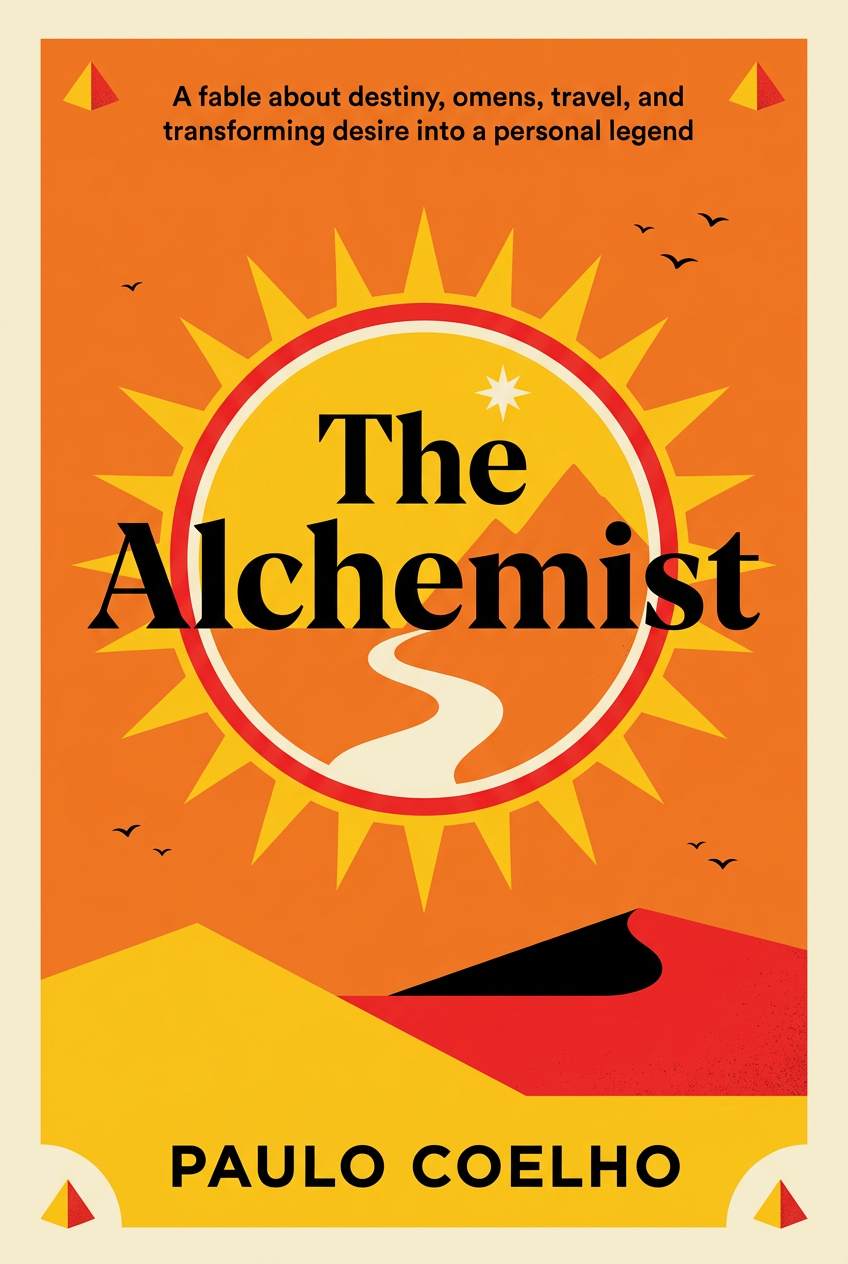
The Alchemist
Chase your true purpose and learn to read the universe's omens.
- Your 'Personal Legend' is your true life purpose.
- The universe conspires to help you achieve your destiny.
- Fear is a greater obstacle than the obstacle itself.
Anyone feeling stuck or seeking the courage to pursue a dream.
Chase your true purpose and learn to read the universe's omens.
Ikigai
Find your 'reason for being' for a longer, happier, and more fulfilled life.
- Your ikigai is where passion, mission, vocation, and profession meet.
- Achieve a state of 'flow' in your daily activities to increase happiness.
- Longevity is linked to having a strong sense of purpose.
People searching for their life's purpose and daily fulfillment.
Find your 'reason for being' for a longer, happier, and more fulfilled life.
The Daily Stoic
Build unshakeable calm with a daily dose of Stoic wisdom.
- Focus only on what is within your control.
- Use daily exercises to build mental resilience against chaos.
- Master your perceptions to reduce stress and find clarity.
Anyone seeking a practical daily routine for mental fortitude.
Build unshakeable calm with a daily dose of Stoic wisdom.
Meditations
Find tranquility in chaos with the private journal of a Roman Emperor.
- Separate what you can control from what you cannot.
- View obstacles as opportunities for personal growth.
- Live a life of virtue and purpose every single day.
Readers overwhelmed by modern life seeking durable inner peace.
Find tranquility in chaos with the private journal of a Roman Emperor.
The Courage to Be Disliked
Free yourself from the need for others' approval.
- Your past trauma does not determine your future.
- Separate your tasks from the tasks and expectations of others.
- True freedom is being disliked by someone without fear.
People tired of worrying what others think and seeking freedom.
Free yourself from the need for others' approval.
The Obstacle Is the Way
Turn every problem you face into your greatest advantage.
- Your perception of an obstacle is the first step to overcoming it.
- Direct your energy into creative, disciplined action.
- Develop an unbreakable will that thrives on adversity.
Individuals facing challenges who want to learn to thrive on adversity.
Turn every problem you face into your greatest advantage.
The Republic
Explore Plato's blueprint for a just society and a well-ordered soul.
- A just society mirrors a just individual soul.
- Understand reality versus illusion with the 'Allegory of the Cave'.
- Leaders should be philosophers who seek wisdom, not power.
Thinkers curious about the foundations of justice, ethics, and society.
Explore Plato's blueprint for a just society and a well-ordered soul.
The Structure of Scientific Revolutions
Discover the hidden patterns behind every major breakthrough.
- Science progresses through revolutionary 'paradigm shifts'.
- 'Normal science' operates within an accepted worldview, resisting change.
- Anomalies trigger crises that eventually lead to new paradigms.
Innovators and strategists who want to understand how change happens.
Discover the hidden patterns behind every major breakthrough.
Siddhartha
Find enlightenment not by following a path, but by creating your own.
- Wisdom comes from direct experience, not inherited teachings.
- Every experience, including failure, is a valuable teacher.
- True enlightenment is found by embracing life's simple flow.
Spiritual seekers looking for a path to inner peace on their own terms.
Find enlightenment not by following a path, but by creating your own.

The Prince
Learn the ruthless, timeless strategies of how power truly works.
- It is often safer for a ruler to be feared than to be loved.
- A leader's reputation is a strategic asset that must be managed.
- Use cunning and force appropriately to maintain control.
Leaders and students of history interested in the realities of power.
Learn the ruthless, timeless strategies of how power truly works.
The Wealth of Nations
Uncover the foundational principles of modern capitalism and wealth.
- The 'invisible hand' of the free market guides economic prosperity.
- Division of labor is the key to massive productivity increases.
- A nation's wealth is the sum of its total production and commerce.
Anyone interested in the origins of modern economic thought.
Uncover the foundational principles of modern capitalism and wealth.
Frequently Asked Questions
Philosophy is the study of fundamental questions about existence, knowledge, values, reason, mind, and language. It's a way of thinking about the world and our place in it, using logic and reason to explore questions that don't have simple scientific answers.
Learning about philosophy helps you develop critical thinking, clarify your personal values, and construct logical arguments. It provides timeless frameworks for living a more meaningful and purposeful life, helping you navigate complex problems with greater wisdom and clarity.
For a gentle yet profound start, 'The Alchemist' offers wisdom through a compelling story. For a practical daily framework, 'The Daily Stoic' is an excellent choice. Both are considered some of the top philosophy books for newcomers because they offer actionable insights without dense academic language.