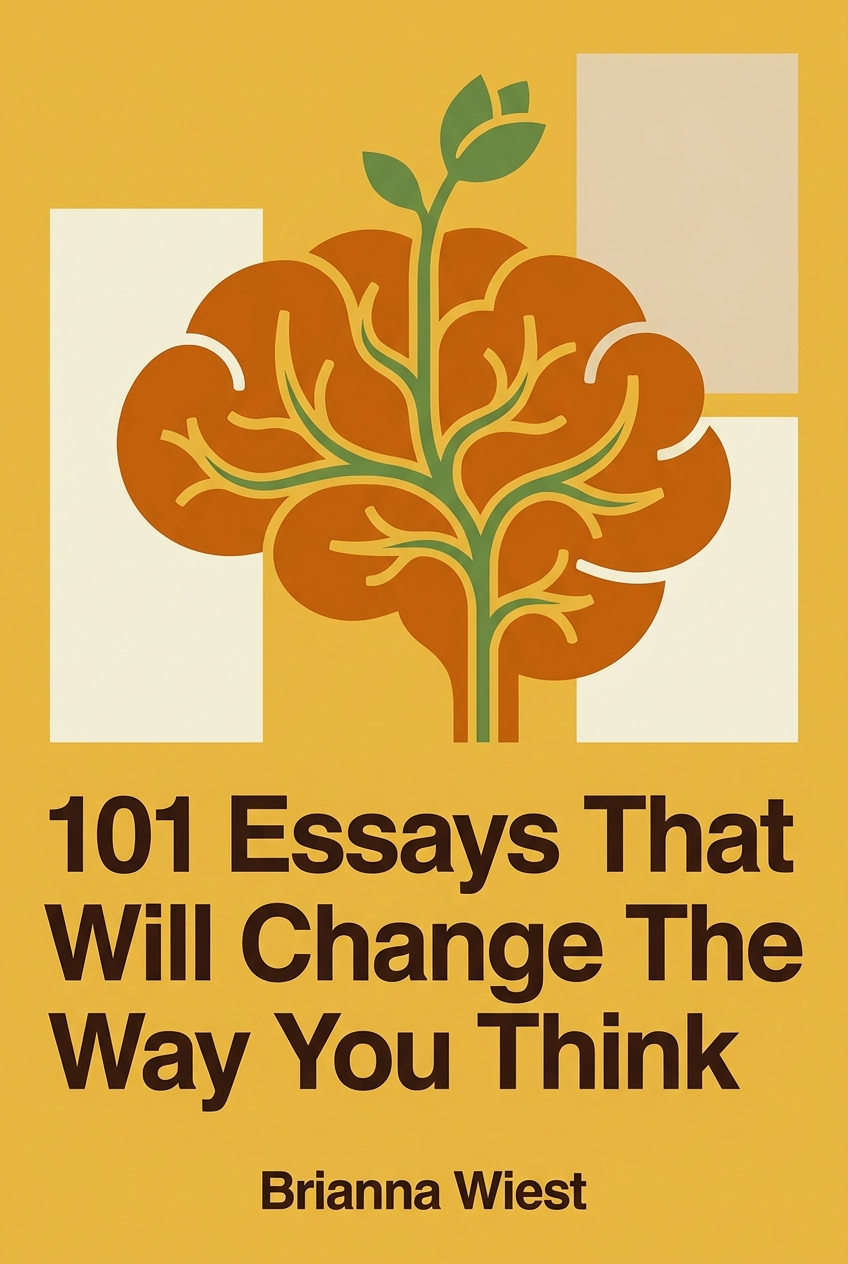
101 Essays That Will Change The Way You Think
What's it about
Ever wonder why you're not where you want to be in life? This collection of viral essays uncovers the hidden cognitive biases and self-sabotaging behaviors holding you back, offering a profound shift in perspective that promises not just insight, but true personal evolution. You'll discover why pursuing happiness often makes you miserable and how to embrace negative thinking as a powerful tool for growth. Learn to reframe your past, understand your purpose, and build a future you genuinely desire by fundamentally changing the way you think.
Meet the author
Brianna Wiest is an international bestselling author whose work has been read by tens of millions of people and translated into over twenty languages worldwide. Starting as a journalist, she began writing about emotional intelligence and self-development to chronicle her own journey of deep inner work. Her profound insights into the human condition resonate globally, empowering readers to transform their thinking, heal their pasts, and consciously create their futures.
Opens the App Store to download Voxbrief

The Script
We treat our difficult emotions like home intruders. When anger, jealousy, or sadness shows up, our first instinct is to barricade the doors, call for backup, and expel the threat. We believe that a peaceful inner life is one where these unwanted guests are permanently locked out. But this constant battle, this state of high alert, is itself a kind of prison. The effort we spend fighting off our own feelings is precisely what chains us to them, ensuring they always have a key to get back inside. What if the path to genuine peace comes from recognizing that the war itself is the problem? This shift in perspective suggests that our most uncomfortable feelings are messengers to be heard. They carry garbled, but vital, information about our unmet needs, our unhealed wounds, and the gap between the life we're living and the one we truly want.
The person who so eloquently decoded these messages began her career as a writer chronicling the quiet, everyday struggles of her generation. Brianna Wiest noticed a pervasive pattern: people, including herself, were exhausted from trying to 'fix' their feelings and 'optimize' their lives, only to end up more anxious and stuck. She realized the conventional advice to suppress negativity and chase happiness was backfiring. This collection of essays grew organically from years of observing these subtle, self-defeating patterns. Each piece is an attempt to dismantle a flawed piece of logic we've unknowingly adopted, offering a new way to interpret the very thoughts and feelings we've been taught to fight.
Module 1: Your Thoughts Aren't Reality, They're Tools
The first major shift Wiest proposes is a radical re-evaluation of our relationship with our own minds. We tend to treat our thoughts as facts. We believe our feelings are accurate reflections of objective reality. Wiest argues this is a fundamental error. And it’s the source of much of our suffering.
The initial step is to separate objective events from your subjective mental narrative. Your thoughts are interpretations, filtered through your unique history, biases, and emotional state. For instance, you might have a spike of panic before a big presentation. That's an honest feeling. But the deeper truth might be that you are fully capable and prepared. Learning to distinguish between a temporary feeling and a deeper, consistent truth is a critical skill. This allows you to stop treating every anxious thought as a prophecy.
From this foundation, we can understand a crucial insight. Anxiety often stems from a perceived misalignment between who you are and who you think you "should" be. Wiest explains that anxiety is the energy created by the gap between your authentic self and a fabricated ideal. It's a panicked urge to "fix" yourself. But there's nothing tangible to fix. The suffering comes from fighting a phantom. This is why you can't just "think your way out" of anxiety by telling yourself to calm down. Instead, the solution is to question the ideal. Where did this idea of who you "should" be come from? Is it truly yours?
This leads to a practical, powerful strategy. Stop making life-altering decisions when you are emotionally charged. When you're upset, panicked, or ecstatic, your judgment is clouded. Your mind is focused on alleviating discomfort or chasing a high. It’s optimized for immediate relief, not long-term strategic thinking. Wiest uses a powerful metaphor. "Stop trying to navigate the path while the forest is dark." Wait for your emotions to return to a neutral state. Only then can you see the path clearly and make choices that align with your true goals, not just your immediate feelings.