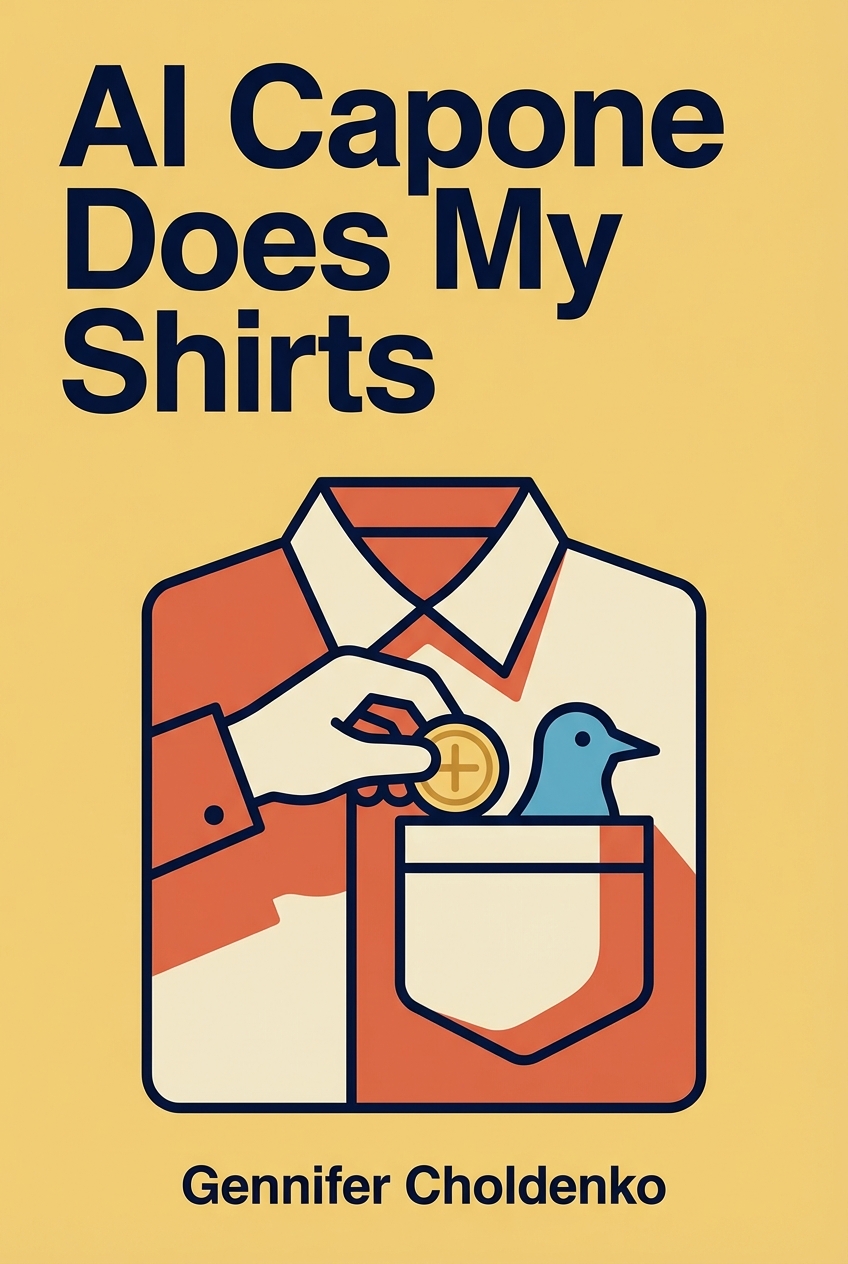
Al Capone Does My Shirts
What's it about
What would you do if you moved to Alcatraz Island and your new neighbor was the infamous gangster Al Capone? For twelve-year-old Moose Flanagan, this isn't a hypothetical. He's stuck on a rock with convicts, a sister with special needs, and a whole lot of questions. You'll join Moose as he navigates the strange rules of his new home, from dealing with the warden's bossy daughter to desperately trying to help his autistic sister, Natalie. Discover how a desperate scheme involving the prison's most notorious resident might just be the only way to get Natalie the help she needs, even if it means breaking every rule in the book.
Meet the author
Gennifer Choldenko is a Newbery Honor-winning author whose masterful storytelling has earned her a place among the most celebrated names in children's literature. Her inspiration for the Al Capone series came from a surprising source: a docent job at Alcatraz, where she learned about the families who lived on the island. This unique historical insight, combined with her experience as a sister to a sibling with autism, allowed her to craft a deeply personal and unforgettable story about family, loyalty, and acceptance.
The Script
It’s laundry day. You gather up the dirty clothes, a routine chore. But as you hand over the bag, you realize the person taking it isn't a family member or a local laundromat owner. It’s one of the most notorious criminals in American history. Your clothes, your family’s intimate, everyday items, are about to be handled by someone the world sees as a monster. This is a collision of two completely different worlds. The ordinary world of a family trying to get by—a family with a neurodivergent child who needs constant, specific care—slams into the extraordinary, dangerous world of the nation's most infamous prison, Alcatraz. How do you navigate a reality where your biggest worry is both getting your sister the help she needs and staying on the right side of men who have nothing left to lose?
This bizarre and unsettling scenario was inspired by a real-life question that sparked the imagination of author Gennifer Choldenko. While working as an advertising copywriter, she came across a docent at Alcatraz who mentioned that the families of the prison guards, including children, lived on the island. The docent added a strange detail: the inmates did all their laundry. This single, peculiar fact—that Al Capone himself might have washed a little girl's socks—refused to let her go. It became the seed for a story about what it means to be 'good' or 'bad,' and how a family's love and fierce loyalty can thrive in the most improbable of places. Choldenko, who has a sister with autism, drew on her own life to give the story its powerful emotional core, exploring the complex, frustrating, and deeply loving bond between a boy and his unique older sister.
Module 1: The Weight of Family and the Burden of Hope
The story begins with the Flanagan family's move to Alcatraz. This is a desperate measure. They've moved so Natalie, Moose's older sister, can attend the Esther P. Marinoff school in San Francisco, a specialized institution that represents their last, best hope. From the first page, the family operates under immense strain. Your family's central crisis will dictate your personal priorities, whether you choose them or not. Moose's father works two jobs, as an electrician and a prison guard, just to make ends meet. His exhaustion is a constant, quiet presence in the house.
Moose's mother is driven by a relentless, almost frantic hope for Natalie. This hope becomes a powerful, and at times destructive, force. She insists Natalie is still ten years old, even though she's approaching sixteen. This is a strategic, heartbreaking attempt to fit Natalie into the school's narrow admission criteria. For Moose, this means his own needs are secondary. His desire to play baseball, to make friends, to have a normal life, is constantly sacrificed. He is told, "We can’t do this without you." The responsibility is crushing.
Here's where the narrative gets incredibly real. The book shows how the relentless pursuit of a "cure" can create its own cycle of trauma. The Flanagans have been down this road before. They've tried voodoo dolls, charismatic churches, and invasive university studies. Each time, hope soared, only to be crushed by rejection and indifference. One researcher at UCLA, after a battery of tests, coldly suggested they "consider donating her brain to science when she dies." This history of disappointment hangs over their move to Alcatraz, making the stakes feel impossibly high. Moose is caught between his mother's desperate optimism and his own weary realism. He knows that with Natalie, there is often no happy ending, but his mother can never afford to believe that.
Finally, the story reveals a difficult truth about family systems under pressure. To survive extraordinary circumstances, families develop unspoken rules and adaptive routines. Moose learns early that getting angry at Natalie is the one unforgivable sin. He develops an almost telepathic ability to manage her needs, using her fascination with book indexes to coax her out of an anxiety-induced trance or offering her a piece of lemon cake to calm her down. These are survival skills developed to keep the family functioning. The family operates as a unit, bound by a shared, unspoken mission to protect Natalie. Moose's role is clear: he is the good, obedient son. He does what he's told, even when it feels like his own world is falling apart.