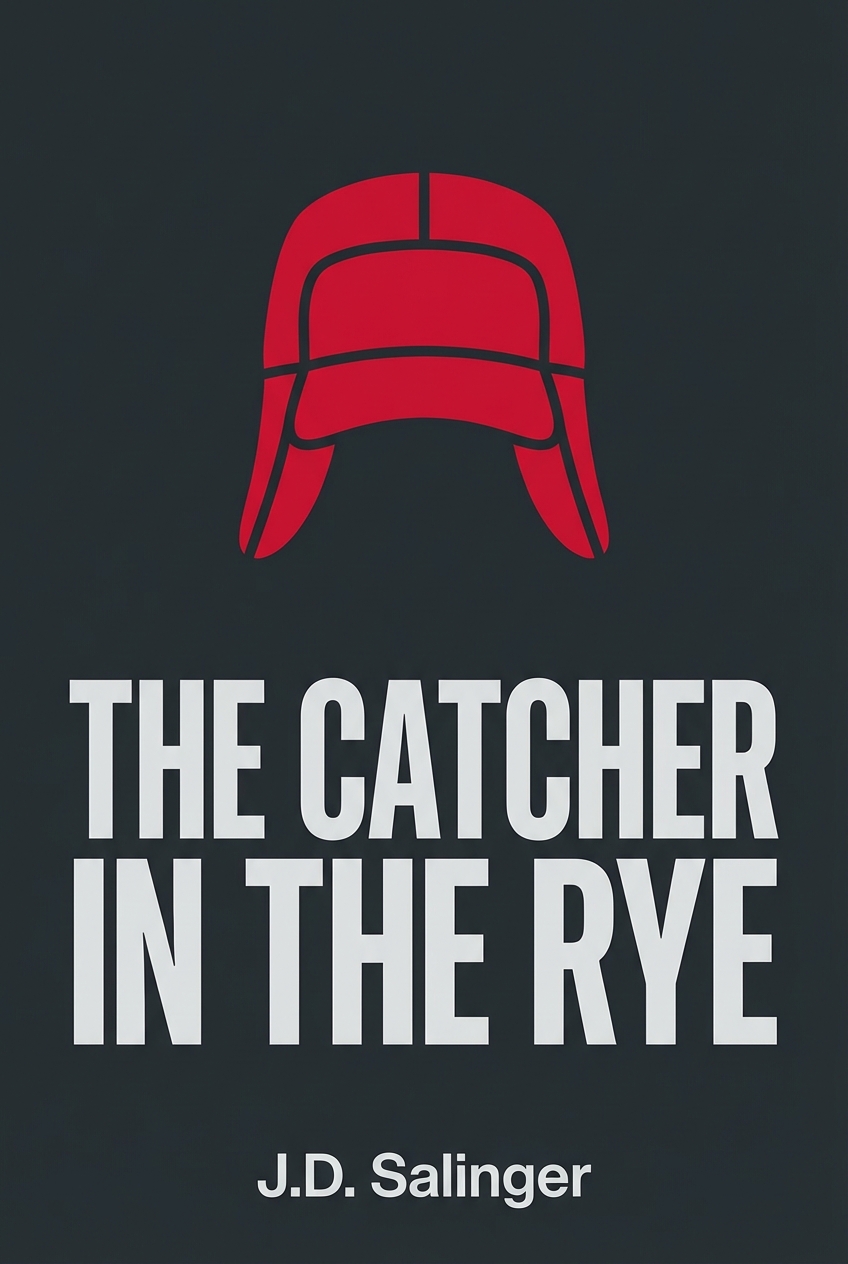
The Catcher in the Rye
What's it about
Ever feel like you're surrounded by phonies and just don't belong? This classic story of teenage rebellion explores the universal search for authenticity in a world that feels fake. Discover why finding your own path sometimes means walking away from everyone else's. You'll join the unforgettable Holden Caulfield on his wild, two-day journey through New York City after being expelled from prep school. Through his cynical yet vulnerable eyes, you'll confront the painful, confusing, and often hilarious gap between childhood innocence and adult hypocrisy.
Meet the author
Jerome David Salinger was a celebrated American author whose landmark 1951 novel, The Catcher in the Rye, defined post-war adolescent alienation for generations of readers worldwide. A World War II veteran who participated in the D-Day landings, Salinger’s own experiences with trauma and his search for spiritual meaning deeply informed his writing. His intense desire for privacy led him to retreat from public life, making his rare but powerful literary contributions all the more treasured and influential.
The Script
A teenager stands before a department store window, looking not at the mannequins, but at his own distorted reflection in the glass. He sees the expensive coat he’s wearing, the slicked-back hair, the posture he’s trying to hold. But behind that, he sees something else entirely—a kid who doesn't fit the suit, a face that feels like a stranger’s. He feels a sudden, overwhelming urge to shatter the glass, to break the image he’s trapped inside, rather than out of anger at the store. It’s the quiet desperation of performing a role you never auditioned for, the suffocating feeling that everyone around you is playing a part in a show you don’t understand, and the most terrifying part is that you’re playing along, too. This profound sense of alienation, of being a lonely spectator in your own life, is a feeling many people recognize but few can articulate.
That feeling found its definitive voice through a man who was, himself, a master of withdrawal. J.D. Salinger was a deeply private person who, after experiencing the horrors of World War II and the superficiality of post-war American society, retreated from public life almost entirely. He channeled his own disillusionment and his sharp observations of hypocrisy into the character of Holden Caulfield. Writing the novel was an obsessive, decade-long process for Salinger, a way to capture a truth about adolescence, grief, and the painful phoniness of the adult world that he felt compelled to expose. The book was an exorcism of the contradictions he saw all around him and felt within himself.
Module 1: The War Against "Phoniness"
Holden Caulfield’s world is divided into two camps. There are authentic people and there are "phonies." This is a full-blown operating philosophy. He wages a quiet war against the hypocrisy he sees in every corner of his life.
The first front in this war is institutional hypocrisy. Holden sees schools and organizations as masters of false advertising. Recognize that institutions often project an idealized image that masks a messy reality. He critiques his school, Pencey Prep, for its glossy brochures. The ads show a "hot-shot guy on a horse jumping over a fence." The slogan promises to mold boys into "splendid, clear-thinking young men." Holden’s response is blunt. It’s all a lie. He’s never seen a horse on campus. And he certainly hasn't met any splendid, clear-thinking men. He sees the headmaster, Mr. Haas, as the ultimate phony. Haas would charm parents who looked wealthy or impressive. But he'd give a cold, phony handshake to anyone who looked ordinary. The system, Holden concludes, is about maintaining appearances and catering to wealth.
This leads to his next target: social performance. Holden believes most people are just acting. They use insincere language and gestures to get what they want. Audit your own interactions for transactional phoniness. He despises the word "grand" because it sounds fake. He observes his roommate, Stradlater, a guy who is handsome and popular but a "secret slob." Stradlater's razor is rusty and full of hair, but his public image is flawless. Holden sees this as a perfect metaphor. The polished exterior hides a grimy reality. Stradlater uses insincere compliments to get favors, confirming Holden’s belief that most social grace is just a transaction.
But what about the world of commerce and success? Here, Holden is even more ruthless. Question whether commercial success requires a compromise of personal integrity. His own brother, D.B., was a writer of "terrific" short stories. Now he's in Hollywood, writing for the movies. Holden calls this prostitution. He believes D.B. sold his authentic talent for money and fame. This critique extends to a wealthy alumnus named Ossenburger, who made his fortune in the funeral home business. Ossenburger gives a speech full of corny jokes and fake piety, talking about his constant chats with Jesus. Holden sarcastically imagines him asking Jesus to "send him a few more stiffs." The school, in turn, names a dorm after Ossenburger because of his donation. For Holden, this proves his point. The world rewards the most successful phonies.