An Immense World
How Animal Senses Reveal the Hidden Realms Around Us
What's it about
Ever wonder what the world looks like to a bee, or what a dog really smells on its walk? Uncover the hidden sensory realms that exist all around you and learn to see the world not just through your eyes, but through the astonishing senses of the animal kingdom. Pulitzer Prize-winning author Ed Yong takes you on a journey into the concept of Umwelt—the unique sensory bubble of each species. You'll discover how animals use everything from electric fields to the Earth's magnetic poles to navigate and communicate, revealing a universe of sights, sounds, and sensations that are entirely beyond human perception.
Meet the author
Ed Yong is a Pulitzer Prize-winning science journalist for The Atlantic, celebrated for making complex scientific concepts accessible and captivating for a global audience. His deep curiosity about the natural world, combined with his rigorous reporting, allows him to translate intricate research into compelling narratives. For An Immense World, Yong immersed himself in the science of animal perception, interviewing hundreds of experts to reveal the extraordinary sensory bubbles—the Umwelt—in which every creature lives, forever changing how we see the world around us.
What's it about
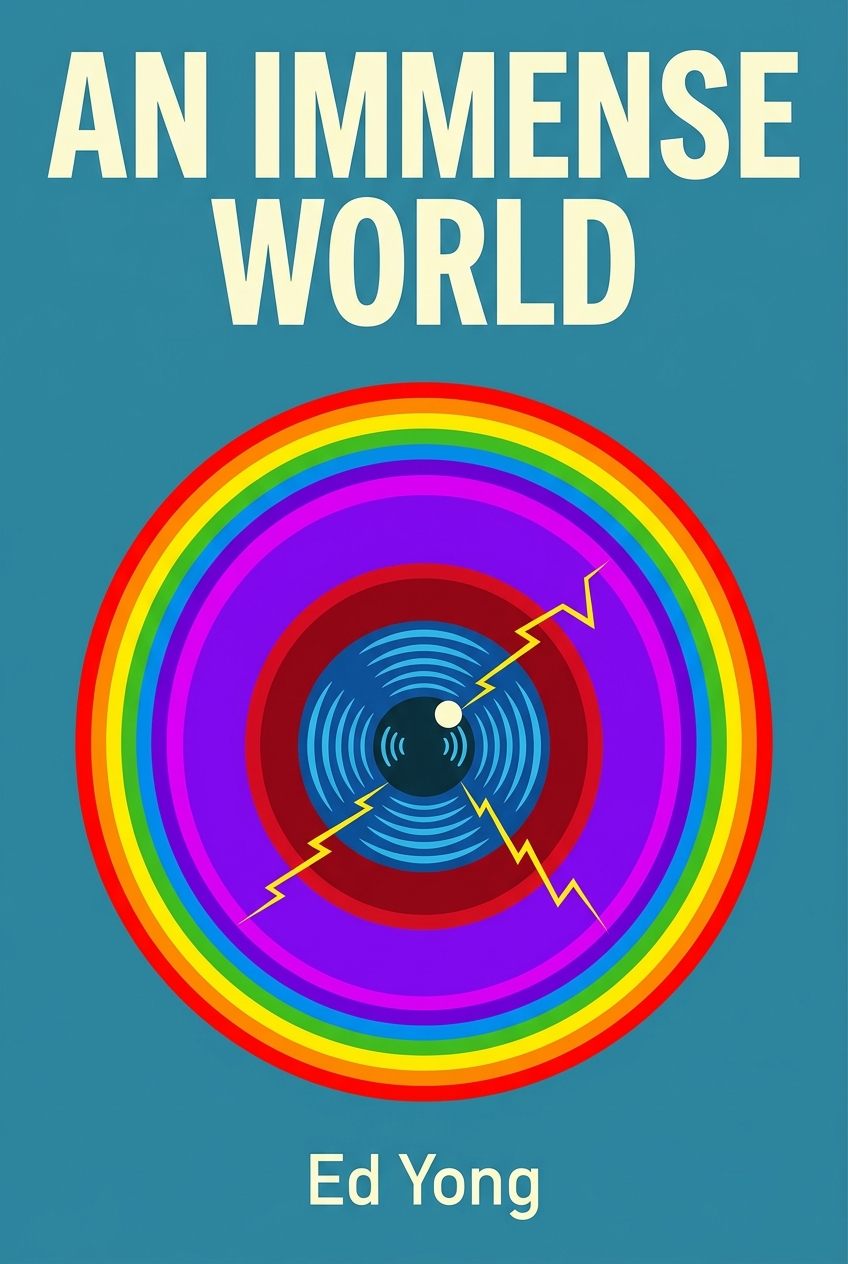
Ever wonder what the world looks like to a bee, or what a dog really smells on its walk? Uncover the hidden sensory realms that exist all around you and learn to see the world not just through your eyes, but through the astonishing senses of the animal kingdom. Pulitzer Prize-winning author Ed Yong takes you on a journey into the concept of Umwelt—the unique sensory bubble of each species. You'll discover how animals use everything from electric fields to the Earth's magnetic poles to navigate and communicate, revealing a universe of sights, sounds, and sensations that are entirely beyond human perception.
Meet the author
Ed Yong is a Pulitzer Prize-winning science journalist for The Atlantic, celebrated for making complex scientific concepts accessible and captivating for a global audience. His deep curiosity about the natural world, combined with his rigorous reporting, allows him to translate intricate research into compelling narratives. For An Immense World, Yong immersed himself in the science of animal perception, interviewing hundreds of experts to reveal the extraordinary sensory bubbles—the Umwelt—in which every creature lives, forever changing how we see the world around us.
The Script
You've reached the end of the free preview.