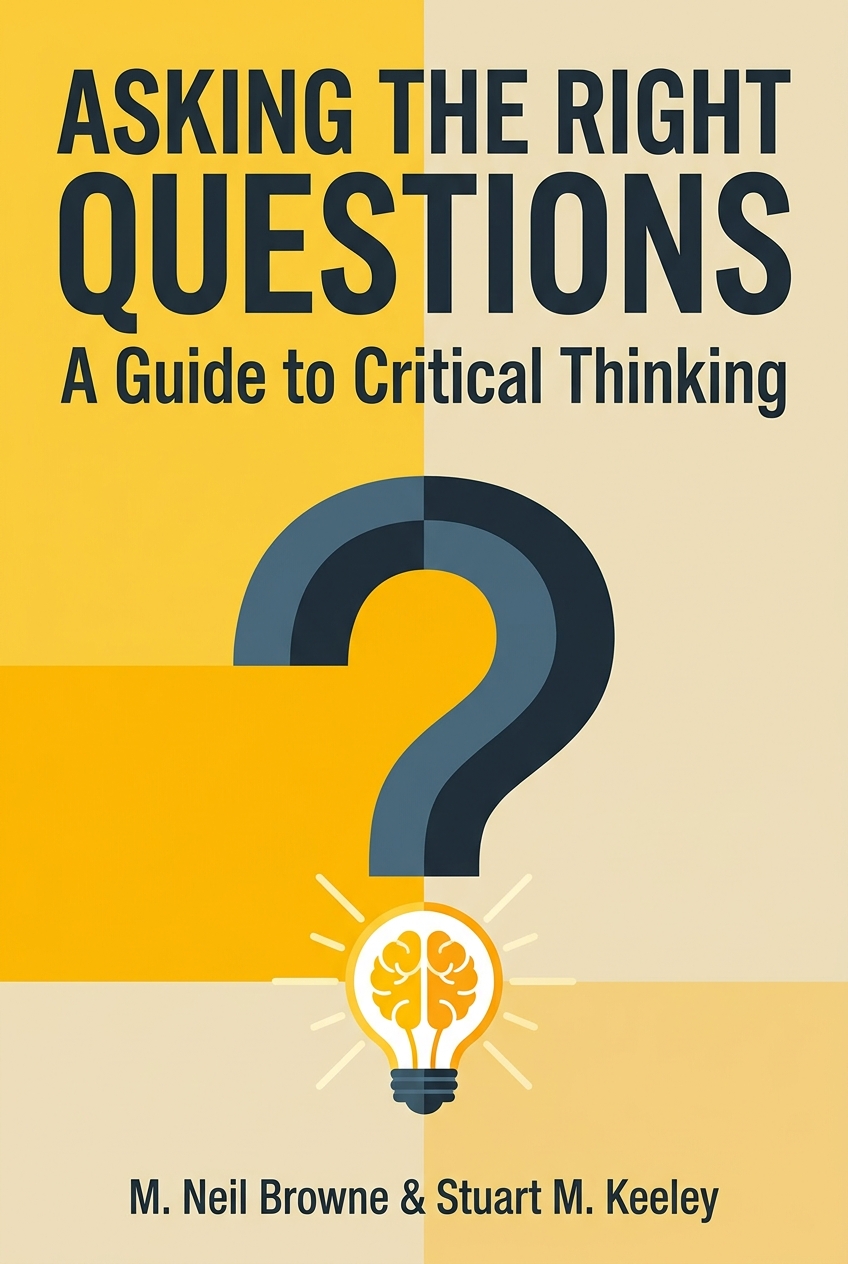
Asking the Right Questions
A Guide to Critical Thinking
What's it about
Tired of being misled by weak arguments and fake news? Learn how to cut through the noise and think for yourself. This guide gives you the power to dissect any claim, identify hidden assumptions, and make smarter, more informed decisions in every area of your life. You'll discover a practical framework of critical questions to ask when faced with any argument, whether it's from a news article, a politician, or a colleague. Uncover logical fallacies, evaluate evidence like an expert, and develop the confidence to challenge ideas and form your own well-reasoned conclusions.
Meet the author
M. Neil Browne and Stuart M. Keeley are distinguished professors of economics and psychology whose pioneering work has made critical thinking accessible to millions worldwide. For over four decades, their collaboration, born from a shared passion for empowering students, has refined the art of questioning into a practical skill for navigating a complex world. Their combined expertise created a timeless guide that transforms how we engage with information, fostering a more thoughtful and discerning society one reader at a time.
What's it about
Tired of being misled by weak arguments and fake news? Learn how to cut through the noise and think for yourself. This guide gives you the power to dissect any claim, identify hidden assumptions, and make smarter, more informed decisions in every area of your life. You'll discover a practical framework of critical questions to ask when faced with any argument, whether it's from a news article, a politician, or a colleague. Uncover logical fallacies, evaluate evidence like an expert, and develop the confidence to challenge ideas and form your own well-reasoned conclusions.
Meet the author
M. Neil Browne and Stuart M. Keeley are distinguished professors of economics and psychology whose pioneering work has made critical thinking accessible to millions worldwide. For over four decades, their collaboration, born from a shared passion for empowering students, has refined the art of questioning into a practical skill for navigating a complex world. Their combined expertise created a timeless guide that transforms how we engage with information, fostering a more thoughtful and discerning society one reader at a time.
The Script
You've reached the end of the free preview.