All Books
Self-Growth
Business & Career
Health & Wellness
Society & Culture
Money & Finance
Relationships
Science & Tech
Fiction
Topics
Blog
Download on the App Store

Bad Feminist

Essays

16 minRoxane Gay

What's it about

Ever felt like you're not a "good enough" feminist? This collection of essays celebrates the messy, contradictory, and deeply human side of the movement. Discover why it's okay to embrace your imperfections and still fight for equality, one pop culture critique at a time. You'll explore how everything from The Hunger Games to reality TV reflects our culture's complicated relationship with gender, race, and power. Roxane Gay's sharp, witty, and personal insights show you how to navigate the world as a feminist who is still figuring things out.

Meet the author

Roxane Gay is a New York Times bestselling author and a leading voice in modern feminism, renowned for her sharp, incisive cultural criticism and commentary. Through her celebrated collection Bad Feminist, Gay embraces the contradictions of being human and redefines what it means to be a feminist today. Her work draws from her experiences as a woman, a person of color, and a professor, offering a refreshingly honest and accessible perspective on pop culture, politics, and identity.
Listen Now

Opens the App Store to download Voxbrief

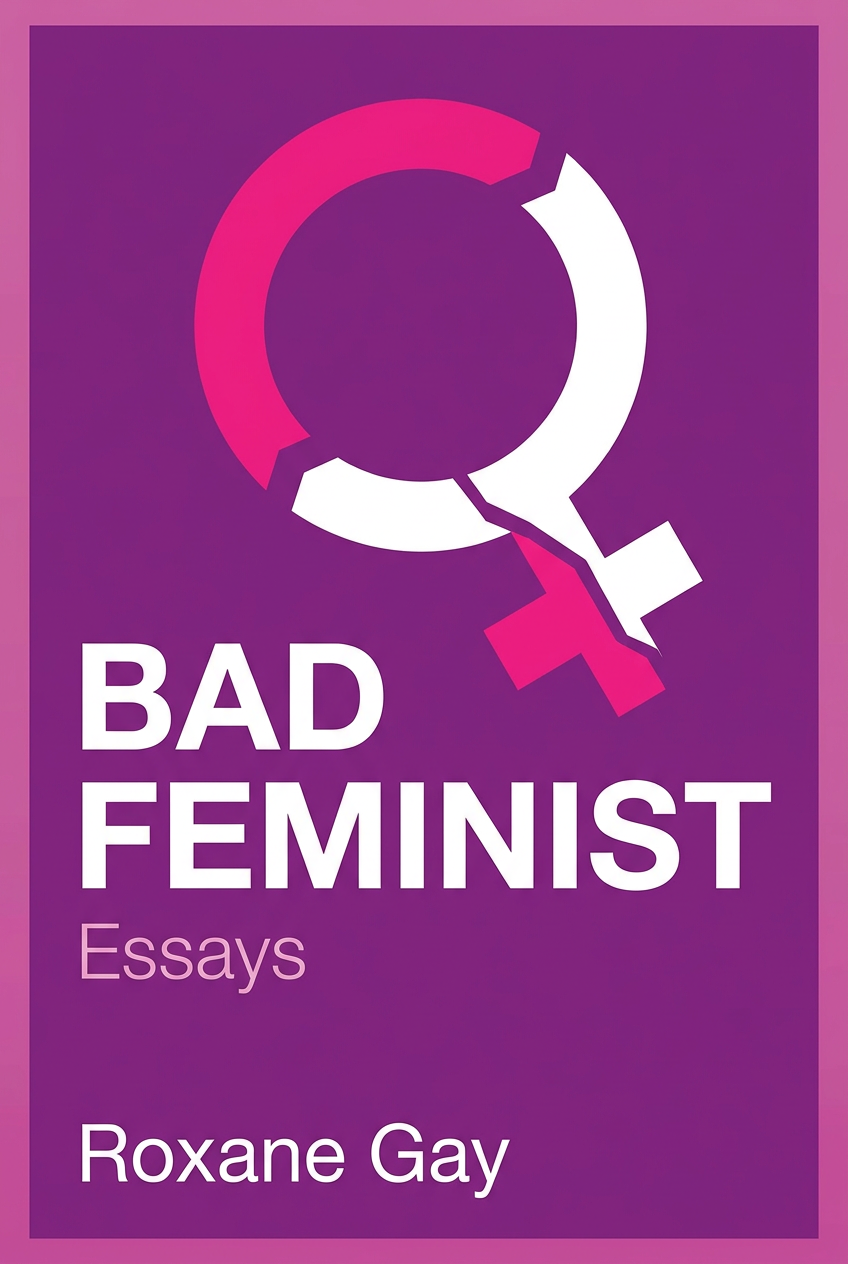
Bad Feminist book cover

The Script

You're at a potluck. You brought a store-bought pie in a flimsy aluminum tin because the week was just too much. Next to it, someone has placed a stunning, home-baked lattice-crust pie, its fruit filling bubbling perfectly. A small, almost imperceptible pang hits you. Your pie feels like an admission of failure, a public confession of not having it all together. The other pie is a statement of competence, of time well-spent, of domestic virtuosity. You find yourself mentally cataloging all the ways your contribution falls short, how it sits there, a little too commercial, a little too convenient, next to an artifact of authentic effort. The social script says you should feel a little embarrassed. But what if you could look at both pies and simply see two different, equally valid ways of feeding a community? What if the real pressure is the impossible standard that makes one feel superior and the other inadequate?

This feeling of being measured against an unattainable ideal, of constantly falling short, is the exact territory Roxane Gay decided to explore. As a writer, professor, and cultural critic, she found herself caught between the public expectations of capital-F Feminism and her own messy, human realities. She loved the color pink, listened to misogynistic rap music, and enjoyed frivolous pop culture—all things that felt at odds with the rigid, academic definition of a 'good feminist.' Instead of abandoning the label or trying to fit into a mold that didn't feel right, she chose to write her way through the contradictions. Bad Feminist became her declaration that it’s okay to be imperfect, to contain multitudes, and to embrace a feminism that has room for both the store-bought and the homemade pie.

Module 1: Embracing the "Bad Feminist" Identity

The central idea of the book is a radical act of self-acceptance. Gay argues that the feminist movement has been constrained by a myth of perfection. This myth creates an "essential feminism," a rigid set of rules about how a "good" feminist should think, act, and feel. This pressure is exhausting and counterproductive, pushing people away.

Gay's solution is simple yet powerful: Embrace being a "bad feminist" to reclaim your humanity within the movement. This is a way to participate authentically. Gay shares her own "failures." She loves the color pink. She listens to rap music with misogynistic lyrics. She sometimes plays dumb with repairmen for an easier interaction. These are acknowledgments of human complexity. By calling herself a "bad feminist," she rejects the pedestal. She refuses to be a flawless icon, knowing that pedestals are built only to be knocked down.

This approach is immediately useful. In a world of constant judgment, particularly online, the pressure to be ideologically pure is immense. Adopting a "bad feminist" mindset allows you to engage with important issues without fear of being called out for minor contradictions. It frees you from the performance of perfection. You can fight for equal pay and still enjoy a problematic movie. You can advocate for reproductive rights and still read Vogue. The point is to show up, flaws and all.

From this foundation, Gay builds a more inclusive vision. Feminism must be pluralistic and intersectional. It cannot be a one-size-fits-all ideology. Gay is clear that mainstream, "Capital-F" Feminism has often failed women of color, queer women, and transgender women. A "bad feminist" approach recognizes these failures. It insists that we must support the choices of other women, even if we wouldn't make those same choices ourselves. This means there are many feminisms, and they can coexist as long as they are grounded in mutual respect and a shared commitment to equality.

So, how do we put this into practice? Start by identifying your own contradictions. What parts of your life feel at odds with a "perfect" political identity? Gay’s work suggests you just have to own them. This creates a more honest and sustainable way to advocate for change, one that doesn't lead to burnout from trying to be someone you're not.

Module 2: Deconstructing Pop Culture's Hidden Messages

Once you accept your own imperfections, you can start to see the world with clearer eyes. Gay is a master of cultural criticism, and she turns her sharp gaze toward the media we consume every day. She argues that pop culture is a powerful force that shapes our beliefs about gender, race, and power.

Her first key insight is that unlikable female characters are often the most compelling and human. Think about it. In literature and film, flawed male characters are often celebrated as complex "antiheroes." Think Tony Soprano or Don Draper. But when a woman is selfish, ambitious, or difficult, she's often dismissed as simply "unlikable." Gay challenges this double standard. She champions characters like Amy Dunne from Gone Girl or the messy women in Megan Abbott's novels. These characters are there to show us the messy, complicated, and sometimes dark realities of being human. They refuse to perform the role of the "Cool Girl," the woman who is effortlessly pleasing and accommodating. This is an actionable insight for anyone in a creative field. It encourages us to create and celebrate characters who are authentic, not just aspirational.

And here's the thing: this critical lens extends beyond fiction. Media representations of real women are often burdened with impossible expectations. Gay examines the cultural reception of shows like Lena Dunham's Girls and movies like Bridesmaids. These works were hailed as "revolutionary" and expected to speak for an entire generation of women. When they inevitably fell short, for instance by lacking racial diversity, the criticism was intense. Gay argues this is an unfair burden. No single TV show or movie can solve systemic problems. While criticism is valid, we must also recognize that creators often write what they know. The lack of diversity in Girls reflects a real-life insularity in many artistic circles. The solution is to demand and create more stories from more diverse voices.

This brings us to a crucial point about race. Mainstream media consistently fails to portray the full spectrum of Black experience. Gay critiques films like The Help and Django Unchained. While celebrated by many, she argues they fall into familiar, damaging tropes. The Help relies on the "magical negro" stereotype, where Black characters exist primarily to help white protagonists grow. Django Unchained, directed by a white man, uses the trauma of slavery as an indulgent backdrop for a revenge fantasy. The result is an endless "cinematic parade of black suffering." Gay expresses a deep exhaustion with these narratives. She calls for more stories that show Black people in all their complexity—as professionals, as friends, in love, in joy—not just as victims or saviors. For professionals in media, tech, or any storytelling industry, this is a direct call to action: audit the stories you consume and create. Are they reinforcing stereotypes or are they expanding our understanding of humanity?

Read More