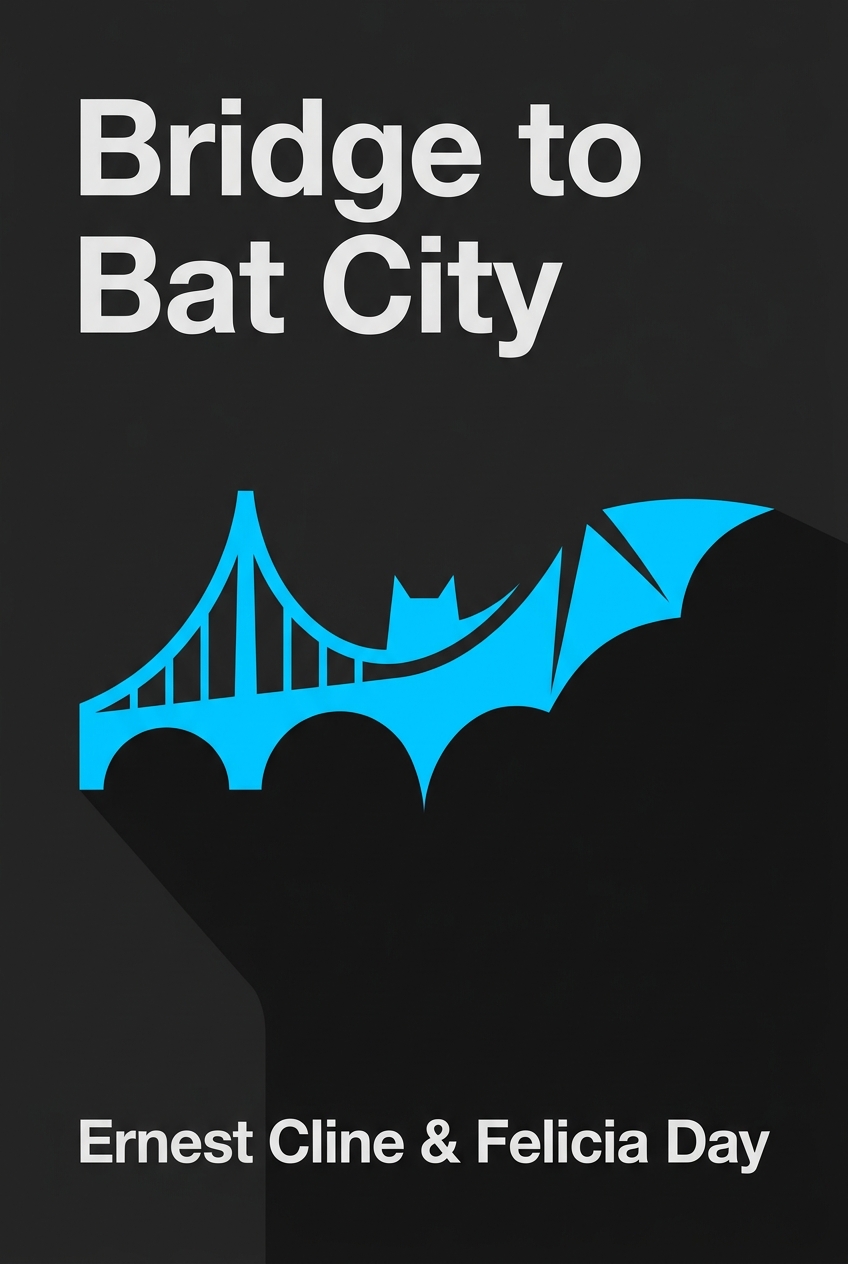
Bridge to Bat City
What's it about
Ever wonder what it would be like if millions of bats suddenly gained human-level intelligence? Get ready to explore a wild new reality where a young girl and a colony of super-smart bats must team up to save themselves from a world that fears them. This isn't just a story; it's a thrilling adventure into empathy and survival. You'll discover how a young runaway named Opal finds an unlikely family among the newly sentient bats of Austin, Texas. Learn how they navigate prejudice and danger, fighting for their right to exist in a society that sees them as a threat.
Meet the author
Ernest Cline, the 1 New York Times bestselling author of Ready Player One, is a globally recognized voice in pop culture, science fiction, and gaming. His lifelong passion for storytelling and classic video games, combined with a deep love for his hometown of Austin, Texas, culminates in this imaginative tale. Co-written with Felicia Day, Bridge to Bat City merges his signature world-building with a heartfelt story inspired by the real-life history and unique charm of the city that shaped him.
The Script
Think of a time you encountered something wild in your own backyard—a hawk perched on a fence post, a fox darting across the street at dusk, or a line of ants marching with purpose across the patio. There’s a jolt of surprise, a moment where the ordinary world cracks open to reveal a hidden, parallel one operating by its own ancient rules. For a child, that discovery is an invitation. A young girl named Opal sees a river of bats emerge from under a bridge as a silent, swirling symphony. She feels a kinship with these misunderstood creatures, a pull to understand their world, which seems so alien yet so close to her own.
This story of a girl connecting with a colony of bats is a fictionalized echo of a real childhood. Author Ernest Cline, known for creating vast digital universes in books like Ready Player One, grew up watching the very same bats emerge from Austin's Congress Avenue Bridge. That childhood fascination never left him. He teamed up with writer and actress Felicia Day, who shares his passion for telling stories that champion the outsider and find magic in the overlooked corners of our world. Together, they wanted to capture that specific childhood wonder—the feeling of discovering a secret, wild world thriving just beneath the surface of our own—and share it with a new generation.
Module 1: The Outcast's Advantage
The story begins with two sets of outcasts. First, there's Opal B Flats, a young girl living in the desolate flatlands of Texas. She’s a self-proclaimed "weirdo." Other kids mock her custom-made turquoise tuxedo. She wears Buddy Holly-style glasses. She copes with the loss of her father, who died in Vietnam before she was born, by immersing herself in music and a creative journal she calls her "scratchbook." Her family history is filled with what she calls "weird, wistful, willful" people. For Opal, being different is an inheritance.
Then, we meet the bats. The narrative immediately reframes them as a "family." They are a tight-knit community of millions living in a "big old beautiful" cave. They are social beings who collectively care for their young. They are masters of their environment, using echolocation to navigate the night sky. The book’s first major idea is that true strength comes from embracing your unique identity, not conforming to expectations. Opal doesn't try to fit in. She doubles down on what makes her unique. Her mother makes her outlandish clothes, which Opal wears with pride. She finds solace in her passion for music. This self-acceptance becomes her armor against a world that doesn't understand her.
So what's the lesson here? In a world that pressures us to conform, the book suggests our eccentricities are our superpowers. Uncle Roscoe, Opal’s guardian, gives her this advice: "Wear your weirdness like a badge of honor." He argues that it’s the "weird folks" who create culture—the stories, art, and music that move the world. Normal is boring. For anyone who has ever felt like an outsider, this is a powerful validation. Your unique perspective is a feature. It allows you to see solutions and opportunities that others miss. It's the foundation for creativity and resilience.
And here's the thing. This applies to the bats, too. Their "weird" traits—flying upside down, eating insects, communicating with clicks—are precisely what make them ecologically vital. They are thriving because of their specialized adaptations. This principle extends to our own lives. Your perceived oddities are often the source of your greatest contributions. Instead of trying to sand down your edges, the book encourages you to sharpen them. That unique skill set, that quirky hobby, that unconventional way of thinking? That’s your competitive advantage.