All BooksSelf-GrowthBusiness & CareerHealth & WellnessSociety & CultureMoney & FinanceRelationshipsScience & TechFiction
Download on the App Store

Things Fall Apart

16 minChinua Achebe

What's it about

Ever wonder what happens when your entire world is turned upside down? Imagine your culture, traditions, and beliefs being challenged by an unstoppable outside force. This summary of Things Fall Apart explores the devastating impact of colonialism on a proud and powerful community. You'll follow the story of Okonkwo, a respected warrior in his Nigerian village, as he grapples with personal ambition and the arrival of European missionaries. Discover how a clash of civilizations leads to misunderstanding, tragedy, and the heartbreaking unraveling of a way of life that had existed for centuries.

Meet the author

Chinua Achebe is widely regarded as the father of modern African literature, whose masterwork, Things Fall Apart, fundamentally reshaped global perceptions of the continent. Raised in the Igbo town of Ogidi, Nigeria, he drew upon the oral traditions and colonial conflicts of his upbringing to write a powerful, authentic counter-narrative to European portrayals of Africa. His work champions the dignity of his culture and gives a voice to those who were silenced by history, inspiring generations of writers worldwide.
Listen Now
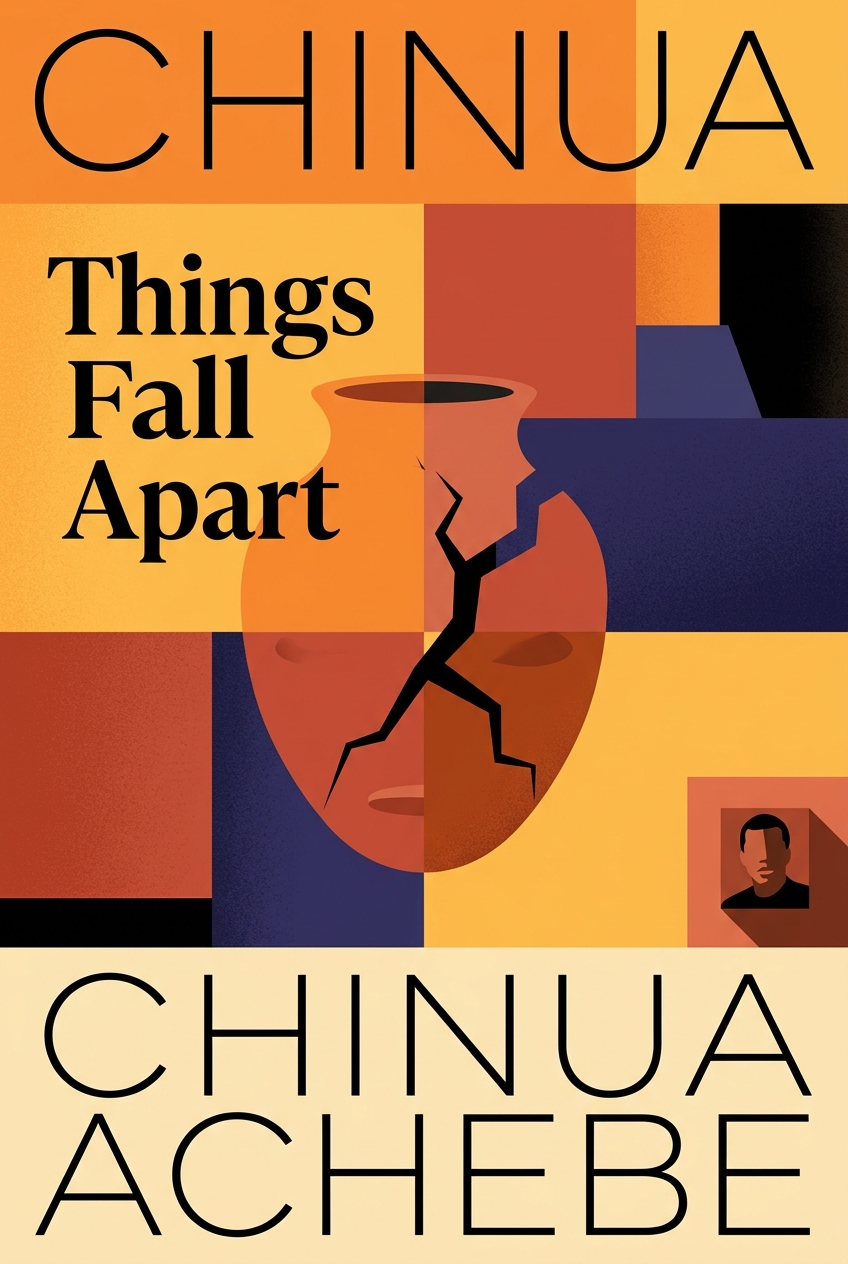
Things Fall Apart book cover

The Script

Two men, neighbors in an Igbo village, argue over a tree. It’s an ancient silk-cotton tree that stands on the fuzzy border between their compounds. One man claims his great-grandfather planted it. The other insists it has always belonged to his lineage, a sacred marker tended by his ancestors. The argument is about memory, honor, and the invisible threads that tie a person to the land and their history. Elders are called to listen to the stories—the oral histories passed down through generations. They weigh the cadence of each man’s telling, the conviction in his voice, the names he invokes. The resolution, when it comes, is a re-weaving of the village’s shared narrative, a judgment that strengthens the communal fabric by honoring its oldest tales.

What happens when a new story arrives, one so powerful and unyielding that it refuses to be woven into the existing fabric? What happens when it brings its own judges, its own maps, and its own single, unassailable version of the truth? This was the question that haunted Chinua Achebe. As a young Nigerian student in the 1950s, he was taught from English novels that depicted his own people as faceless, primitive savages—characters without history, without complex stories of their own. He saw the rich tapestry of Igbo life, with its intricate traditions, nuanced language, and deep-seated sense of justice, being flattened and erased. Achebe realized that if you don't tell your own story, someone else will tell it for you, and they will almost certainly get it wrong. He wrote "Things Fall Apart" as an act of reclamation—a powerful counter-story to give a voice, a history, and a name to a world on the verge of being silenced.

Module 1: The Architecture of a Pre-Colonial Society

Before we can understand the collapse, we must first appreciate the structure. The world of Umuofia, the setting for the novel, operates on a clear and powerful set of principles. It’s a society built on merit, ritual, and a deep connection to the land.

First, status is earned through personal achievement, not inherited by birth. This is a pure meritocracy. The protagonist, Okonkwo, is a revered leader in spite of his father. His father, Unoka, was a lazy debtor who died in shame. Okonkwo, by contrast, built his reputation through sheer will. He defeated a legendary wrestler, became a wealthy farmer with barns full of yams, and earned titles through his prowess. The novel states it plainly: "a man was judged according to his worth and not according to the worth of his father." For anyone in a competitive field, this resonates. Your value is tied directly to your proven accomplishments.

Next up, the culture is governed by a complex system of social protocols. Communication is an art form, where indirectness and proverbs signal wisdom. When a neighbor comes to collect a debt from Okonkwo’s father, he doesn’t just ask for the money. He speaks in proverbs. The book explains, "Among the Ibo the art of conversation is regarded very highly, and proverbs are the palm-oil with which words are eaten." This is a sophisticated social technology for navigating delicate situations, preserving honor, and demonstrating intellectual grace. It’s a reminder that in high-stakes communication, how you say something is as important as what you say.

And here's the thing: this society is animated by a deep spiritual framework. Supernatural beliefs and oracles are active governors of daily life. The Oracle of the Hills and the Caves is the ultimate authority. The clan will not go to war unless the Oracle declares it just. This spiritual oversight acts as a crucial check on impulsive action. Darkness holds a "vague terror," and people avoid certain behaviors at night for fear of evil spirits. This is an integrated worldview where the spiritual and physical are inseparable, providing a moral compass for every major decision.

Finally, we see that masculinity is defined by a narrow and demanding code of strength, wealth, and emotional control. Yams are called "the king of crops," and their cultivation is a man's work, the primary measure of his success. Okonkwo’s entire life is a reaction to his father’s failure to meet this standard. He rules his family with a "heavy hand" and hates anything he perceives as weak or gentle. This rigid definition of strength is both Okonkwo’s greatest asset and his most tragic flaw. It propels him to greatness, but it also makes him brittle, incapable of adapting when the world around him begins to change.

Read More