All BooksSelf-GrowthBusiness & CareerHealth & WellnessSociety & CultureMoney & FinanceRelationshipsScience & TechFiction
Download on the App Store

Bridge to Terabithia

16 minKatherine Paterson

What's it about

Ever felt like an outsider, searching for a place where you truly belong? Discover how the magic of an unlikely friendship can build a secret kingdom, offering an escape from the bullies and loneliness of everyday life and teaching you the power of imagination. This story follows Jess Aarons, a boy whose rural life is transformed when he meets Leslie Burke, the new girl who doesn't fit in any better than he does. Together, they create Terabithia, a magical world in the woods where they rule as king and queen. You'll learn how this imaginary realm helps them conquer their real-world fears and navigate the complexities of joy, tragedy, and the enduring strength found in connection.

Meet the author

Katherine Paterson is a two-time winner of both the Newbery Medal and the National Book Award, cementing her as a giant of children's literature. The daughter of missionaries, she spent her early childhood in China, an experience that gave her a profound sense of being an outsider. This feeling of otherness, combined with a deep understanding of childhood grief, inspired her to write the deeply personal and timeless story of friendship and loss in Bridge to Terabithia after her son's friend was tragically struck by lightning.
Listen Now
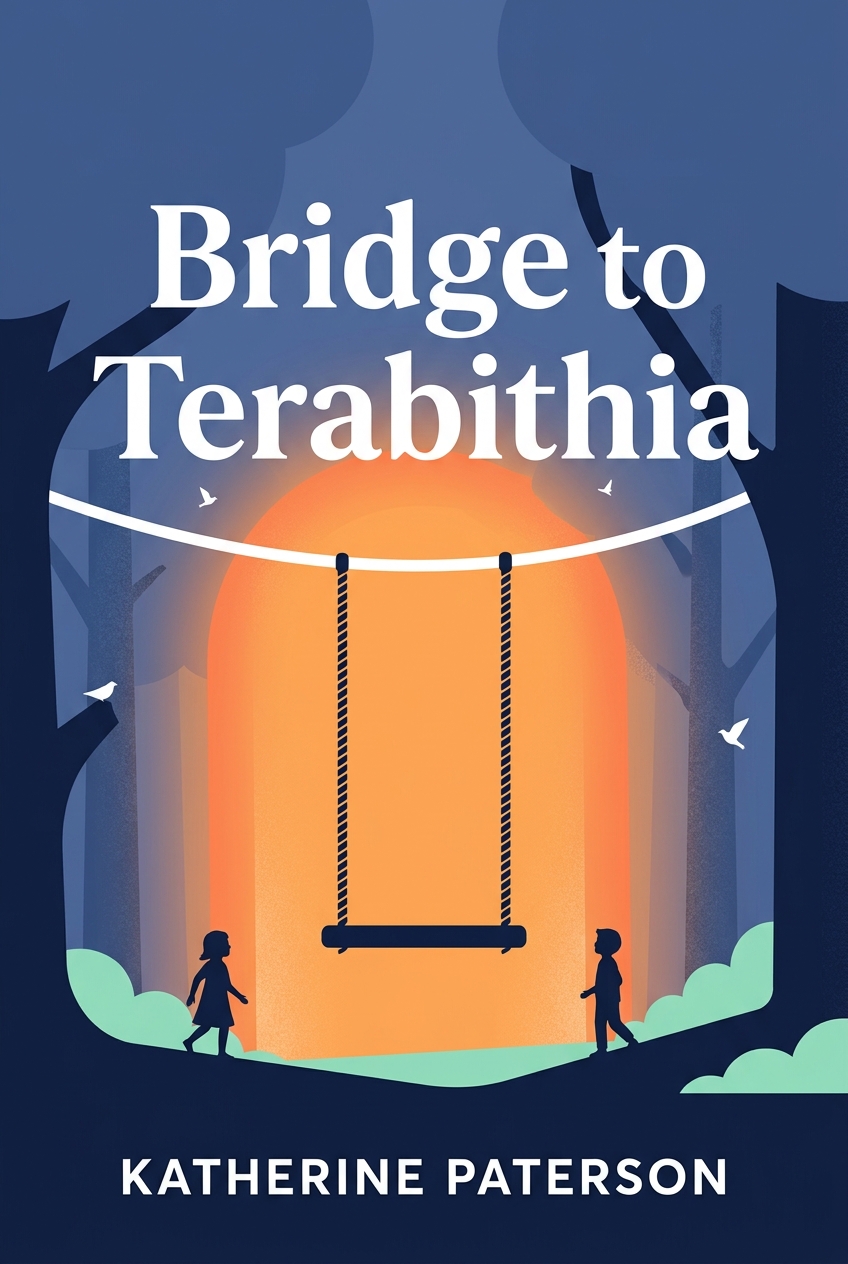
Bridge to Terabithia book cover

The Script

Every childhood has a secret geography, a map drawn with imagination and fierce loyalty. There’s the creek bed that becomes a treacherous canyon, the cluster of trees that transforms into a fortress, the empty field that holds the ruins of a lost civilization. These places are sovereign nations built for two, where the rules of the outside world—of chores, and bullies, and lonely school bus rides—don't apply. Inside these invisible borders, you can be a king or a queen, a warrior, a hero. It’s a world built on a shared whisper, a kingdom that feels more real and infinitely more important than the one you go home to for dinner. But what happens when the real world, with its casual cruelty and finality, breaches those sacred walls? What is left of the magic when one half of the kingdom is suddenly, inexplicably, gone?

This question of how imagination shields us from pain, and what happens when that shield breaks, is at the heart of Katherine Paterson’s work. The story of "Bridge to Terabithia" grew from a devastatingly real event in her own family's life. In the summer of 1974, her son David’s closest friend, an eight-year-old girl named Lisa Hill, was struck and killed by lightning while playing on the beach. Paterson, a minister’s wife and a missionary who had spent her early years in China, was left to help her son navigate an ocean of grief he couldn't comprehend. In an attempt to make sense of the senseless and to build a bridge for her son out of his despair, she began to write. The result was a tribute to the power of a friendship that could create a world strong enough to survive even its own ending.

Module 1: The Architecture of Escape

Every high-performer has a private world. It might be a side project, a creative hobby, or a specific goal that feels entirely your own. For Jess Aarons, the story’s protagonist, this world is built from two things: raw ambition and secret creativity. He lives in a crowded, noisy house where money is tight and attention is even tighter. His escape is about becoming someone else.

First, personal achievement becomes a proxy for identity. Jess is obsessed with becoming the fastest runner in the fifth grade. He believes this victory will transform his entire social standing. He’ll no longer be "that crazy little kid that draws all the time." He’ll be a star. He imagines his distant, hardworking father finally seeing him, pulling him into a playful hug. This ambition is a direct line to the recognition and connection he craves but doesn't receive. It's a powerful reminder that our professional goals are often deeply tied to our personal need for validation.

But running is a public performance. Jess has a second, more private escape. Art serves as a vital refuge for self-expression. He draws fantastical animals and secret worlds. This is something he does for himself, a way to process the stress of his life. He describes drawing as something that "seeps down" through his body like whiskey for an adult. It’s a powerful coping mechanism. And here's the thing: he keeps it secret. His father once dismissed his drawing as something unmanly. His teachers see it as a distraction. So, his most authentic self—the artist—is hidden. This creates a fundamental tension. His public ambition is acceptable, but his private passion is a source of shame.

Finally, we see how imagination is a tool for managing a harsh reality. Jess imagines crowds cheering for him. He talks to the family cow, Miss Bessie, as if she were a friend. He injects creativity into the mundane, lonely chores of his life. This is a sophisticated strategy for maintaining sanity and control in an environment that offers very little of either. For any professional, this is a critical skill: the ability to reframe tedious tasks or difficult environments through the power of your own internal narrative.

Read More