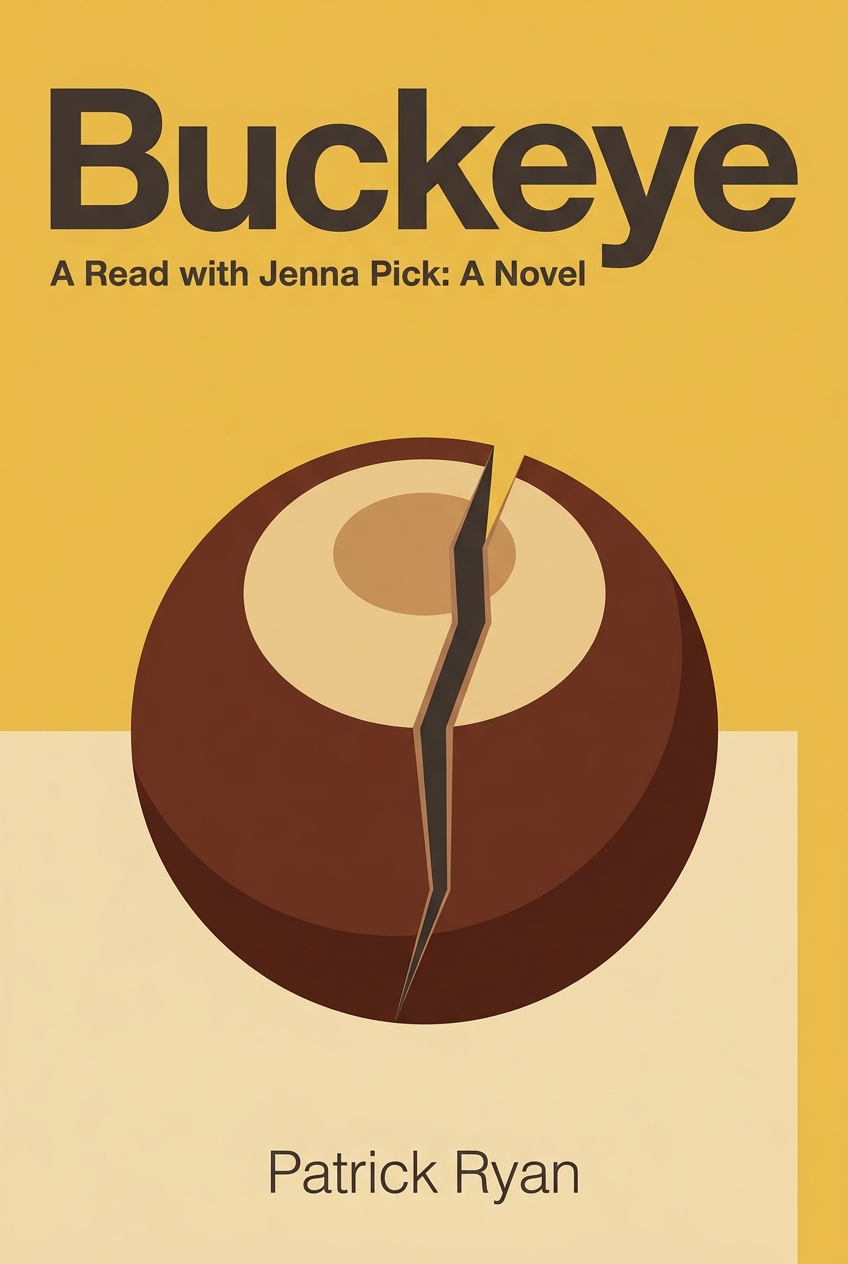
Buckeye
A Read with Jenna Pick: A Novel
What's it about
Ever feel like your life is just a series of awkward moments you're trying to survive? What if you could find the humor and heart in the chaos of growing up? This story shows you how one boy’s offbeat journey through a messy, hilarious adolescence can be surprisingly relatable. Follow along as twelve-year-old Daniel navigates a bewildering world of divorced parents, a new stepdad, and a crush on his best friend’s mom. You'll discover how embracing your own weirdness and finding connection in the most unexpected places can help you not just get by, but truly come into your own.
Meet the author
Patrick Ryan is a recipient of a National Endowment for the Arts fellowship in fiction and the author of three novels, including the Read with Jenna pick, Buckeye. Drawing from his own experiences growing up in a small town, Ryan masterfully captures the complex bonds of family and the bittersweet ache of first love. His work explores the quiet moments that define us, revealing the profound emotions simmering just beneath the surface of everyday life.
Opens the App Store to download Voxbrief

The Script
At the town’s annual Founders Day picnic, there are two distinct competitions happening at the potato sack race. The first is the one everyone sees: kids in burlap bags, hopping and stumbling toward a red ribbon finish line, cheered on by parents with cameras. The winner gets a blue ribbon and their picture in the local paper. But the second competition is invisible, played out in the space between the racers. It’s in the way one father, whose son is in last place, cheers with a desperate, frantic energy, as if this single race holds the power to redeem a year of private failures. It’s in the quiet, knowing glance shared between two mothers whose children are neck-and-neck, a look that communicates a whole history of playground rivalries and shared anxieties. This second race has no finish line and no ribbon; its stakes are the unspoken truths of love, disappointment, and the secret hopes we pin on the people we care about most.
The world of these hidden contests—the quiet dramas unfolding just beneath the surface of ordinary life—is the territory Patrick Ryan has been exploring for his entire career. He grew up surrounded by the unique rhythms of small-town America, observing the ways people navigate the gap between their public roles and their private longings. For years, he collected these moments, the small gestures and unspoken words that reveal more than any grand pronouncement. In Buckeye, Ryan gathers these observations into a series of interconnected stories, creating a portrait of a community through the quiet, deeply human competitions that define the lives within it.
Module 1: The Lottery of Fate and the Search for Purpose
Life often hinges on accidents of birth. A minor physical difference can radically alter a person's path. This is the story of Cal Jenkins. He was born with one leg two inches shorter than the other. This small "deformity" kept him out of World War II. His childhood friend, Sean, was drafted and killed in Germany. Cal stayed home, married, and worked in a hardware store. He was granted a full life by a quirk of fate. And this simple fact haunted him.
This leads to a core idea in the book. When you feel excluded from a defining collective effort, you often begin an anxious search for personal purpose. Cal was not allowed to serve. He couldn't participate in the great struggle of his generation. So he constantly wondered about his "special thing," the purpose his friend Sean once said they were both meant for. This feeling of being left out manifested physically. His limp seemed to worsen on its own. He felt compelled to tell strangers about his leg, as if to justify his presence on the home front. He was a man adrift, looking for meaning in a world that had told him he wasn't needed for its most important task.
Another character, Felix Salt, faces a similar search, but his is internal. He enlists in the Navy during the war to escape himself. Drastic life changes can be a desperate attempt to force personal transformation and find a new identity. Felix felt a disconnect between who he was and who society expected him to be. He saw the military as a "refitting" for his internal gears. A way to reset his life and become the man he thought he should be. Both Cal and Felix were driven by a deep-seated need to find their place, one by being excluded from war, the other by running toward it. This sets the stage for the complex lives they lead back in Bonhomie.
Module 2: The Architecture of Secrets in Marriage and Community
The town of Bonhomie, Ohio, is a character in itself. It's a mosaic of informal neighborhoods. People found their people. Tiller’s Flat for Black and Mexican families. "Vatican City" for the Catholics. These social geographies weren't rigid. They were fluid, organic, and defined by shared identity. But beneath this communal surface, the real architecture of the town was built on secrets.
This brings us to one of the book's most powerful themes: Marital intimacy is destroyed by unspoken truths and mismatched desires. We see two central marriages, both appearing successful on the outside, but hollowed out by what's left unsaid. Cal and Becky Jenkins have a deep affection for each other. Their "common ground was them." But their marriage is slowly eroded by secrets. The biggest one is Cal's affair with Margaret Salt.
In the other marriage, Felix and Margaret Salt build a life on a foundation of lies. Felix marries Margaret to hide his homosexuality, hoping the "right" woman could cure him. Margaret marries Felix for security, hiding her past as an orphan. Their home is beautiful. Their life looks perfect. But Margaret feels a loneliness so profound she could scream. Their intimacy has only "a faint pulse." The need to conform to a societal role can force you to hide your true self, leading to deep internal conflict. Felix lives by a strict set of internal rules. He trains himself not to look at other men. He builds a facade of the perfect husband and employee. This constant performance is exhausting. It creates a chasm between him and his wife.
So what happens next? The pressure builds. The secrets fester. Margaret, starved for desire, begins an affair with Cal. It’s an escape. It’s a way to feel seen. For Cal, the affair is an adventure, a spark in a life he feels has been too quiet. They rationalize their actions. They tell themselves it’s just a physical need, managed responsibly to avoid harming their marriages. But of course, that’s a lie. The affair becomes the central secret that will eventually shatter both families. It’s a stark illustration of how the search for connection outside a broken marriage creates even deeper fractures.