All Books
Self-Growth
Business & Career
Health & Wellness
Society & Culture
Money & Finance
Relationships
Science & Tech
Fiction
Topics
Blog
Download on the App Store

Del amor y otros demonios / Of Love and Other Demons

14 minGabriel García Márquez

What's it about

What happens when a forbidden love, born from a supposed demonic possession, challenges the very foundations of faith and reason? In 18th-century Colombia, a young girl's strange illness after a dog bite ignites a firestorm of superstition, leading her to a convent where her fate becomes entwined with a priest sent to save her soul. Instead of an exorcism, you'll discover a passionate, secret love story that questions everything. Uncover how Gabriel García Márquez uses magical realism to explore the clash between science and religion, the power of collective hysteria, and how love itself can be the most powerful and dangerous "demon" of all. This isn't just a tale of romance; it's a journey into the heart of human obsession and societal madness.

Meet the author

Winner of the 1982 Nobel Prize in Literature, Gabriel García Márquez is celebrated as a colossal figure of 20th-century fiction and a pioneer of magical realism. Raised by his grandparents in a small Colombian town, he absorbed the local folklore, family stories, and superstitions that would later infuse his work. This unique upbringing allowed him to explore the extraordinary within the ordinary, blending historical reality with mythic imagination to create worlds where love, obsession, and miracles intertwine, as seen in this novel.
Listen Now

Opens the App Store to download Voxbrief

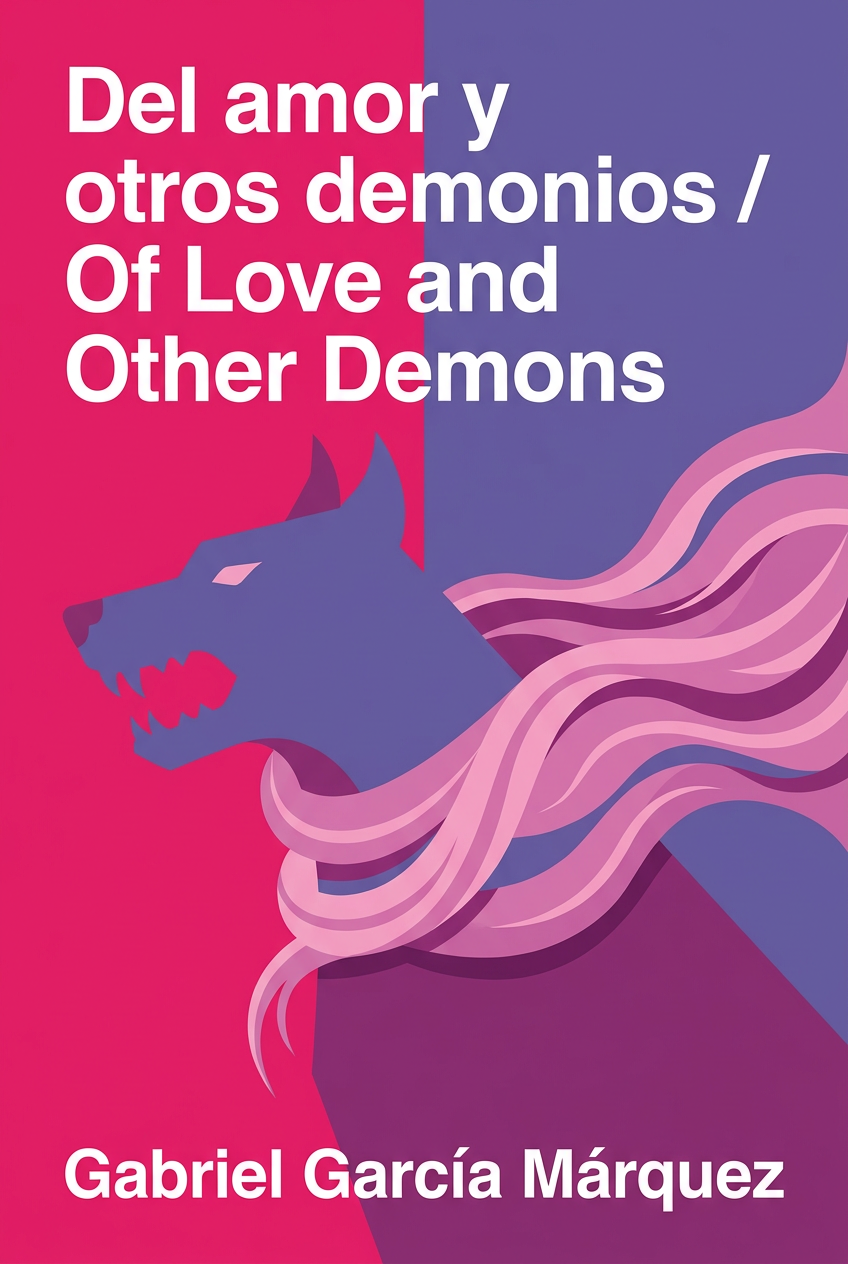
Del amor y otros demonios / Of Love and Other Demons book cover

The Script

In the crumbling port city of Cartagena de Indias, two fevers raged. The first was a physical malady, a contagion that swept through the slave quarters and noble houses alike, leaving a trail of death and terror. The second was a fever of the soul, a contagion of unreason where fervent faith blurred into dark superstition. In this world, a dog bite could be mistaken for a sign of demonic possession, and the boundary between sainthood and madness was as thin and treacherous as a spider’s thread. This was a place where the logic of the Enlightenment clashed with the ancient, visceral beliefs of the land, and where the most terrifying demons were the ones lurking within the human heart: obsession, fear, and a love so absolute it defied all reason.

This very collision of worlds—the rational and the magical, the sacred and the profane—was unearthed by Gabriel García Márquez in 1949. While working as a young reporter, he was sent to cover the emptying of burial crypts in the old Convent of Santa Clara. As workers cleared the tombs, they broke open the sepulcher of a young girl from the colonial era. From her skull, a stream of living copper-colored hair spilled out, measuring an impossible twenty-two meters long. The foreman explained, without surprise, that hair continues to grow after death. For Márquez, this single, astonishing detail—a scientifically impossible event presented as simple fact—was the seed. He didn’t write the story then, but the image of the girl with the miraculous hair never left him, becoming the anchor for a novel that explores how a single, inexplicable event can expose the deepest passions and follies of an entire society.

Module 1: The Collision of Worlds

The story is set in a colonial port city, a place of stark divisions. You have the world of the Spanish aristocrats, governed by the Church and royal decree. Then you have the world of the enslaved Africans, a vibrant, resilient culture with its own languages, gods, and traditions. These two realities exist side-by-side, but they don't truly mix. They collide.

This brings us to the first critical insight. Culture is an operating system for reality. For the young protagonist, Sierva María, this is literally true. Though born to a Spanish Marquis, she is neglected by her parents. She is raised in the slave quarters by Yoruban caregivers. She speaks their languages. She wears the beaded necklaces of their gods, the Orishas. She dances their dances with more grace than they do. In the eyes of her mother, "The only thing white about that child is her color." Sierva María's world is one of syncretic faith, community, and ritual.

But then, a rabid dog bites her. This single event forces her out of her world and into the other. The Spanish colonial world does not see her culture. It sees chaos and heresy. Her knowledge of African languages is seen as the "gibberish of idolaters." Her necklaces are viewed as trinkets of the devil. The Bishop looks at her and sees "unequivocal symptoms of demonic possession."

The conflict is immediate. Institutions diagnose problems based on their own frameworks, not the individual's reality. The Church has a framework for evil: demonic possession. It has a solution: exorcism. They don't have a category for a culturally displaced, terrified child. So, they force her into the category they understand. They strip her of her necklaces, confine her, and try to exorcise the "demons," which are, in fact, her identity. This is a powerful lesson for any organization. When confronted with something unfamiliar—a new market, a disruptive technology, a different way of thinking—the default response is often to pathologize it. To label it as wrong, dangerous, or broken, simply because it doesn't fit the existing model.

So what happens next? The official response is destructive. Neglect and fear create the very monsters they pretend to fight. Sierva María is terrified. Left to her own devices, she might have been fine. But her parents' neglect and the Church's fear-based diagnosis trap her. She is locked away in a convent cell, treated like a creature. The more they treat her like a demon, the more she acts like one. She lashes out. She spits. She uses the only power she has: defiance. The institution’s cure becomes the disease. The prophecy of her demonic nature becomes self-fulfilling, not because it was true, but because the system made it true.

Module 2: The Failure of Reason and the Tyranny of Dogma

Now, let's turn to the figures of authority. You might expect a clear line between the rational and the irrational. But García Márquez shows us it’s much messier. The book introduces two key figures who represent different forms of knowledge: Doctor Abrenuncio and Father Cayetano Delaura.

The first, Doctor Abrenuncio, is a man of science. He is a Jewish intellectual in a fiercely Catholic society, an outsider who relies on empirical observation. When he examines Sierva María, he dismisses the superstitious panic. He sees a frightened child. He tells the Marquis that for a disease like rabies, the most merciful act is often to end the suffering quickly. His advice is pragmatic, cynical, but rooted in a kind of humanism. His ultimate conclusion is profound: "No medicine cures what happiness cannot." He understands the limits of his own knowledge.

This is a crucial point. True expertise acknowledges its own boundaries. Abrenuncio doesn't pretend to have a magical cure. He admits that science, in his time, is helpless against this particular threat. This humility is his strength. It allows him to see the human tragedy unfolding, while everyone else is caught up in supernatural drama.

But flip the coin. We meet Father Cayetano Delaura, the young, brilliant cleric assigned to be Sierva María's exorcist. He is a man of books, a librarian for the Bishop, steeped in religious doctrine. At first, he tries to be rational. He tells the Abbess, "Sometimes we attribute certain things we do not understand to the demon, not thinking they may be things of God that we do not understand." He sees the girl's wounds and treats them with medical care. He tries to apply logic and compassion.

And here's the thing. It doesn't work. His own institution works against him. The Abbess is consumed by "rancor, intolerance, imbecility." She sees Sierva María’s influence in everything from the garden's growth to birds defecating in flight. The official records of the convent, the acta, are filled with hysterical, contradictory claims of the girl flying or turning invisible. Delaura realizes these documents reveal more about the "mentality of the Abbess than the condition of Sierva María."

This leads to a chilling realization. An organization's official records can become tools for reinforcing bias, not discovering truth. The convent is constructing a case. Every action is interpreted through the lens of demonic possession. This is a trap any data-driven organization can fall into. When you only look for evidence that confirms your initial hypothesis, you are no longer conducting analysis. You are performing a ritual. The "data" becomes a weapon to justify a pre-existing belief. The convent’s acta are the 18th-century equivalent of a biased dashboard, designed to prove a point, not to inform a decision.

Read More