All Books
Self-Growth
Business & Career
Health & Wellness
Society & Culture
Money & Finance
Relationships
Science & Tech
Fiction
Topics
Blog
Download on the App Store

Diana

Her True Story--in Her Own Words

12 minAndrew Morton

What's it about

Ever wonder what was really happening behind the palace doors? This is the explosive, first-hand account that shattered the royal fairytale. Get ready to hear Princess Diana’s unfiltered story, revealing the truth about her lonely life, her troubled marriage, and her battle with the monarchy. You'll discover the secret collaboration behind this biography and listen to Diana's own words about her struggles with bulimia, her husband's affair, and the crushing pressures of royal life. This isn't just a biography; it's the testimony that gave a princess her voice back.

Meet the author

Andrew Morton is the celebrated royal biographer whose groundbreaking work, Diana: Her True Story, changed the public's perception of the British monarchy forever. Initially a veteran correspondent covering the royal family, he secretly collaborated with the Princess of Wales, using her own tape-recorded words to reveal the hidden truth of her life. This unprecedented access and courageous reporting established him as a leading authority and trusted voice on the inner world of the royals, a reputation he has maintained for decades.
Listen Now

Opens the App Store to download Voxbrief

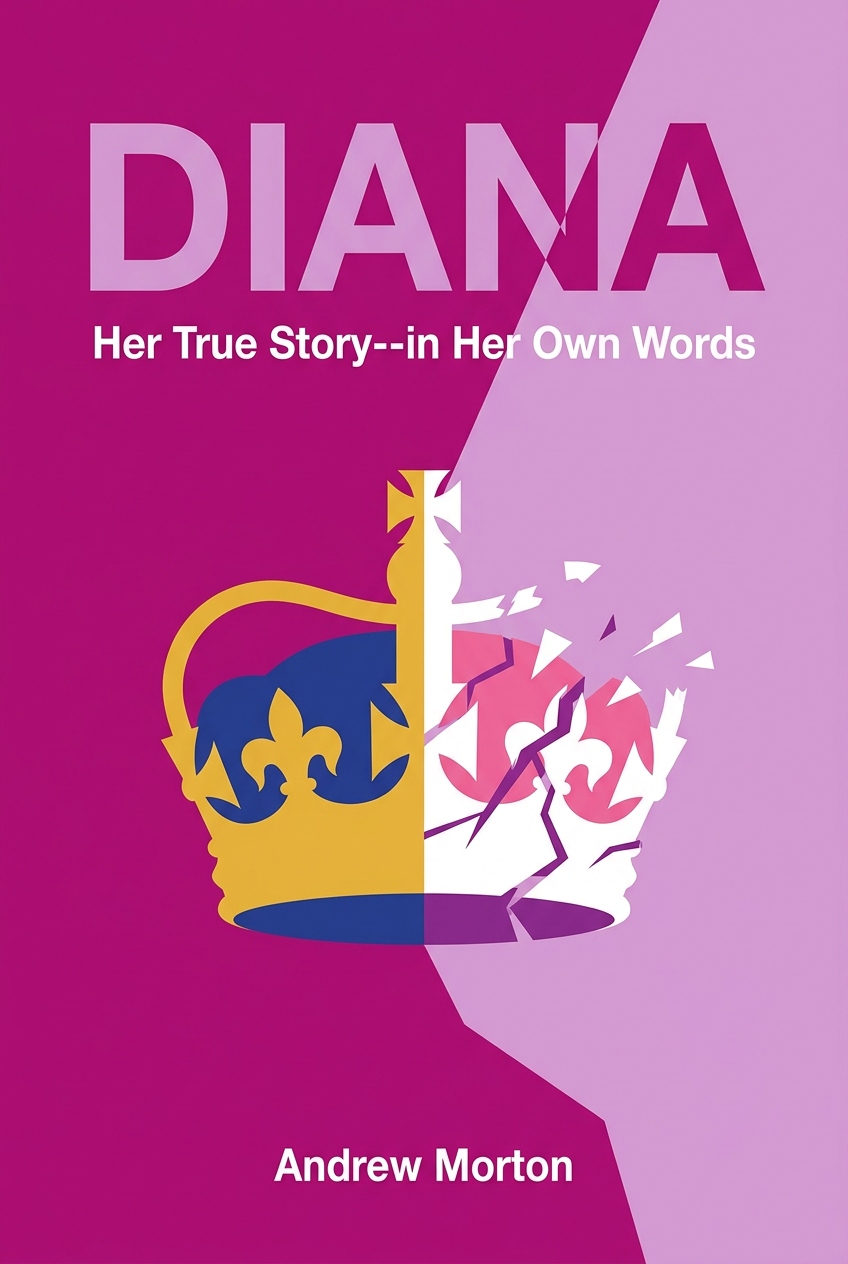
Diana book cover

The Script

In 1991, Whitney Houston delivered a rendition of 'The Star-Spangled Banner' at the Super Bowl that transcended sport and became a cultural landmark. It was a unifying moment of raw, emotional power that felt utterly spontaneous. Yet, behind this seemingly effortless display was a hidden architecture of intense preparation. Houston had pre-recorded the vocal in a studio, meticulously crafting every note and inflection, a decision that allowed her to project pure confidence and connect with millions, unburdened by the technical pressures of a live stadium feed. This gap—between the flawless public image and the complex, often fraught, private reality required to sustain it—is a defining paradox of modern celebrity. We see the icon, but we rarely see the machinery, the secret collaborations, and the personal cost of manufacturing that perfection.

One person was given an unprecedented, secret look behind the curtain of the most famous woman in the world. Andrew Morton, a veteran royal reporter, had spent years observing the monarchy from the outside, documenting the polished facade presented to the public. He understood the official narrative. But then, he received a clandestine invitation to hear the real story from the source herself, not from palace insiders or gossiping courtiers. Through a trusted intermediary, Princess Diana began to share her life story onto secret tapes, smuggling her unfiltered truth out of the palace. Morton found himself as the chosen conduit for a story Diana was desperate to tell, a collaboration that would dismantle the fairy-tale myth and reveal the lonely, complicated reality of the woman within.

Module 1: The Architecture of Unhappiness

Diana's life story is often framed as a fairytale gone wrong. But the book argues the foundation was cracked from the very beginning. Her childhood, despite its material privilege, was a blueprint for emotional distress. A childhood defined by emotional neglect creates deep-seated feelings of rejection. Diana described a world where she wanted for nothing materially but everything emotionally. She craved cuddles and kisses. Instead, she got presents from a toy catalogue. She grew up with the fixed idea that she was a "nuisance," the girl who was supposed to be a boy. This feeling of being unwanted became a core part of her identity.

This leads to a crucial insight. Traumatic family events in youth shape adult emotional responses. The bitter divorce of her parents was a defining trauma. At age six, she vividly remembered her mother driving away, a memory that still triggered feelings of rejection and isolation twenty-five years later. The children became pawns in a custody battle. They were forced to navigate divided loyalties. It’s no coincidence that both Diana and her sister Sarah later suffered from eating disorders, which are often rooted in a malfunctioning family life. Diana herself said her upbringing was "very unstable."

So, what happens next? A person desperate for validation seeks it elsewhere. Acts of service and compassion can become a primary source of self-worth. Diana found her identity in caring for others, not in the classroom, where she struggled. She won a school award for helpfulness. She visited the elderly. She even went to a local mental asylum, an experience she "adored" as an introduction to bigger things. She formed an instinctive rapport with the vulnerable. This work boosted her low self-esteem. It was a pattern that would define her public life: finding purpose by connecting with those who were suffering.

Module 2: The Royal Cage

The courtship and marriage to Prince Charles was an institutional transaction. Diana, naive and just nineteen, stepped into a system that was rigid, cold, and utterly alien. The book makes it clear: The royal system prioritizes institutional continuity over individual happiness. Charles himself saw marriage as a duty, a "much more important business than falling in love." He needed a bride to produce an heir. Diana, with her aristocratic background and perceived innocence, fit the bill. His infamous reply to a reporter's question about being in love—"Whatever ‘love’ means"—was a chillingly honest admission of his pragmatic, loveless approach.

From this foundation, a toxic dynamic was inevitable. A relationship cannot survive when a third person permanently occupies the emotional space between a couple. Camilla Parker Bowles was a constant, looming presence. Diana was obsessed with her, and for good reason. She found a bracelet Charles had made for Camilla just days before their wedding. On their honeymoon, Charles wore cufflinks Camilla had given him. He even told Diana that his father had given him permission to return to his "bachelor habits" after five years if the marriage didn't work. Diana was the third person in her own marriage.

Here’s where it gets darker. The pressure mounted, and Diana's health collapsed. Bulimia nervosa became a secret coping mechanism for a life without control. The illness started the week after her engagement. Charles made a casual comment about her being "a bit chubby." That was the trigger. She found that making herself sick was a "profound release of tension." It was the one thing she could control in a life that was completely controlled by others. She would binge on food and then purge, sometimes four or five times a day. This secret, sophisticated illness allowed her to maintain a public facade of a happy princess while she was privately falling apart.

Read More