All Books
Self-Growth
Business & Career
Health & Wellness
Society & Culture
Money & Finance
Relationships
Science & Tech
Fiction
Topics
Blog
Download on the App Store

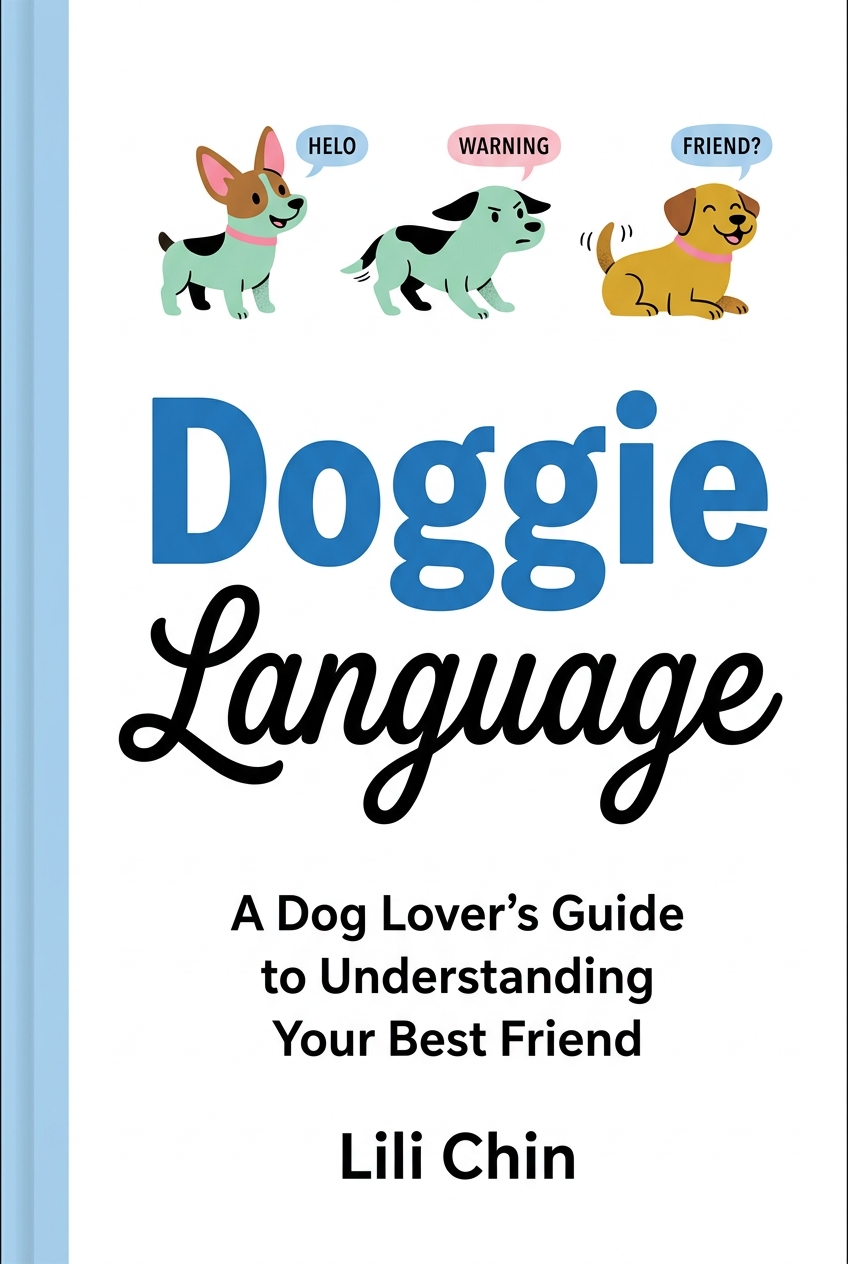
Doggie Language

A Dog Lover's Guide to Understanding Your Best Friend

13 minLili Chin

What's it about

Ever wish your dog could just tell you what they’re thinking? Now they can. This guide decodes the subtle, often-missed signals your dog sends every day, from the flick of an ear to the curve of their tail, so you can finally understand their true feelings and needs. You'll learn to spot the key visual cues that reveal if your dog is stressed, happy, or scared. By mastering the art of "doggie language," you'll build a deeper, more trusting bond and transform your relationship with your best friend from good to truly incredible.

Meet the author

Lili Chin is an internationally recognized artist whose infographics on dog body language are used by veterinary professionals, trainers, and animal welfare advocates in countless countries worldwide. Her unique talent for translating complex animal behavior into clear, charming, and accessible visuals grew from a personal journey to understand her own rescued dog, Boogie. This experience inspired her to dedicate her art to helping people better understand and connect with their beloved canine companions, making her a leading voice in visual pet education.
Listen Now

Opens the App Store to download Voxbrief

Doggie Language book cover

The Script

A professional dog walker clips a leash onto a fluffy golden retriever, ready for their midday stroll. As they head down the block, the dog suddenly freezes, fur bristling slightly along its spine. Its eyes are fixed on a man approaching with a stroller. The dog lets out a low, rumbling growl. The walker, embarrassed, gives the leash a sharp tug and says, “Stop that! Be nice!” She sees a dog being unfriendly. But what if the dog wasn't being rude? What if that freeze, that bristle, that low growl wasn't aggression, but a desperate plea? What if the dog was saying, “I’m scared. That stroller looks strange and loud. Please give me some space.” We often punish our dogs for being ‘bad’ when they are simply trying to tell us they’re overwhelmed, anxious, or afraid, using the only language they have.

This exact communication gap is what drove professional animator and illustrator Lili Chin to create a new set of tools. For years, she worked in entertainment, bringing characters to life on screen. But her own rescue dog, Boogie, presented a different kind of animation challenge. Boogie was fearful and reactive, and Chin struggled to understand what he was trying to tell her. She began drawing simple, clear illustrations to decode his subtle signals for herself—a lip lick, a yawn, a head turn. These personal sketches, designed to bridge the gap with her own anxious companion, soon became a viral phenomenon shared by trainers, vets, and dog lovers worldwide. Realizing how many people were misinterpreting their own dogs, Chin compiled her life's work as an artist and her personal journey with Boogie into “Doggie Language,” creating a visual guide to finally help us understand what our dogs are really saying.

Module 1: The Foundation of Canine Communication

Let's start with a fundamental shift in perspective. We humans are verbal creatures. We use words, tone, and direct eye contact. Dogs are different. They live in a visual world. A dog's primary language is body language. Their posture, their ears, their eyes, their tail—every part of their body is part of a constant, silent conversation. When we focus only on vocalizations, we miss most of what they're trying to tell us.

For instance, a dog yawning isn't always tired. In a veterinary office or during a training session, that yawn is often a "calming signal." It's the dog's way of saying, "I'm feeling a little stressed here." Similarly, a quick lip lick when no food is around is another sign of unease. By recognizing these subtle cues, we can de-escalate a situation before the dog feels overwhelmed.

This leads to a crucial point. To understand a dog, you must observe their whole body in context. A single signal is just one word in a sentence. A wagging tail, for example, doesn't automatically mean "happy." You have to look at the rest of the body. Is the body loose and wiggly? That's a happy wag. Is the body stiff, the tail held high, and the wag short and fast? That's a sign of high arousal, maybe even a warning. The context is just as important. A dog panting after a run is likely just cooling down. But a dog panting in a crowded room with a tense face and wide eyes is likely anxious.

And here's the thing about our human habits. They don't always translate well. Direct, sustained eye contact is often impolite in the dog world. While we've trained dogs to look at us, in their natural interactions, a hard stare is a challenge. It's confrontational. When a dog is relaxed and comfortable, it will offer "soft eyes." The eyes are almond-shaped, the brow is smooth, and their gaze is indirect. This is a sign of trust and peace. If you see a dog giving you a hard, fixed stare with a tight mouth, they're not being stubborn. They're communicating concern or annoyance. They're asking for space.

Read More