All Books
Self-Growth
Business & Career
Health & Wellness
Society & Culture
Money & Finance
Relationships
Science & Tech
Fiction
Topics
Blog
Download on the App Store

Dope Sick

A Powerful Young Adult Novel of Drugs, Violence, and Second Chances

12 minWalter Dean Myers

What's it about

Ever felt trapped by a bad decision, desperate for a do-over? This gripping story throws you into the life of a teen whose world implodes after a drug deal goes wrong. Discover how one moment can change everything and what it truly takes to get a second chance. You'll follow Lil J as he's cornered by police and a mysterious stranger who offers him a choice: face the consequences or relive his past mistakes to understand where he went wrong. This isn't just a story about drugs and violence; it’s a powerful look at redemption, personal responsibility, and finding the strength to escape your own self-made prison.

Meet the author

Walter Dean Myers was the third National Ambassador for Young People's Literature, a testament to his profound impact on a generation of readers. Growing up in Harlem, he witnessed firsthand the struggles and resilience of his community, experiences that gave him an unparalleled understanding of the challenges facing urban youth. His own turbulent adolescence, including dropping out of high school, fueled his passion for writing authentic stories like Dope Sick, offering hope and a voice to teens navigating difficult circumstances.
Listen Now

Opens the App Store to download Voxbrief

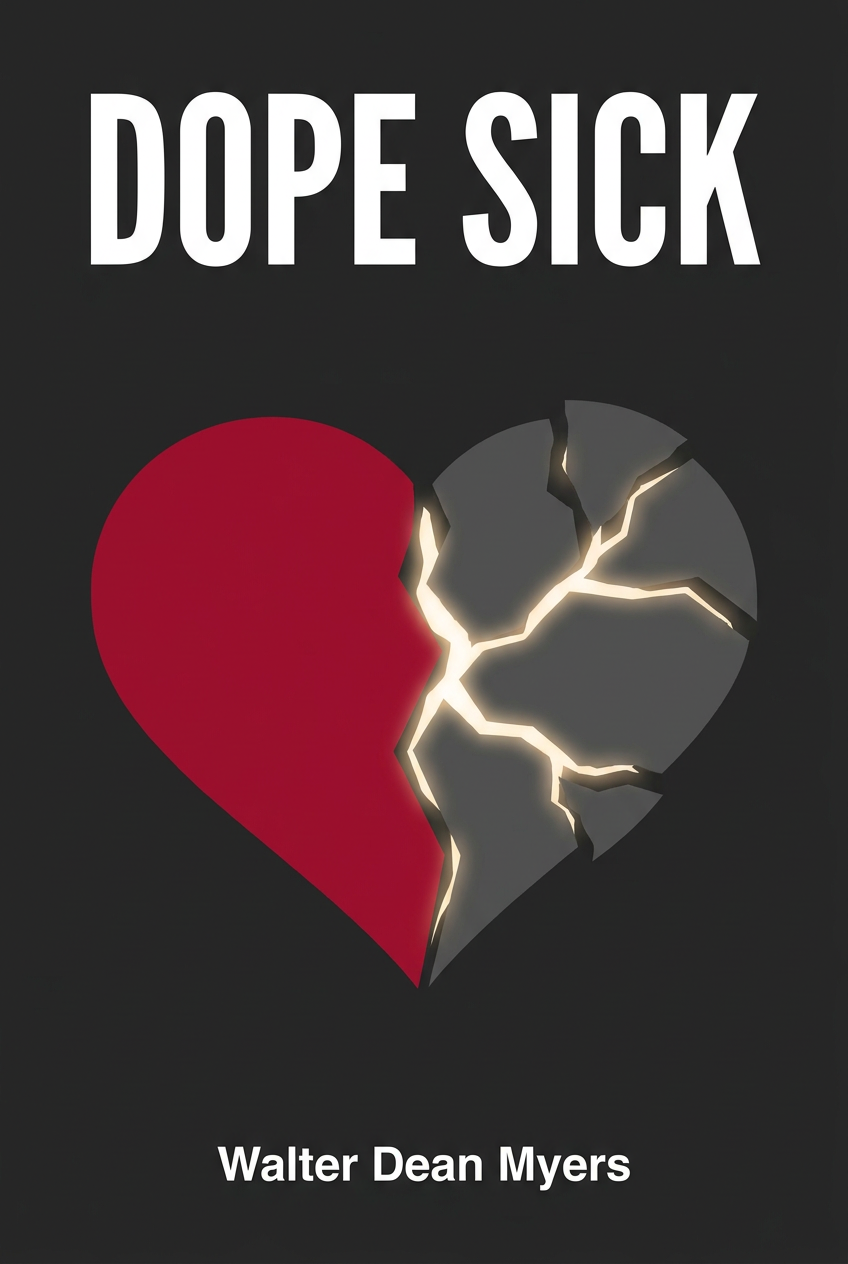
Dope Sick book cover

The Script

A kid lies on the pavement, the metallic taste of blood filling his mouth, a siren wailing somewhere in the distance. His whole world has shrunk to the searing pain in his hip and the concrete scraping his cheek. He made a choice—a fast, dumb choice—and now this is the end. Or is it? A stranger appears, not a paramedic or a cop, but someone who seems to have stepped out of the bleed between one moment and the next. The stranger doesn’t offer a bandage or a ride to the hospital. He offers a choice: keep bleeding out on the asphalt, or stand up and walk back through the moments that brought you here. This is a chance to feel them again—the shame, the fear, the flicker of hope—and finally understand why that single, stupid decision felt like the only one you could make.

This is the impossible second chance that Walter Dean Myers gives his protagonist, Lil J. Myers, a celebrated author who grew up in Harlem, spent his life writing for and about young people navigating treacherous circumstances. He saw how easily a single bad turn, often fueled by desperation or a yearning for respect, could become a life sentence. He wrote Dope Sick as a visceral, street-level exploration of the moment a life hangs in the balance. It was his way of grabbing a kid by the shoulders, right on that pavement, and showing him that even when you think the story is over, there might be one more page left to turn.

Module 1: The Anatomy of "Broke Sick"

The story begins with a powerful idea. Being broke makes you sick, too. This is a psychological state of chronic desperation that grinds you down.

Lil J describes himself as "broke sick." This is a profound feeling of hopelessness that comes from seeing no way out. We see him meticulously prepare for a job interview at Home Depot. He buys a new shirt, leaving him with almost no money. He plans to lie about his age. He has a fake GED certificate ready. This is a desperate attempt to join the legitimate world. But when he arrives, the line for just a handful of jobs is impossibly long. The hope instantly evaporates. That feeling of defeat, that physical sickness in his stomach, is being "broke sick." The first core insight is that economic despair is a physical and psychological illness. It creates a constant, low-grade panic that clouds judgment and makes long-term planning feel impossible.

So what happens when the legitimate path feels like a dead end? This leads to the next point. The illicit economy is a pragmatic, if dangerous, alternative when all other doors are closed. Immediately after the Home Depot failure, Lil J calls Rico, a known drug dealer. He needs money, now. Not for luxuries, but for survival and to help his ailing mother. He rationalizes the choice. A quick drug run will earn him $150. That money will give him the breathing room to try for another real job, to show up to an interview feeling confident, not desperate. This reveals a critical aspect of his mindset. He sees crime as a short-term tool to achieve a legitimate goal. This is a common and dangerous rationalization. The temporary fix often becomes a permanent trap.

And here's the thing. This desperation is deeply tied to family. Lil J is trying to save his mother. She's sick, relying on painkillers, and losing her will. His dream is modest. He wants a decent apartment for them, a steady job, and to escape the feeling of being "broke sick." He feels a crushing sense of responsibility. This reveals that the pressure to provide for loved ones can be a powerful driver toward high-risk choices. His love for his mother, a noble emotion, becomes entangled with the logic of the streets. He needs to get her out of their situation, and if the straight path is blocked, the crooked one starts to look like the only one available. It's a tragic cycle where the desire to do good leads to doing something very wrong.

Module 2: The Logic of Addiction and Escape

Now, let's turn to the other sickness in the book: being "dope sick." Myers presents addiction as a desperate flight from pain. It's a coping mechanism for a reality that has become unbearable.

Lil J's drug use is directly linked to his feelings of failure and inadequacy. He tells his mysterious guide, Kelly, that he uses drugs because he feels weaker than other people. He feels crushed by a psychological "load" he can't carry. The drugs just make the weight feel lighter for a little while. This is a crucial distinction. Addiction is often a symptom of untreated pain, not the root cause of a person's problems. After a humiliating encounter with his girlfriend's mother, or after realizing he can't afford an apartment, his first impulse is to get high. The emotional pain triggers the physical craving. It's a cycle. The failure creates pain, the pain demands an escape, and the escape leads to more failure.

From this foundation, we see how addiction creates a warped sense of control. Lil J engages in self-deception to manage his own self-image. He tells himself he's not a real addict. He "skin-pops," injecting under the skin, because he believes it's safer than injecting into a vein. He tells himself he doesn't mix drugs and business. But these are just rules he constantly breaks. The addict’s mind builds a framework of rationalizations to maintain the illusion of control. He needs to believe he is choosing to use, not that he is compelled to use. This denial is what allows the addiction to deepen. He can see the addiction in his friend Rico clearly, but he refuses to see the same patterns in himself.

But flip the coin. While drugs offer an escape from internal pain, they amplify external danger. The world of street-level drug dealing operates on a razor's edge of paranoia and violence. Lil J is constantly calculating risks. He worries about Rico using too much of the product. He's suspicious of the undercover cop who doesn't look like a real addict. He knows the brutal reputation of their supplier, Dusty. The illicit world has its own strict, pragmatic rules, and breaking them has immediate and severe consequences. The very act of participating in this world requires a heightened state of vigilance that is mentally and emotionally exhausting. The escape that drugs promise comes at the cost of living in a state of constant, low-grade fear. It’s a terrible trade-off.

Read More