All Books
Self-Growth
Business & Career
Health & Wellness
Society & Culture
Money & Finance
Relationships
Science & Tech
Fiction
Topics
Blog
Download on the App Store

Dune

14 minFrank Herbert, Scott Brick

What's it about

Ever wondered how to turn a seemingly barren wasteland into a source of immense power? Discover the secrets to mastering any environment, no matter how hostile, and learn to wield influence so powerful it can shape the destiny of an entire universe. This summary of Dune reveals the strategies used by House Atreides to navigate the treacherous desert planet of Arrakis. You'll learn how to leverage scarce resources, understand deep-seated cultural traditions to your advantage, and cultivate a prescient awareness to anticipate your rivals' every move, turning adversity into your ultimate weapon.

Meet the author

Frank Herbert was an award-winning journalist and visionary author whose seminal masterpiece, Dune, won the inaugural Nebula Award and the Hugo Award, establishing it as a cornerstone of science fiction. His background in journalism, ecology, and politics fueled his creation of a richly detailed universe, exploring complex themes of power, religion, and humanity's future. Scott Brick is an acclaimed narrator who has brought hundreds of books to life, earning multiple Audie Awards and a dedicated following for his immersive storytelling.
Listen Now
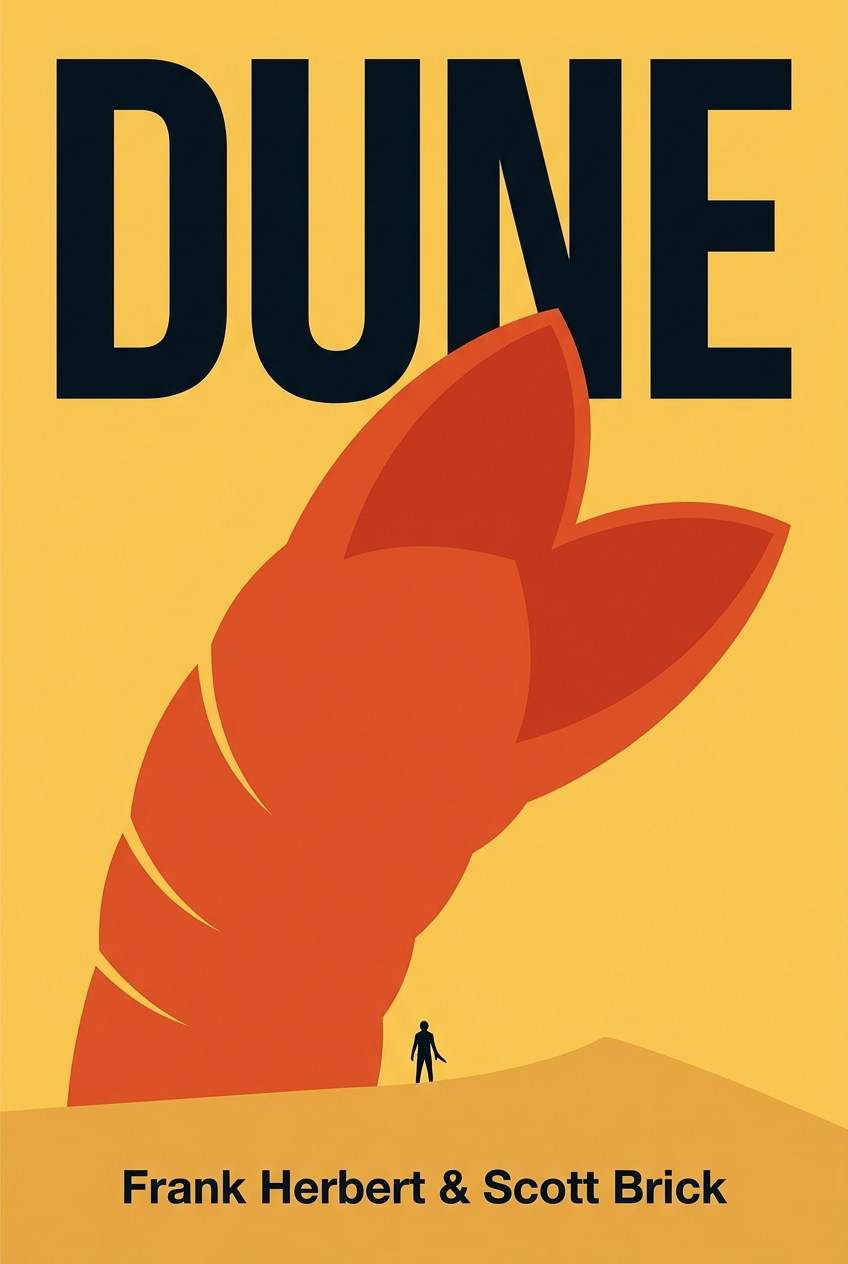
Dune book cover

The Script

A master vintner walks through two nearly identical vineyards. They share the same soil, the same sun, the same ancient grape varietials. Yet one produces a wine that is merely good, while the other yields a vintage of legendary complexity. The difference lies in the unseen pressures applied over generations. The vintner from the legendary vineyard knows that true greatness is forged through controlled hardship: carefully restricted water, exposure to wind, and a delicate balance of struggle and survival that forces the vines to dig deeper, to concentrate their essence, and to produce something transcendent. Comfort creates competence; adversity, when strategically channeled, creates dynasties.

This same principle—that entire civilizations, like grape vines, can be cultivated for greatness through carefully orchestrated struggle—was the seed of a story that began to sprout in the mind of a journalist named Frank Herbert. While researching a story in the 1950s, he became fascinated by a government project using poverty grasses to stabilize the shifting Oregon Dunes. He saw how a seemingly barren landscape could be transformed, and a question took root: what if an entire ecosystem, and the people within it, were part of a vast, multi-generational breeding program? Herbert, a writer with a deep interest in ecology, power, and the long arc of human history, spent the next six years meticulously cultivating this idea. He layered it with complex political structures, ecological principles, and religious prophecy to explore how humanity might evolve when pushed to its absolute limits, not for a season, but for millennia.

Module 1: Forging the Vision

The creation of Dune was a battle on two fronts. One was against the blank page. The other was against an industry that didn't understand his vision. Herbert’s early letters and drafts reveal a creator wrestling with massive ideas and the commercial pressures to shrink them.

His initial concept was a much simpler adventure story. It was called "Spice Planet." This early outline contains familiar echoes. There's a desert world, a valuable spice, and warring noble houses. But the core themes are different. The story focuses on decadence and drug addiction, a far cry from the grand ecological and political saga we know. The characters are prototypes. Jesse Linkam is the blueprint for Duke Leto. Valdemar Hoskanner is the early Baron Harkonnen. But key elements, like the Fremen's water-saving walk or Paul's prescient abilities, are missing. Herbert's first critical move was to abandon a marketable idea for a more meaningful one. He shelved "Spice Planet" because his vision had outgrown it. He knew the story needed to be bigger.

Next came the struggle with his editor, John W. Campbell, Jr. Campbell was a giant in science fiction. He championed Dune but also pushed back on its core concepts. He argued that Paul Atreides's prescient powers made him too powerful, removing narrative tension. Herbert responded with a five-page philosophical defense. He explained that Paul's vision was a trap. Paul could see possible futures, but he was often powerless to change the terrible path humanity was on. This reveals a core principle: protect your central theme, even from expert advice. Herbert refused to compromise on the philosophical heart of his story. He understood that the burden of knowledge was the real drama.

And here’s the thing. This commitment came at a cost. The final manuscript was nearly 200,000 words. This was triple the length of a typical science fiction novel at the time. Publisher after publisher said no. His own agent, Lurton Blassingame, was worried. But Herbert's belief was unshakable. In a letter, he insisted the book would be a moneymaker for whoever took the risk. His journey teaches a powerful lesson in creative conviction: believe in the work when no one else does. Eventually, a small publisher known for auto repair manuals, Chilton Books, took a chance. Its editor, Sterling Lanier, saw what others missed. The rest is history.

Read More