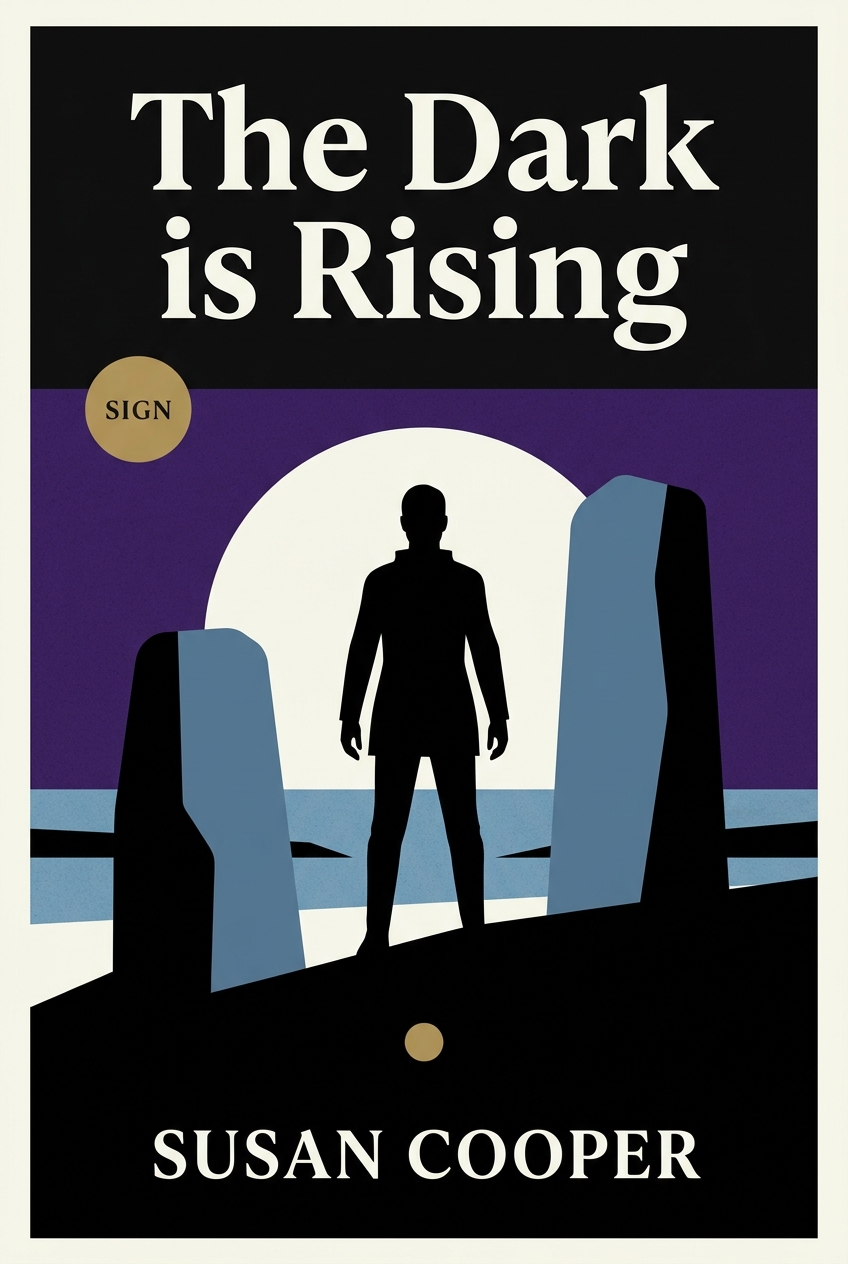
The Dark is Rising
What's it about
Ever felt like there's a hidden power inside you, waiting to be unleashed? Imagine discovering you're not just an ordinary kid but the key to saving the world from an ancient, rising evil. That's the sudden reality for Will Stanton on his eleventh birthday. This is your chance to join Will as he's thrust into a timeless battle between the Light and the Dark. You'll journey with him to master incredible powers, find six magical Signs, and face terrifying forces. Learn how an ordinary boy accepts an extraordinary destiny and becomes a hero.
Meet the author
Susan Cooper is a Newbery Medalist and one of the most distinguished fantasy authors of her generation, celebrated for her masterful blend of mythology and modern adventure. Born in England, she grew up surrounded by the ancient landscapes and legends that would later inspire The Dark Is Rising sequence. Her deep connection to Celtic and Arthurian lore, combined with a profound understanding of the timeless battle between good and evil, infuses her work with a unique power and enduring relevance for readers of all ages.
Opens the App Store to download Voxbrief

The Script
The silence on a boy’s eleventh birthday should be one of anticipation, not dread. It should be filled with the rustle of wrapping paper and the low murmur of a family waking up, not the unnatural quiet of a world holding its breath. For Will Stanton, the youngest of nine children, his birthday arrives with a strange and chilling stillness instead of celebration. The animals on the farm are frozen with fear. The very air has grown heavy and cold, thick with an ancient power that seems to be calling his name. He feels a pressure building, an awareness dawning that he is a key turning in a lock that has been sealed for centuries. This is the unsettling recognition that the familiar world of family, chores, and the English countryside is just a thin veil over a much older, darker reality.
This feeling—of ancient forces stirring just beneath the surface of the everyday—is what drove author Susan Cooper to write The Dark is Rising. Growing up in England during World War II, Cooper experienced firsthand how an ordinary world could be suddenly invaded by a vast, impersonal, and terrifying darkness. She saw how the familiar landscapes of home could become battlegrounds overnight. Years later, after moving to the United States and becoming an established author, she channeled that childhood memory of encroaching shadow into a timeless myth. Cooper, a scholar of English literature with a deep love for folklore and history, wanted to create a story that captured the epic struggle between Light and Dark as something that could awaken in your own village, on your own birthday.
Module 1: The World as a Barometer
Before our hero, Will Stanton, even knows who he is, the world around him is already screaming a warning. The narrative opens by showing us that nature is a highly sensitive instrument, reacting with fear and agitation to the rising pressure of supernatural forces. This is the first major insight. The natural world is a barometer for unseen conflicts.
Think about the animals in the story. The rabbits in Will’s care aren't just restless; they are terrified, cringing with a primal fear directed specifically at him. The rooks in the nearby wood are in a frenzy. They create a deafening, chaotic chorus and launch a violent, uncharacteristic attack on a mysterious stranger. This is a direct reaction to the growing power of the Dark and the awakening power within Will himself. As one character notes, animals can sense these things. The dog that once greeted Will with a wagging tail now snarls at him. This is a powerful signal. When the natural order is disturbed, it’s a sign that a deeper, more fundamental order is also in peril.
Building on that idea, the weather becomes an active character in the story. The sky is a uniform, oppressive grey, holding back snow that refuses to fall. There’s a persistent, ominous mood. This is a tangible manifestation of the conflict. The Dark uses the environment as a weapon. Later, an unnatural, catastrophic blizzard paralyzes the country. It is a strategic move by the Dark to isolate its enemies and sow chaos. This principle is immediately applicable. Pay attention to systemic anomalies and disturbances. In a project, a team, or a market, small, unusual signs of stress or fear are often the first indicators of a larger, unseen problem. Don't dismiss them as isolated incidents. Look for the pattern.
And here's the thing. While the world is in turmoil, Will is the only one who truly perceives it. His family rationalizes away the strange events. His brother James forgets the rook attack almost immediately, his memory neatly wiped. But Will remembers. He feels a profound, creeping dread that no one else shares. This leads to a critical point. True awareness often leads to isolation. Will is marked. The animals fear him. He feels the weight of the coming storm in his bones. This unique sensitivity sets him apart, making him feel profoundly alone even in his bustling family home. For anyone in a leadership role, this is a familiar feeling. Seeing a threat or an opportunity that others don't can be isolating. Your job is to understand that feeling as a signal that you are seeing something true.
Module 2: The Burden of Innate Power
On his eleventh birthday, Will awakens to a new reality. The world he knew is gone, replaced by an ancient, timeless forest. He isn't a normal boy anymore. He is an Old One, the last of an ancient line of guardians. This awakening is a profound burden. Merriman Lyon, his mentor, tells him plainly: "Any great gift or power or talent is a burden... and you must serve it." This reveals a core truth of the book: Innate power is a compulsory duty.
Will doesn't choose this destiny. He is born to it. His power awakens uncontrollably at first. He causes electronic disturbances and frightens animals without meaning to. He has to learn to control it, to move from unconscious effect to deliberate command. Merriman guides him in a simple exercise: extinguishing and relighting the great hall fire with his will alone. This is the first step in mastering a power that he will often long to be free of. The lesson here is direct. If you have a significant talent—for coding, for strategy, for leadership—it comes with a non-negotiable responsibility. You have a duty to cultivate it, control it, and apply it with intention.
This brings us to the source of true knowledge. Will is given the Book of Gramarye. Gramarye is an old word for magic, but here it means the deep, foundational knowledge of the Old Ones. Reading this book is an experiential immersion. True learning is transformational. When Will reads the line "I have journeyed as an eagle," he becomes one. He feels the wind in his wings, understands the mechanics of flight, and gains the eagle's innate knowledge—including which birds can see the Dark. He learns the specific magics of oak and ash by becoming part of the forest. He learns the secrets of the cosmos by flying among the stars.
This kind of knowledge is about embodying principles. It's the difference between reading a book on management theory and actually leading a team through a crisis. The experience itself is the teacher. The book implants the knowledge directly into his being, making it a permanent part of him. So what does this mean for us? Seek out experiences that force you to embody the skills you want to learn. Don't just read about difficult conversations; have them. Don't just study strategy; build something and test it in the market.
Finally, this journey from innocence to awareness is marked by a deep sense of separation. After reading the Book of Gramarye, Will feels as if he has lived for a hundred years. He is weighed down, melancholy. He realizes he now inhabits a different timescale from everyone he loves. This is the ultimate burden of his power. Mastery creates a profound and often painful distance from the ordinary world. He is no longer just a boy. He is a guardian, and that role comes with a perpetual, formless longing for the simple connection he has lost. This is a sober reminder that as you gain expertise and responsibility, you will inevitably see the world differently from those around you. That distance is a necessary cost of the role you have accepted.