All Books
Self-Growth
Business & Career
Health & Wellness
Society & Culture
Money & Finance
Relationships
Science & Tech
Fiction
Topics
Blog
Download on the App Store

Every Last Lie

A Thrilling Suspense Novel from the author of Local Woman Missing

15 minMary Kubica

What's it about

How well do you really know the person you married? When Clara's husband dies in a tragic car accident, she's left with a newborn daughter and a mountain of grief. But as the official story starts to unravel, she begins to suspect his death was no accident at all. You'll follow Clara down a rabbit hole of secrets and deception as she questions everything she thought she knew about her husband and their perfect life. Was he the loving family man he appeared to be, or was he hiding a dark, dangerous side? Uncover the shocking truth, one terrifying lie at a time.

Meet the author

Mary Kubica is a New York Times and USA Today bestselling author of gripping suspense novels, with her breakout hit The Good Girl selling over two million copies worldwide. A former high school history teacher, Kubica now channels her passion for exploring human nature and complex relationships into crafting chilling, unpredictable thrillers that keep readers guessing. Her stories are known for their deep psychological insights and characters who feel unnervingly real, making her a master of domestic suspense.
Listen Now

Opens the App Store to download Voxbrief

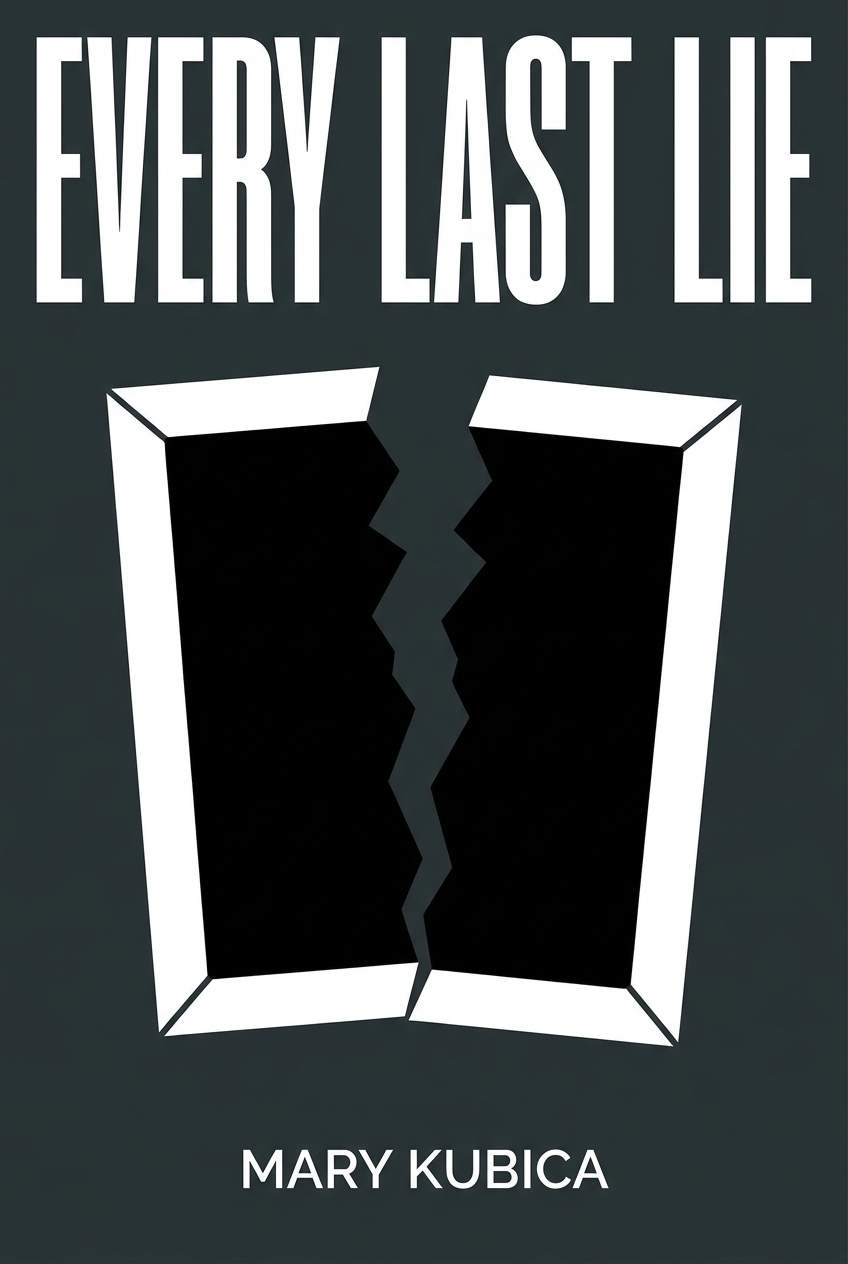
Every Last Lie book cover

The Script

The official story arrives first, clean and clinical. A single-car accident on a rain-slicked road. A tragic, unavoidable loss. It’s the version printed in the local paper, the one neighbors whisper with sad, sympathetic eyes. It’s a neat box, sealed with the authority of a police report. But then, a flicker. A detail that doesn’t fit. Her husband, a man who loathed the scent of mint, had a pack of mint gum in his pocket. It’s a tiny, insignificant crack in the smooth facade of the official story, but once noticed, it’s impossible to ignore. Soon, other cracks appear: a cryptic text message, a name she doesn’t recognize, a receipt from a place he had no reason to be.

The tidy box of the official story begins to splinter. The woman is left holding the pieces, each one sharp and contradictory. One piece says he was a devoted husband, another suggests a secret life. One says it was a random accident, another hints at a deliberate act. Her grief, once a simple, overwhelming wave, becomes a confusing labyrinth. She is no longer just a widow; she is an investigator in the wreckage of her own life, forced to question everything she thought she knew about the man she loved, and to confront the terrifying possibility that the most dangerous lie is the one she’s been living.

This chilling exploration of a marriage's hidden depths comes from Mary Kubica, a former high school history teacher who became a master of domestic suspense. Kubica found herself fascinated by the idea of how well we can truly know the people closest to us. She was drawn to the unsettling truth that the person sleeping next to you might be a stranger, their life a carefully constructed narrative. With a background in shaping historical stories, she turned her attention to the small, private histories of a family, crafting a story that peels back the layers of a seemingly perfect life to reveal the dark secrets—and every last lie—hidden beneath.

Module 1: The Anatomy of Sudden Loss

The story opens on what seems like a normal evening. Clara Solberg is at home with her newborn son, Felix. She’s physically exhausted from childbirth, sitting on an ice pack, waiting for her husband, Nick, to return with their four-year-old daughter, Maisie. Their last conversation was about Chinese food versus Mexican food. It’s a trivial, everyday moment. Then, the doorbell rings. A police officer stands on her porch. Nick and Maisie were in a car accident. Nick is dead.

This jarring transition from the mundane to the catastrophic is central to the book's power. It forces us to confront a difficult truth. Life's stability is an illusion we maintain moment to moment. Kubica details the ordinary scenes right before the crash. Nick helps Maisie with her ballet shoes. He reminds her to use the bathroom. These are small acts of parental love, rendered heartbreaking in retrospect. The official report is clinical. The sun was in Nick’s eyes. He was driving too fast on a sharp turn. A simple, tragic accident.

But for Clara, this explanation is impossible to accept. Her grief-stricken mind immediately begins to search for a reason, a narrative, something to control in an uncontrollable situation. This leads to the first major psychological theme. In the absence of clear answers, the grieving mind will invent its own. Clara latches onto the dinner order. If only she had asked for Mexican food, she thinks, Nick would have taken a different route. He would be alive. This irrational self-blame is a desperate attempt to find causality in chaos. It’s a way of asserting some form of agency, however misguided, over a devastatingly random event.

And here's where it gets complicated. Clara's grief is a volatile, contradictory state. One moment, she’s “soused in sadness,” unable to do more than watch cartoons with Maisie. The next, she’s furious. She’s angry at Nick for his "lead foot." She’s angry at the running shoes he left by the door. She’s even angry at herself for her initial, disbelieving reaction when the police officer arrived. This emotional whirlwind is a core insight. Grief is a chaotic cycle of anger, denial, and sorrow. Kubica portrays this as a fundamental part of the human response to trauma. It’s the mind trying, and failing, to process the unthinkable.

Module 2: The Unreliable Child Witness

Now, let's turn to the most compelling twist in the early narrative: the child. While Clara is drowning in her grief, her daughter Maisie seems physically fine. She eats a lollipop at the hospital, oblivious to the fact that her father is gone. Her innocence is a painful contrast to Clara’s knowledge. But Maisie’s trauma is just hidden.

This introduces a critical element of the story. A child's trauma often manifests in ways adults cannot easily interpret. During a hospital announcement, Maisie suddenly becomes terrified. "He's here," she cries. "He followed us here." Later, she wakes from a nightmare, screaming about a "bad man" who was "in a car" and was "following" them. Clara initially dismisses this. She thinks it's a monster from a cartoon. But Maisie's terror is too real, too visceral. It plants a seed of doubt. Was the crash really an accident?

This is where the official narrative begins to fray. The police, the news, everyone tells Clara that Nick died because he was speeding. But Maisie's fragmented, terrified words suggest another vehicle was involved. This presents Clara with a terrible choice. Does she trust the authorities and their cold, hard facts? Or does she trust the fractured memories of her traumatized four-year-old?

So here's what that means for the plot. Clara, desperate for an explanation that isn't just "Nick was reckless," latches onto Maisie's words. The search for a villain becomes a coping mechanism for unbearable loss. Clara begins her own investigation. She starts to believe Nick was murdered. This quest gives her a purpose beyond just surviving her grief. It transforms her from a passive victim into an active detective. However, her investigation is built on a foundation of sand. She is relying on the testimony of a child who can’t distinguish fantasy from reality. Maisie later talks about seeing an "elephant" in the trees, forcing Clara—and the reader—to constantly question the validity of her claims. Is Maisie a key witness, or is her trauma simply producing frightening fantasies?

Read More