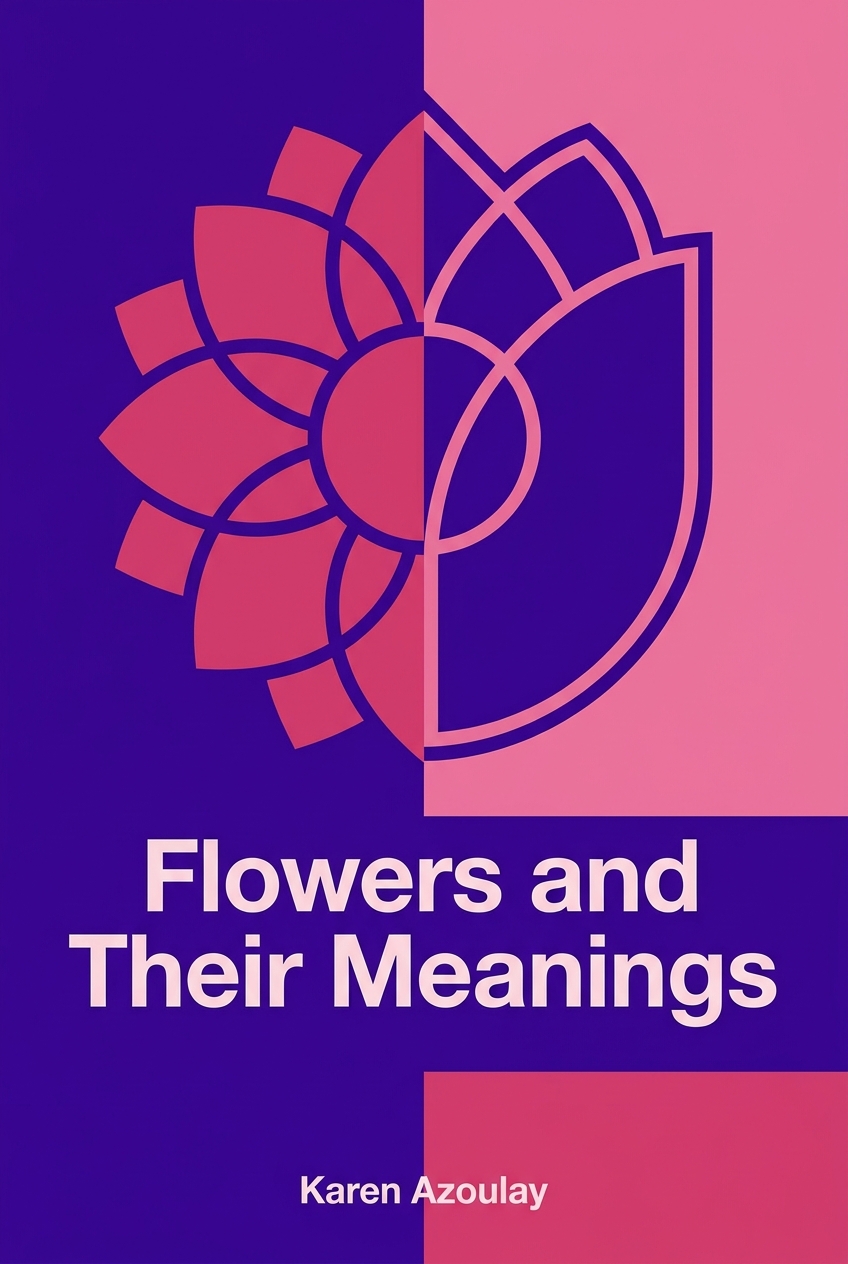
Flowers and Their Meanings
The Secret Language and History of Over 600 Blooms (A Flower Dictionary)
What's it about
Ever wonder what secrets your bouquet is telling? Unlock the hidden language of flowers and learn to communicate your deepest feelings without saying a word. This guide makes it easy to choose the perfect bloom for any occasion, from a first date to a heartfelt apology. You'll discover the rich history and symbolism behind over 600 flowers, from the passionate red rose to the humble violet. Learn how Victorians used floriography to send coded messages and how you can use this timeless art to add layers of meaning to your gifts, gardens, and events.
Meet the author
Karen Azoulay is a celebrated artist and author whose work has been featured in The New York Times, Vogue, and Martha Stewart, establishing her as a leading voice on floral symbolism. Her lifelong fascination with floriography, the secret language of flowers, began in her grandmother’s garden and blossomed into a deep artistic and historical exploration. This unique blend of personal passion and professional acclaim allows her to reveal the rich, hidden stories behind every bloom, connecting us to the powerful meanings they hold.
Opens the App Store to download Voxbrief

The Script
In the nineteenth century, a suitor might have sent his beloved a small bouquet, a tussie-mussie, that held an entire conversation. A sprig of red salvia could declare, ‘I’m thinking of you,’ while a sprig of mint offered a compliment on her virtue. If she returned a yellow carnation, the message was clear and brutal: ‘You have disappointed me.’ This silent, coded language, known as floriography, allowed Victorians to express feelings too bold for their buttoned-up society. Every petal, every color, every combination was a carefully chosen word in a dialogue of desire, regret, or devotion. The gesture was a secret whispered in plain sight, a way to navigate the complex social landscape with nuance and grace.
That lost art of floral communication fascinated artist and author Karen Azoulay. While researching historical symbolism for her own visual art, she kept stumbling upon these intricate floral dictionaries. She realized that while we still give flowers, we’ve lost the vocabulary. We’ve forgotten how to speak this rich, emotional language. Azoulay, whose work often explores historical ephemera and hidden meanings, embarked on a project to revive this tradition for a modern audience. She wanted to create a book that was an invitation—a chance to rediscover the power of a simple bloom to convey our deepest feelings when words fall short.
Module 1: The Secret Social Network of the 19th Century
The Victorian era is often remembered for its strict social codes. Especially for women. But beneath the surface, a vibrant, covert communication network was thriving. This network was floriography. It was a language of rebellion and identity.
First, floriography was a socially-sanctioned tool for emotional expression. For teenage girls, it was a way to navigate the confusing world of emotions. They used floral dictionaries to craft bouquets with hidden meanings. This allowed them to explore their identities and feelings safely. For example, the author Mary Ann Evans, who later took the pen name George Eliot, used a floral dictionary with her friends. They gave each other code names. Evans signed her letters as "Clematis," which meant "mental beauty." It was a secret nod to her intellectual identity, long before she became a literary giant.
This leads us to a second point. This coded language was a powerful tool for romance and subversion. Young lovers could communicate under the watchful eyes of chaperones. A bouquet of everlasting pea, night convolvulus, and forget-me-nots sent a clear message: "Meet me tonight; do not forget." This was a way to reclaim agency in a world that offered very little. And it wasn't just for the young. Queen Victoria, a master of floriography, chose orange blossoms for her wedding crown. They signified chastity and fertility. She also included a sprig of myrtle, the emblem of love. Every British royal wedding bouquet since has included myrtle from her garden.
But flip the coin, and you see a darker side. This floral language could also convey discontent and betrayal. Princess Diana's 1981 wedding bouquet was a masterclass in this. It included ivy for marriage and gardenias for joy. But it also contained two yellow roses. In the language of flowers, yellow roses mean jealousy and infidelity. It was a silent, public complaint hidden in plain sight. This practice of embedding regret and sorrow in floral arrangements is ancient. In Harry Potter, Professor Snape asks Harry about asphodel and wormwood. Asphodel means "my regrets will follow you to the grave." Wormwood means "absence" and "bitter sorrow." Together, they form a hidden sentence: "I bitterly regret Lily's death."
So what happens next? This secret language was part of a larger pattern of feminine-coded linguistic innovation. Throughout history, young women have pioneered new ways to communicate. Think of the "Valley girl" use of the word "like" in the 1980s. It was dismissed as frivolous. But linguists now recognize it as a sophisticated tool for paraphrasing and reinforcement. It's now a permanent feature of modern speech. Floriography, like emoji chains today, allowed for sincere emotional expression without feeling overly vulnerable. These systems, often created by young women, push language forward, even when they are initially underestimated.
We've covered how floriography worked as a social tool. Now, let's explore its deeper historical roots.