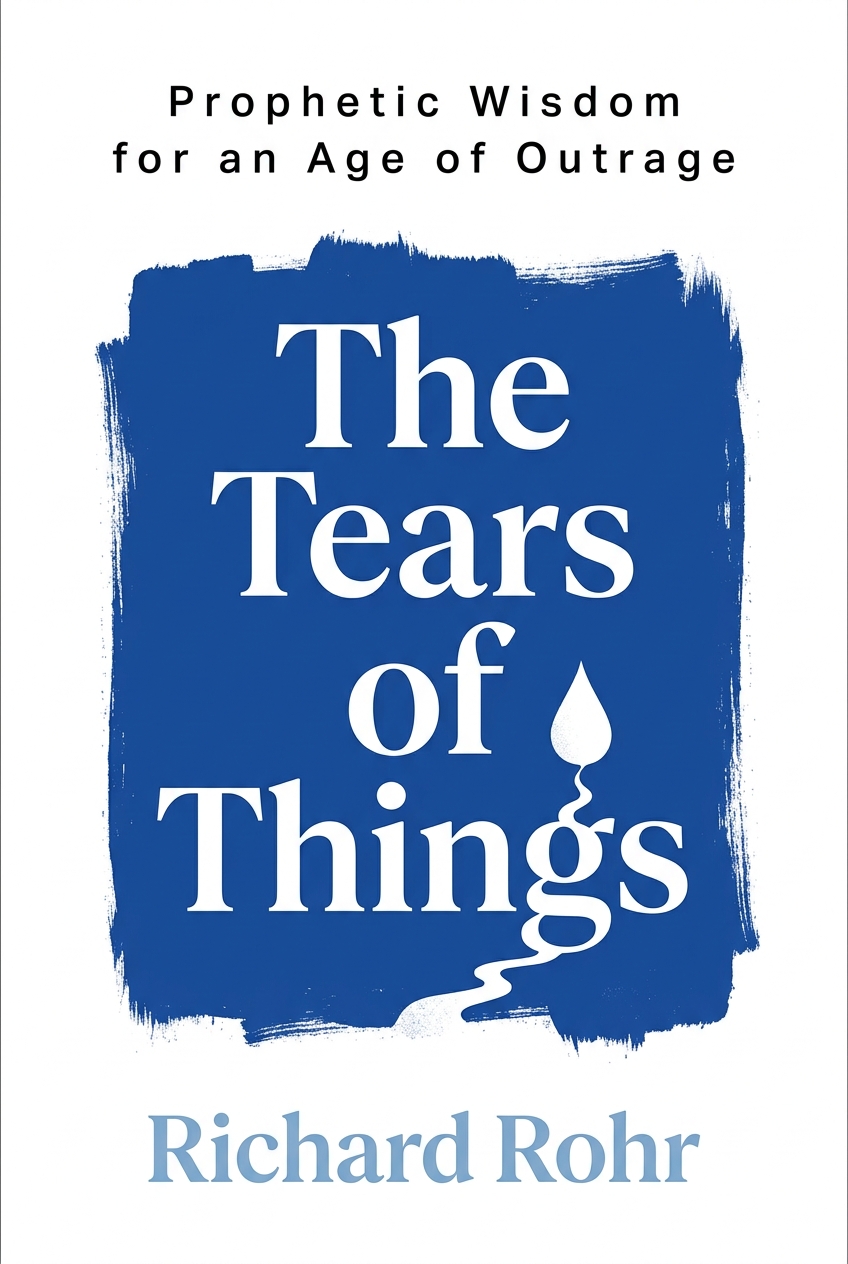
The Tears of Things
Prophetic Wisdom for an Age of Outrage
What's it about
Feeling overwhelmed by the constant outrage and division in the world? Discover a path to find peace, purpose, and profound wisdom amidst the chaos. Learn how to transform your frustration into a powerful force for compassion and genuine change, starting from within. Richard Rohr's The Tears of Things reveals how to see the world through a prophetic lens. You'll uncover how embracing grief and lament, rather than anger, can unlock deep spiritual insight and connect you to a more just and loving reality, moving beyond surface-level reactions to find true hope.
Meet the author
Richard Rohr is a globally recognized spiritual teacher and Franciscan friar, renowned for his work as founder of the Center for Action and Contemplation. Drawing from decades of contemplative practice and pastoral ministry, he confronts the divisions of our time with a compassionate, non-dual perspective. Rohr's unique ability to blend Christian mysticism, perennial wisdom, and psychological insight offers a prophetic path forward, guiding readers from outrage and polarization toward profound reconciliation and a deeper connection with the divine.
Opens the App Store to download Voxbrief

The Script
We believe our greatest spiritual moments happen on the mountaintop—in times of clarity, victory, and ecstatic joy. We chase these highs, assuming they are the primary source of growth and connection to the divine. But what if the inverse is true? What if the moments that truly shape us, that break us open to something larger than ourselves, are found in failure? It’s a strange proposition: that our deepest, most painful losses—the job we didn’t get, the relationship that ended, the dream that died—are the spiritual path itself. This perspective suggests that holiness is achieved by walking directly through suffering, by allowing our failures and disappointments to become our most profound teachers.
This is the challenging territory explored by Richard Rohr in his book, The Tears of Things. For decades, as a Franciscan friar and globally recognized spiritual teacher, Rohr has guided countless people through the landscapes of faith and doubt. He noticed a persistent pattern: people were desperately trying to be perfect, to ascend, to win at spirituality. They saw their stumbles and sorrows as evidence of their inadequacy. Rohr wrote this book to offer a different way, one rooted in the ancient wisdom of the Christian contemplative tradition. He argues that it is in the 'tears of things,' in the very brokenness of life, that we find an unexpected and universal grace that perfection could never offer.
Module 1: The Prophetic Journey from Anger to Tears
Most of us think of prophets as angry, bearded men calling down fire and brimstone. Rohr suggests this is only the starting point. The true prophetic journey is an emotional and spiritual evolution. It begins with righteous anger, but it cannot end there.
The first stage is a necessary, virtuous anger at injustice. Think of the prophet Amos condemning the elite who "lie on ivory beds" while the poor suffer. This anger is a powerful motivator. It sees a problem and demands change. But remaining in a state of rage is spiritually immature. It leads to burnout, bitterness, and a dualistic "us versus them" worldview. So, what happens next? The prophet must move from anger into sadness. True spiritual maturity requires transforming anger into deep, empathetic sadness.
This sadness is a profound, shared grief for the brokenness of the world. Rohr introduces a Latin phrase, lacrimae rerum, which means "the tears of things." This captures a dual reality. There is sadness in things, an inherent tragedy in life. And there is sadness for things, our compassionate response to that tragedy. Jesus weeping over Jerusalem is a perfect model of this divine empathy. He is heartbroken by the city's blindness. This "way of tears" is the antidote to judgmentalism. As Rohr notes, "It is hard to be on the attack when you are weeping."
Building on that idea, this journey is a profound spiritual practice. Lamentation is the gateway to an adult faith that can hold paradox and suffering. Many of us are taught a childish faith. It's transactional. If you are good, God will reward you. If you are bad, you will be punished. The prophets challenge this. They show that life is filled with undeserved suffering and unearned grace. Embracing this reality requires a heart softened by tears, not hardened by certainty.
And here's the thing: this process changes the weeper first. Anger wants to punish the other. Sadness, however, transforms the self. It creates a space for forgiveness—not just for others, but for reality itself. It's an acceptance of the world's imperfection. This is why the prophet Ezekiel, when commanded to eat a scroll filled with "lamentations, weeping, and moanings," finds it tastes "sweet as honey." He has internalized the world's bitterness and transformed it into nourishing truth. This is the goal. You must transform your pain, or you will transmit it.
Module 2: The Cycle of Order, Disorder, and Reorder
So, if the prophetic journey involves embracing sadness and disruption, how does this actually create positive change? Rohr presents a powerful three-stage pattern for all healthy growth. It’s a cycle of Order, Disorder, and Reorder.
First, we live in Order. This is the "first half of life" task. We build structures, rules, identities, and careers. We create stability. This is good and necessary. Priests are the guardians of this Order. They maintain rituals, traditions, and orthodoxy. But any system of Order, if left unchallenged, becomes rigid and corrupt. It starts to serve itself instead of its original purpose. People begin confusing the rules with the goal.
This is where the prophet introduces Disorder. Specifically, "holy disorder." Holy disorder is the necessary disruption that exposes the flaws and falsehoods of a rigid system. It’s the truth that destabilizes a comfortable lie. Think of the Babylonian conquest of Israel. It was a devastating "disorder" that shattered their national pride and sense of divine favor. But it forced them to re-evaluate their entire relationship with God. It led to a profound spiritual renewal. On a smaller scale, this could be the whistle-blower exposing corporate fraud or a loved one challenging a family's unspoken prejudices. This is what the activist John Lewis called "good trouble."
From this foundation, we can see that disorder is a fertile, transitional space. True growth must pass through the crucible of disorder. You can't skip this step. Trying to go straight from Order to a new Order is just rearranging the deck chairs. You need the deconstruction that Disorder provides to see what's truly broken. A rule-follower has to experience a situation where the rules utterly fail before they can find a more flexible, wisdom-based approach.
Consequently, after passing through disorder, we arrive at Reorder. This is a new, higher level of consciousness. The Reordered state is more inclusive, less violent, and more compassionate. It has integrated the wisdom of both the initial Order and the disruptive Disorder. The person or institution that emerges is more humble and more resilient. For example, after the "disorder" of the Civil Rights Movement, American society moved toward a "reorder" with greater, though still imperfect, racial justice. The ultimate goal of the prophet is to guide people through this entire cycle, from a stable but flawed Order, through the necessary pain of Disorder, into a more loving and just Reorder.