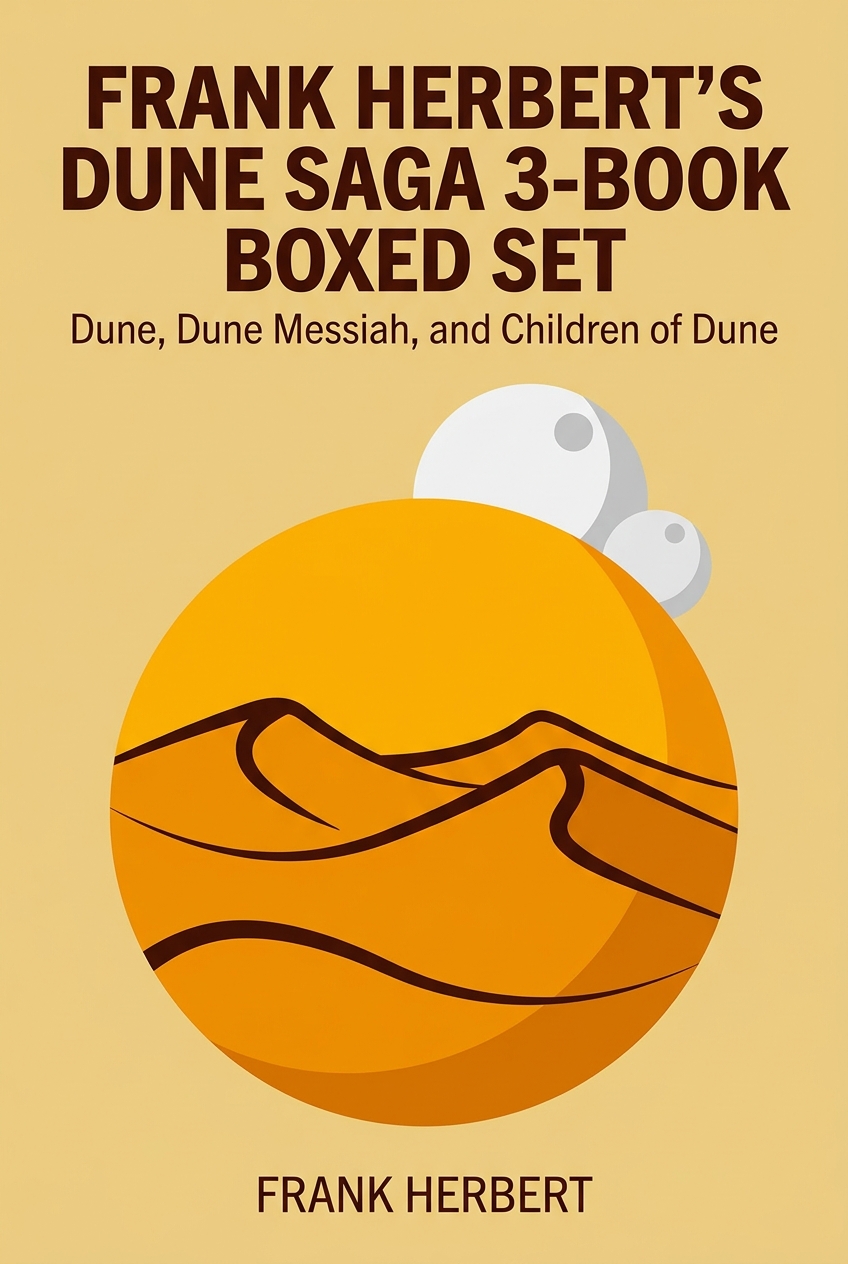
Frank Herbert's Dune Saga 3-Book Boxed Set
Dune, Dune Messiah, and Children of Dune
What's it about
Ever wonder how to seize power and build a legacy that spans generations? Discover the secrets to political mastery, strategic foresight, and inspiring unwavering loyalty. This isn't just a story; it's a blueprint for outmaneuvering rivals and transforming your vision into an empire. You'll learn how Paul Atreides weaponized a planet's ecology and its people's faith to overthrow an emperor. Then, you'll see how his children grappled with the immense burden of his power, navigating treacherous plots and personal sacrifice to secure humanity's future against extinction. This saga reveals the true cost of becoming a legend.
Meet the author
Frank Herbert was a visionary American author whose landmark 1965 novel, Dune, won the inaugural Nebula Award and tied for the Hugo Award, establishing him as a master of science fiction. Drawing from his background as a journalist and his deep interest in ecology, politics, and religion, Herbert spent years meticulously crafting a universe that explored the complex interplay between human society and its environment. His profound world-building and philosophical depth created a timeless saga that continues to captivate readers and shape the genre.
What's it about
Ever wonder how to seize power and build a legacy that spans generations? Discover the secrets to political mastery, strategic foresight, and inspiring unwavering loyalty. This isn't just a story; it's a blueprint for outmaneuvering rivals and transforming your vision into an empire. You'll learn how Paul Atreides weaponized a planet's ecology and its people's faith to overthrow an emperor. Then, you'll see how his children grappled with the immense burden of his power, navigating treacherous plots and personal sacrifice to secure humanity's future against extinction. This saga reveals the true cost of becoming a legend.
Meet the author
Frank Herbert was a visionary American author whose landmark 1965 novel, Dune, won the inaugural Nebula Award and tied for the Hugo Award, establishing him as a master of science fiction. Drawing from his background as a journalist and his deep interest in ecology, politics, and religion, Herbert spent years meticulously crafting a universe that explored the complex interplay between human society and its environment. His profound world-building and philosophical depth created a timeless saga that continues to captivate readers and shape the genre.
The Script
You've reached the end of the free preview.