All Books
Self-Growth
Business & Career
Health & Wellness
Society & Culture
Money & Finance
Relationships
Science & Tech
Fiction
Topics
Blog
Download on the App Store

Gandolfini

Jim, Tony, and the Life of a Legend

13 minJason Bailey

What's it about

Ever wonder what made Tony Soprano so captivatingly real? Uncover the man behind the legend and learn how James Gandolfini’s own life, struggles, and intense dedication blurred the lines between actor and character, forever changing television and the way we see antiheroes. You'll discover the untold stories from the set of The Sopranos and beyond, exploring Gandolfini's unique acting methods and the personal demons he channeled into his iconic role. This is the definitive look at the complex, brilliant, and deeply human artist who became a cultural phenomenon.

Meet the author

Jason Bailey is a film historian and critic whose work has appeared in The New York Times, Vulture, and The Guardian, and the author of several books on film. His deep dive into cinema history and pop culture provided the unique perspective needed to explore the complex, parallel lives of James Gandolfini and his iconic character, Tony Soprano. Bailey's expertise allows him to untangle the man from the myth, offering a definitive look at a cultural legend and the role that defined him.
Listen Now

Opens the App Store to download Voxbrief

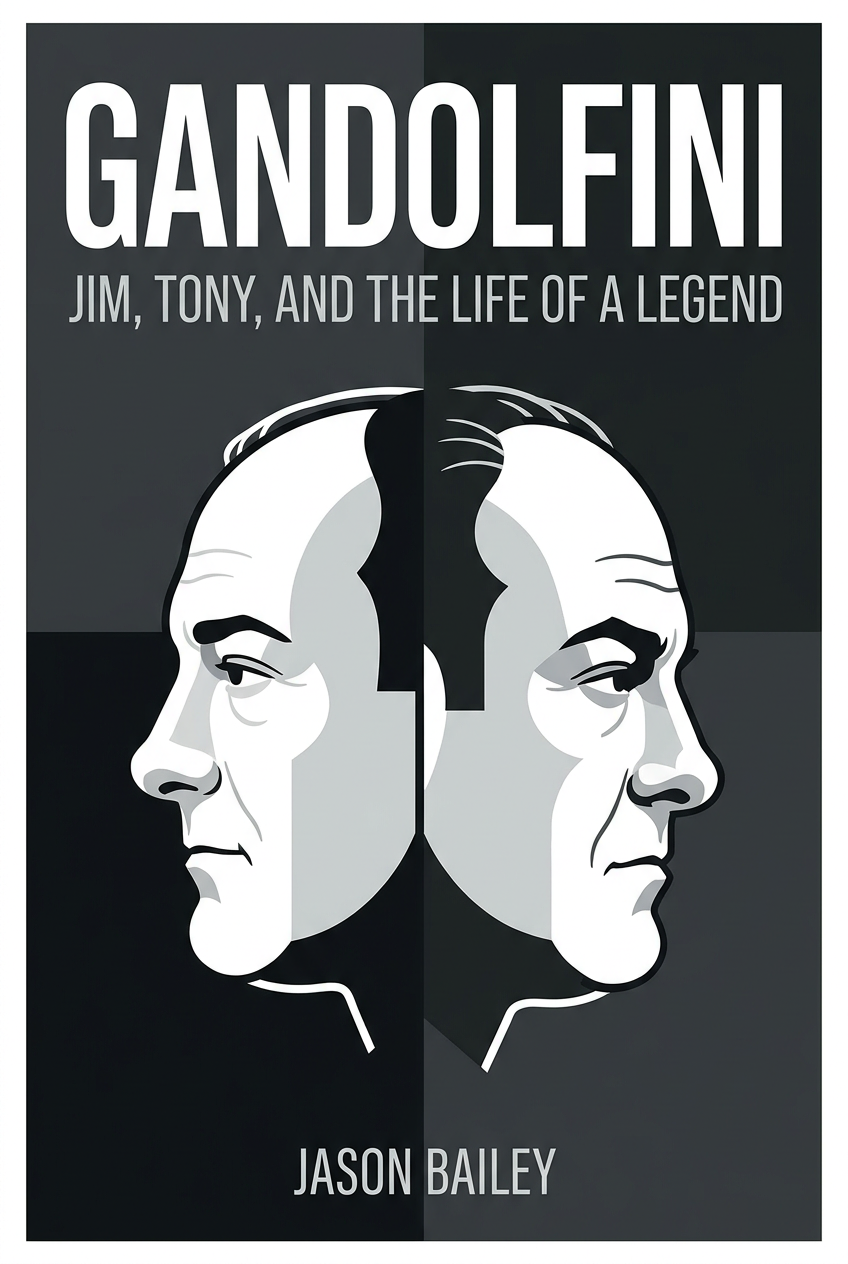
Gandolfini book cover

The Script

In a diner booth, sometime after midnight, a man orders coffee. He is large, a physical presence that seems to shrink the space around him, yet his movements are contained, almost delicate. The waitress knows his face, of course—everyone does—but tonight, he is just another customer nursing a cup, lost in the hum of the fluorescent lights. He’s spent the day on set, inhabiting a character whose rage and vulnerability have become a cultural fixation. The role is a magnet, drawing out parts of himself he’d rather keep buried, amplifying them under scorching lights until the line between the performance and the man begins to blur. The director yells cut, the crew disperses, but the echo of the character follows him out of the studio, a shadow that sits beside him in the car and settles into this quiet booth. He takes a sip of coffee, the heat a small, grounding anchor in a sea of emotional turbulence. He is, in this moment, both a household name and a complete stranger, wrestling with the ghost he brings to life for a living.

This profound, often painful, duality at the heart of James Gandolfini’s life is what fascinated film critic and author Jason Bailey. For years, Bailey had watched Gandolfini on screen, recognizing that the actor's most iconic performances were complex, soul-baring excavations. He saw a man whose immense talent was inextricably linked to his personal struggles, a dynamic that was celebrated on screen but took a heavy toll off of it. Bailey, whose work frequently explores the intersection of art and artist for publications like The New York Times and Vulture, felt compelled to look beyond the mythology of Tony Soprano. He wanted to understand the craft, the cost, and the quiet humanity of the man who gave the world one of its most unforgettable characters, revealing how the very qualities that made Gandolfini a brilliant actor also made his life a constant, heart-wrenching battle.

Module 1: The Reluctant Star and the Burden of Tony Soprano

James Gandolfini never sought fame. He stumbled into acting and approached it with the grit of a blue-collar worker, not the ambition of a movie star. This fundamental reluctance shaped his entire career, especially after he landed the role that would define him. The book reveals a man in constant conflict with the persona he so brilliantly created.

His early life in Park Ridge, New Jersey, was deeply normal. His father was a bricklayer and school custodian. His mother worked in a school cafeteria. This working-class, Italian-American upbringing instilled in him a powerful sense of loyalty and a deep-seated suspicion of bullshit. He viewed acting as a "hobby," not a serious career path for someone from his background. It was only after the tragic death of his girlfriend, Lynn Marie Jacobson, that he committed to acting. He saw it as a way to process a world that suddenly felt chaotic and unjust. This origin story is crucial. It shows that Gandolfini's art was born from pain.

This internal conflict intensified with the colossal success of The Sopranos. Gandolfini was intensely private. He actively resisted interviews and public exposure. He believed that the more people saw "James Gandolfini," the less they would believe in Tony Soprano. He wanted the work to speak for itself. But the media frenzy was relentless. Tabloids chronicled his every move, blurring the line between the actor and the character. Upon his death, the New York Post headline was simply "TONY SOPRANO DEAD." This constant conflation was a source of deep frustration for him.

Furthermore, the role itself was an immense psychological weight. To access Tony's rage and despair, Gandolfini employed intense Method techniques. He would walk around with a rock in his shoe to maintain irritation. He would deprive himself of sleep. He would listen to angry music. His co-star Edie Falco noted that his commitment was so total, it was a "form of suicide." The authenticity that made Tony Soprano unforgettable came at a tremendous personal cost to Gandolfini. He frequently threatened to quit the show from sheer emotional and physical exhaustion. He felt trapped by the character's darkness.

Ultimately, Gandolfini's career illustrates a powerful tension. He was a character actor who became an unwilling movie star. He used the breaks from The Sopranos to take on wildly different roles. He played a gay hitman in The Mexican, a meek prison warden in The Last Castle, and a gentle romantic lead in Enough Said. These choices were deliberate attempts to prove his range and escape the "mob guy" box. He knew the cautionary tales of actors like Telly Savalas, forever defined by one role. He fought hard to remain an artist, not just an icon.

Module 2: The Gandolfini Method: Craft, Collaboration, and Generosity

While the world saw a natural, almost effortless performance, Gandolfini's work was the product of a meticulous and often grueling process. He was an actor who built his characters from the ground up, brick by brick. His approach, which could be called the "Gandolfini Method," rested on three pillars: relentless preparation, radical collaboration, and profound generosity.

First, let's look at his preparation. Gandolfini was his own harshest critic. He was plagued by self-doubt, often calling his managers before a shoot to suggest other actors who would be better for the part. This insecurity fueled an obsessive work ethic. For The Sopranos, he worked tirelessly with his dialogue coach, Susan Aston. They would break down scripts late into the night, filling journals with notes on Tony's inner life. He memorized his voluminous lines using a handwritten flashcard system. Gandolfini's genius was earned through disciplined, exhaustive work. He believed external details unlocked a character's internal world. For the HBO film Cinema Verite, he fixated on getting the character's 1970s wig exactly right, believing he couldn't feel like the man without it.

Next up, his collaborative spirit was legendary. Gandolfini saw acting as a team sport. He was famous for staying on set long after his own scenes were wrapped, just to give his fellow actors his full attention for their off-camera lines. He would frequently ask them, "Did you get what you needed?" He used his power to lift others up. He championed Aida Turturro for the role of his sister Janice on The Sopranos. He once asked for his own billing to be reduced in the film Angie to give Turturro a better credit, an act his agent said was unprecedented. He believed that for a scene to work, every actor had to be at their best. His focus was on the truth of the moment they were creating together.

And here's the thing about his generosity. It was deeply personal. After a contentious contract negotiation with HBO that netted him a significant raise, he quietly wrote personal checks for over $30,000 to each of the sixteen main cast members. He felt the show's success belonged to everyone. On set, he regularly ordered lavish catered meals for the entire crew on grueling Friday night shoots. This wasn't the behavior of a diva. It was the action of a leader who understood that respect and loyalty were two-way streets. He saw the cast and crew as his family, and he treated them as such. Gandolfini used his success to create a community of shared purpose. This generosity was the bedrock of the loyalty he inspired.

Read More