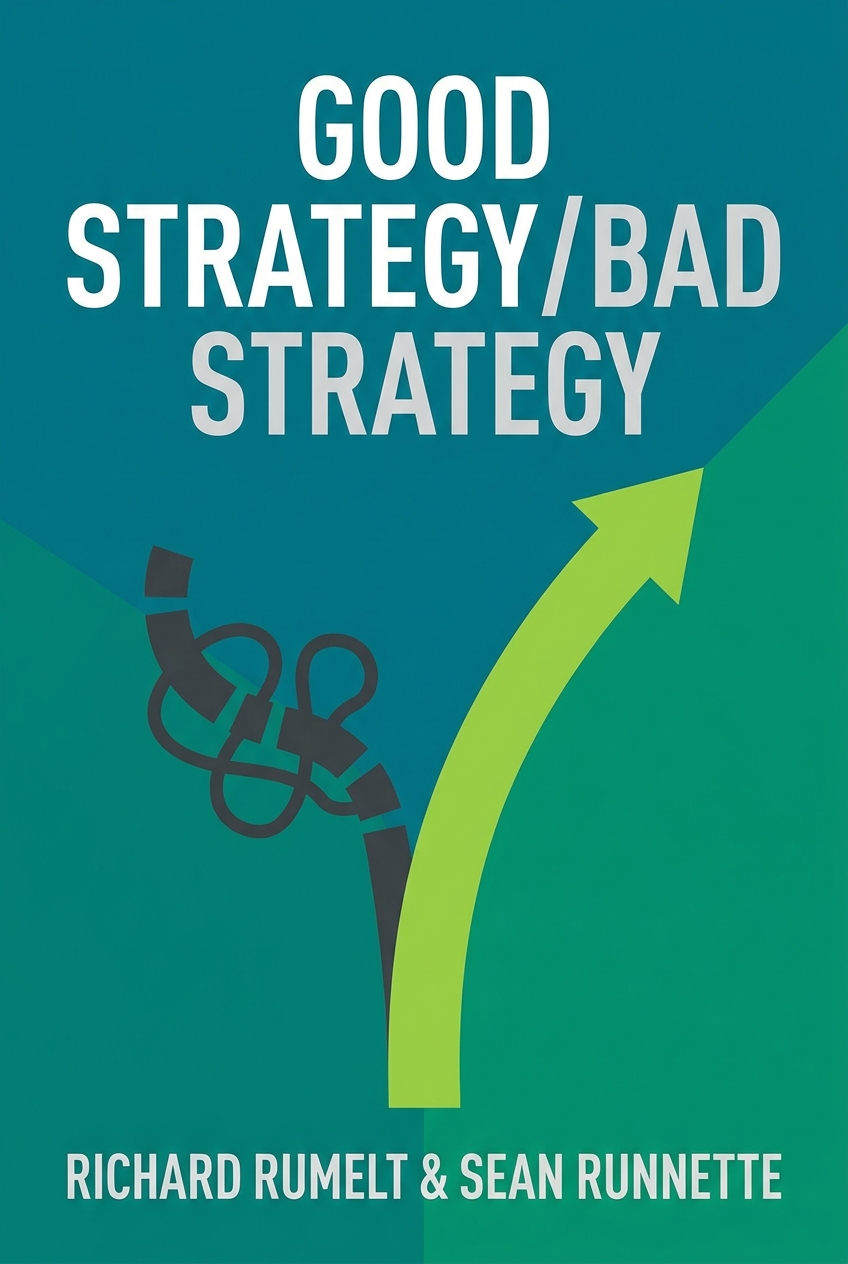
Good Strategy/Bad Strategy
The Difference and Why It Matters
What's it about
Tired of strategies that are all fluff and no action? Learn to cut through the noise and craft a powerful, effective strategy that actually delivers results. This guide reveals the one core difference between a winning plan and a roadmap to failure. You'll discover how to diagnose your biggest challenges, create a guiding policy to overcome them, and design a set of coherent actions to execute your vision. Stop confusing goals with strategy and start building a real competitive advantage that leaves others behind.
Meet the author
Richard Rumelt is one of the world’s most influential thinkers on strategy and management, hailed by McKinsey Quarterly as "strategy's strategist." His groundbreaking work stems from decades of research and consulting with top corporations and governments, where he consistently observed a fundamental misunderstanding of what strategy truly is. This experience, combined with his background in physics and engineering, provides the unique analytical lens that makes his insights both powerful and practical. Sean Runnette is an award-winning audiobook narrator known for his engaging and authoritative delivery.
What's it about
Tired of strategies that are all fluff and no action? Learn to cut through the noise and craft a powerful, effective strategy that actually delivers results. This guide reveals the one core difference between a winning plan and a roadmap to failure. You'll discover how to diagnose your biggest challenges, create a guiding policy to overcome them, and design a set of coherent actions to execute your vision. Stop confusing goals with strategy and start building a real competitive advantage that leaves others behind.
Meet the author
Richard Rumelt is one of the world’s most influential thinkers on strategy and management, hailed by McKinsey Quarterly as "strategy's strategist." His groundbreaking work stems from decades of research and consulting with top corporations and governments, where he consistently observed a fundamental misunderstanding of what strategy truly is. This experience, combined with his background in physics and engineering, provides the unique analytical lens that makes his insights both powerful and practical. Sean Runnette is an award-winning audiobook narrator known for his engaging and authoritative delivery.
The Script
You've reached the end of the free preview.