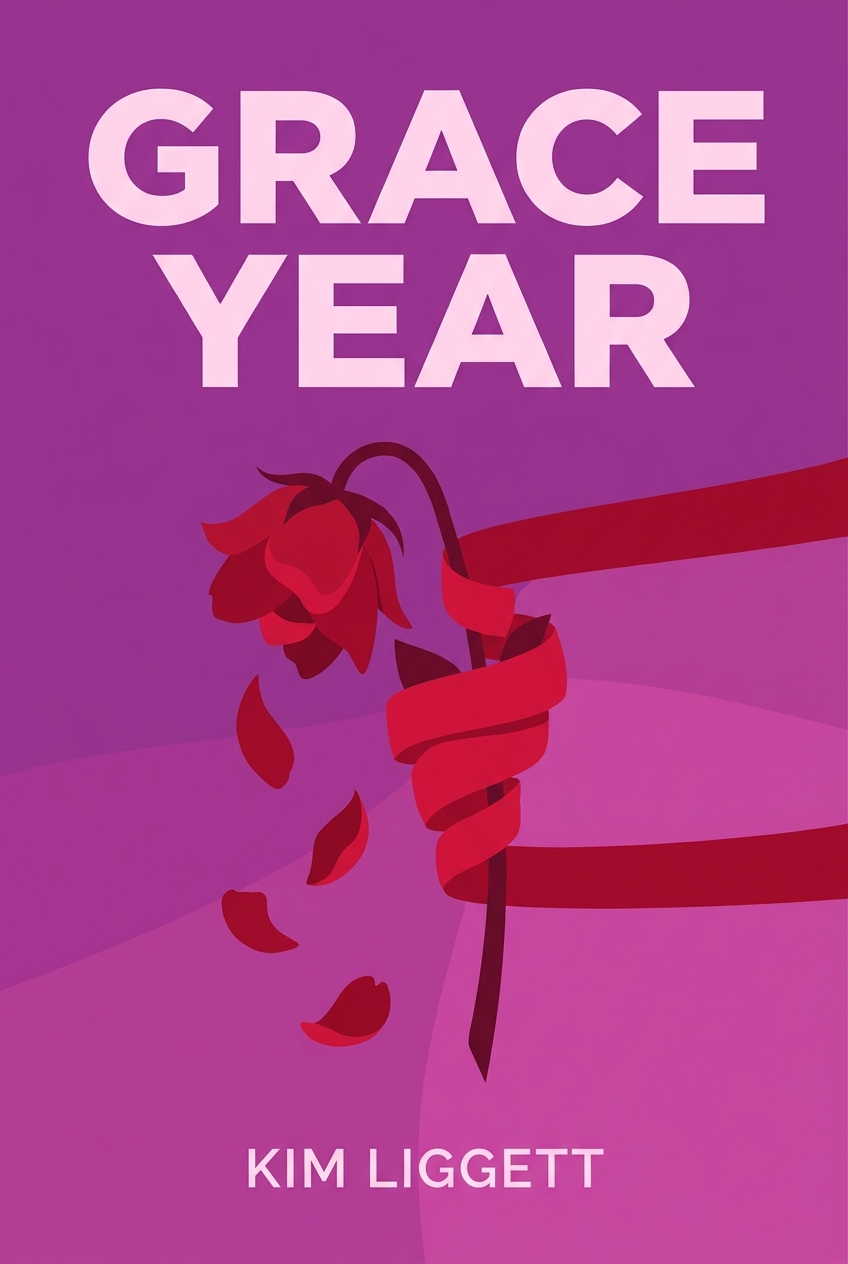
Grace Year
What's it about
Ever wondered what you would do if society believed your very existence was a dangerous poison? In Garner County, girls are banished on their sixteenth birthday to release their supposed "magic" into the wild, a brutal ordeal known as the Grace Year. But not all of them return. This isn't just a story of survival; it's a chilling look at the power of female rage and the lies girls are told to turn them against each other. You'll follow Tierney James as she uncovers the dark truths behind the tradition and discovers that the real threat isn't some imagined magic, but the men who fear it and the women who uphold their deadly system.
Meet the author
Kim Liggett is the New York Times bestselling author of The Grace Year, a speculative thriller that has been translated into over twenty languages worldwide. Drawing from her own rural upbringing and fascination with the complexities of girlhood, Liggett explores the fierce, often brutal, journey of coming of age. Her work confronts the societal pressures placed on young women, turning a critical eye on the stories we are told and the ones we must write for ourselves.
Opens the App Store to download Voxbrief

The Script
In the old world, before the convenience of modern medicine, a girl’s first period was often a secret, something shrouded in whispers and folklore. It was a private threshold, marked by a mother’s quiet instructions, perhaps a clean cloth, and the solemn understanding that a new phase of life had begun. But what if that biological reality was a public spectacle? What if, instead of being a sign of life-giving potential, it was interpreted as the arrival of a dangerous, corrupting power—a magic so potent and alluring to men that it had to be violently purged from the body? Imagine a society where this transition is met with suspicion and exile. A society where sixteen-year-old girls, on the cusp of womanhood, are cast out into the wilderness for a full year. Their mission is to survive each other and expel the volatile magic believed to be coursing through their veins, returning 'purified' and ready for marriage, if they return at all.
This chilling premise, where the natural process of becoming a woman is twisted into a source of public terror and ritualistic banishment, didn't spring from a vacuum. Author Kim Liggett was haunted by a fundamental question of inequality she couldn't shake: why, throughout history and across cultures, has the female body so often been a site of fear, control, and legislation by men? She saw a pattern in the overt laws and the subtle, insidious ways society polices girlhood and womanhood. Liggett, a writer known for her unflinching look at dark, speculative themes, wanted to distill this rage and confusion into a tangible, high-stakes narrative. The Grace Year became her answer—a raw, allegorical exploration of this deep-seated societal anxiety, transmuting her frustration with real-world injustices into a story about survival, rebellion, and the fierce, untamable magic that society fears most.
Module 1: The Architecture of Control
In the world of Garner County, society is built on a foundation of control, and its primary tool is the grace year. This is a mandatory, year-long banishment for all sixteen-year-old girls. The official reason is to purge their "magic," a dangerous, seductive power believed to drive men mad and wives to jealousy. But the book quickly reveals a darker purpose.
The system works by creating an atmosphere of constant fear and surveillance. From a young age, girls are taught their bodies are dangerous. Their hair must be braided to prevent "a wandering eye." Their dreams are forbidden, seen as a place to hide their magic. This indoctrination creates a powerful internal conflict. The narrator, Tierney, admits, "But I don’t feel powerful. I don’t feel magical." This disconnect is the first crack in the system's facade. The most effective systems of control make people police themselves. The women of Garner County, steeped in generations of fear, often become the harshest enforcers of the rules. They internalize the misogyny, turning on each other with gossip and judgment, which prevents any form of solidarity. Tierney notes that a gathering of women could be a place to "talk, share, let it all out," but instead, it devolves into petty competition.
This leads to the next insight. Rituals are used to codify and reinforce power structures. The veiling ceremony is a prime example. It is a transaction. Girls are paraded like cattle while boys trade and barter for them. A veil signifies a promise of marriage, the only path to status. An unveiled girl is deemed dispensable, destined for a life of hard labor. This public ritual solidifies a girl's worth as entirely dependent on a man's choice. It’s a brutal, efficient way to remind everyone of the patriarchal order.
But the most potent tool is mystification. The grace year itself is shrouded in secrecy. It's forbidden to speak of it. Survivors return broken, emaciated, and silent, their trauma serving as a terrifying, unspoken warning to the next generation. This creates a powerful mythos around the experience. Is the magic real? Are there ghosts in the woods? Are the poachers, men who hunt the girls for their supposedly magical flesh, an actual threat? Ambiguity is a powerful instrument of fear. By keeping the truth hidden, the county ensures that every girl enters her grace year terrified not just of the known dangers, but of the far more potent unknown. The system is designed to colonize the mind with fear.