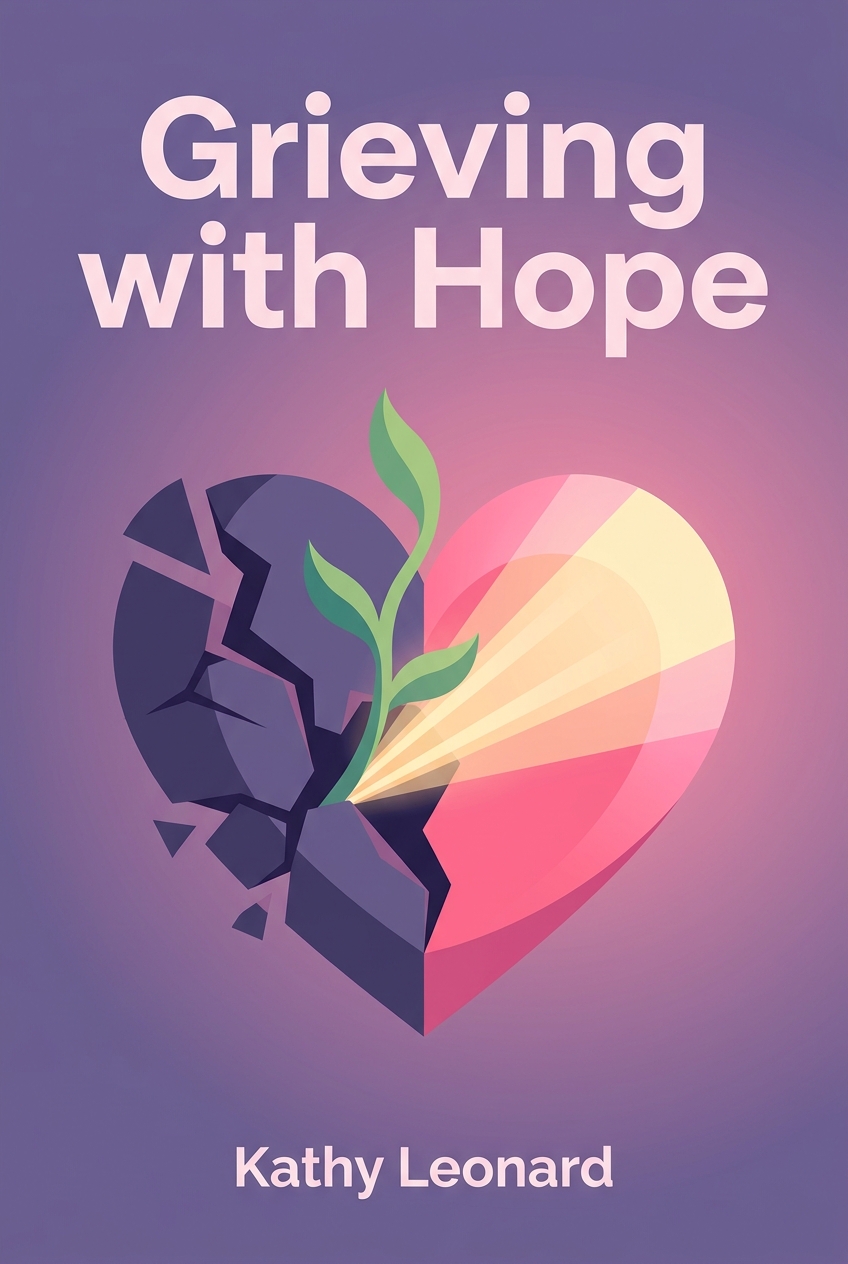
Grieving with Hope
Finding Comfort as You Journey Through Loss (Practical, Warm, and Compassionate Encouragement for Those Facing Grief - A Thoughtful Sympathy Gift)
What's it about
Feeling lost and overwhelmed by grief? Discover a compassionate path forward that honors your pain while guiding you toward hope. This guide offers practical comfort and warm encouragement, proving that you don't have to walk through the darkness of loss alone. You'll learn how to navigate the complex stages of grief with grace, find strength in your faith, and embrace treasured memories without getting stuck in sorrow. Uncover gentle, actionable steps to help you process your emotions, find solace, and slowly rediscover joy and purpose in your life.
Meet the author
With over twenty years of experience as a grief counselor and hospital chaplain, Kathy Leonard has guided thousands through the complex journey of loss. Her own profound experience with grief, combined with her extensive professional background, inspired her to write Grieving with Hope. Kathy's unique blend of professional expertise and personal empathy offers readers a compassionate and practical path toward healing, providing the comfort and understanding she has shared with so many throughout her dedicated career.
The Script
In the workshop of a master doll restorer, two nearly identical porcelain figures arrive. Both have been shattered, their painted smiles broken, their limbs separated. The first doll is brought by a collector, who provides a detailed photograph of its original, pristine state. 'Make it look exactly like this,' he instructs. 'Erase the damage. I want no trace of the fall.' The restorer nods, knowing she can use fillers and paints to create a flawless illusion of perfection, hiding any evidence that the doll was ever broken.
The second doll is brought by a young girl. She has no photograph, only tears in her eyes. 'She was my grandmother's,' the girl whispers, placing the pieces on the velvet cloth. 'Can you... can you make her whole again? But please, don't hide the cracks. They're part of her story now.' The restorer understands this request is about honoring the past. She will use a special golden resin to join the pieces, turning the lines of breakage into beautiful, shimmering veins. Both dolls will be whole, but only one will carry its history with visible grace. This profound difference in how we approach what is broken is at the heart of our own journeys through loss. We are often told to hide the cracks, to return to who we were before the fall. But what if the goal is to integrate grief, to let it become part of a new, stronger, and more beautiful whole?
This very question is what compelled Kathy Leonard to write Grieving with Hope. After experiencing the devastating loss of her own son, she found herself surrounded by well-meaning advice that felt like a demand to erase her pain, to pretend the fall never happened. As a licensed professional counselor with years of experience helping others navigate trauma, she realized the conventional wisdom about grief was failing her and so many others. She began to explore a different path—one that, like the golden resin, honors the fractures, creating a way to carry loss with purpose and find a way forward by remembering with hope.
Module 1: The Anatomy of Grief
Grief is a natural expression of love. The author’s first major point is that grief is the price you pay for loving someone. This reframes the entire experience. The crushing weight isn't a sign of weakness. It's a testament to the depth of the connection you lost. Think about hearing of a tragedy on the news versus losing someone close. The difference is love. Motivational speaker Zig Ziglar, after losing his daughter, affirmed this. He said that while people mean well, no one can truly know your specific pain. They didn't share your unique relationship.
This leads to a paradox. While your grief is unique, the symptoms are often common. Grief manifests in predictable emotional, mental, and physical ways. You can expect waves of deep sadness or depression. Your mind might feel foggy. Grief therapist H. Norman Wright notes that concentration falters and memory plays tricks. It’s normal to struggle with decisions. Physically, you might feel exhausted or get sick more easily. Stress takes a toll. Some even feel relief, especially after a long illness. Judy Blore felt this when her mother’s suffering ended. It didn't mean she loved her less. It meant she was exhausted from caregiving. All these tangled emotions are part of the process.
So what can you do when you feel so overwhelmed? The initial advice is surprisingly simple. Focus on completing the next immediate task. Counselor Edward Welch calls this "doing the next thing." Get a glass of water. Brush your teeth. Make one phone call. This is about preventing paralysis. It breaks an overwhelming reality into manageable moments. When your mind is clouded, keep a notebook handy. Write down tasks as they come to you. Don't trust your memory right now. This small structure can be an anchor in a storm.
Finally, and this is crucial, postpone all major life decisions for at least a year. Grief clouds judgment. H. Norman Wright warns against the impulse to sell a family home right away. This can trigger a second major loss by removing the physical space where memories live. Your mind is filled with emotion. Professor Robert DeVries admitted it took him a long time to feel capable of responsible decisions after his wife died. If a decision is unavoidable, seek expert, trustworthy counsel. But otherwise, give yourself time. The fog will eventually lift. You need to be patient with yourself until it does.