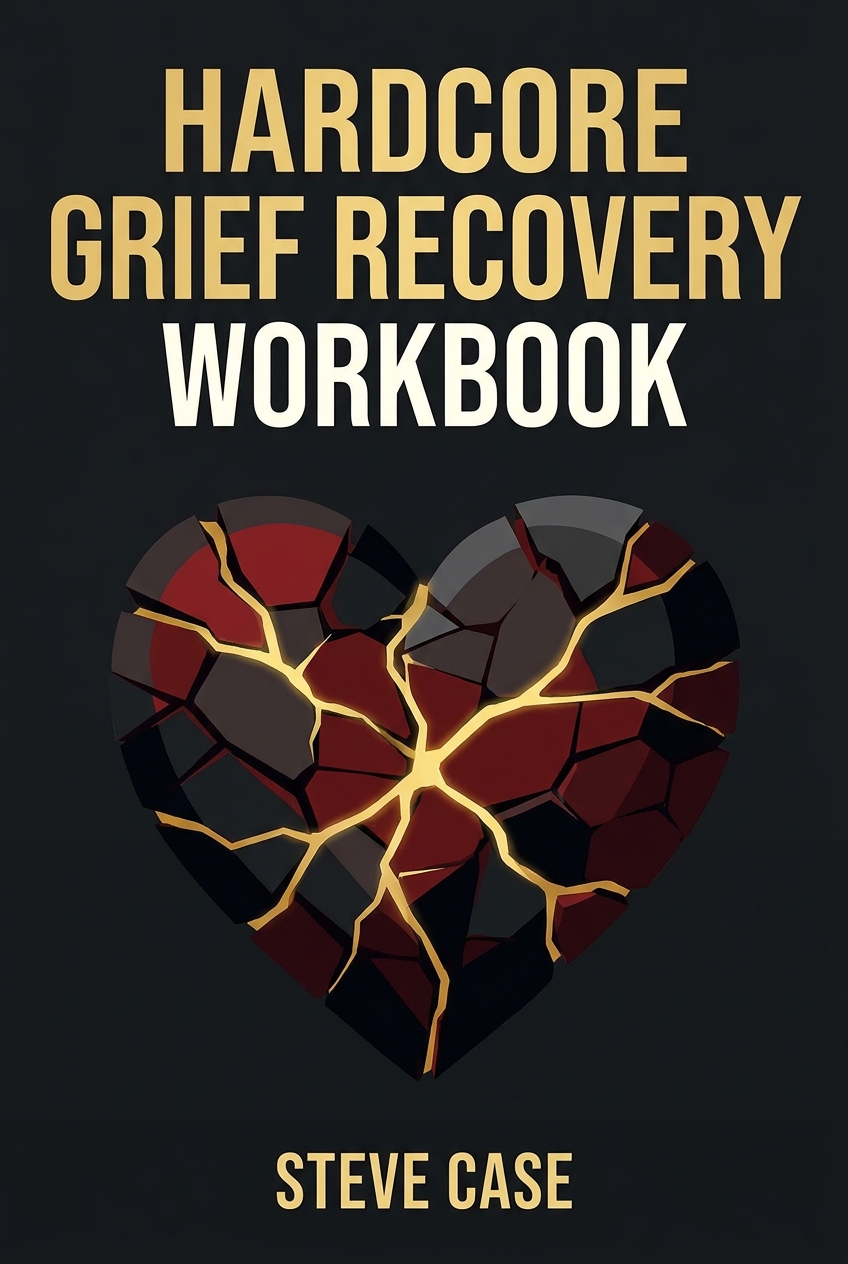
Hardcore Grief Recovery Workbook
An Honest Journal for Getting through Grief without the Condolences, Sympathy, and Other BS (F*ck Death)
What's it about
Tired of the sympathy cards, empty platitudes, and advice that just doesn't help? This workbook is your no-BS guide to navigating grief on your own terms. Get ready to process your loss honestly, without pretending to be okay for anyone else. You'll discover how to embrace the anger, find humor in the darkness, and create your own rituals for remembering. This isn't about "getting over it"—it's about getting through it with raw, hardcore honesty, giving you the tools to rebuild your life authentically.
Meet the author
Steve Case is a certified Grief Recovery Specialist who has dedicated over a decade to helping hundreds of individuals navigate the raw, unfiltered reality of profound loss. After the sudden death of his brother, he rejected platitudes and forged a practical, no-BS path through his own intense grief. This personal crucible, combined with his professional expertise, inspired him to create the direct, action-based methods found in his workbook, offering a tangible alternative to traditional sympathy.
The Script
Every family has a drawer. It’s not the one for silverware or dish towels, but the one stuffed with tangled charging cables, expired coupons, and a half-dozen pens that don’t work. When a device dies, you go to the drawer, grab a cable that looks right, and plug it in. Nothing happens. You jiggle it. Still nothing. You try another cable, then another. You might get a flicker of life, a brief charging icon that vanishes, but the device remains stubbornly dead. The problem is that you’re using the wrong ones. The drawer is full of solutions for other devices, other problems. For this specific loss, they are useless.
Grief often feels like this. We are handed a drawer full of well-intentioned but mismatched tools: platitudes about time healing all wounds, advice to ‘be strong,’ or pressure to find closure. We try them one by one, jiggling the emotional connections, hoping for a spark of relief, only to feel more exhausted and broken when nothing changes. This frustrating cycle of trying and failing with the wrong tools is precisely what drove Steve Case to create this workbook. As a seasoned funeral director, Steve had a front-row seat to the inadequacy of conventional wisdom. He saw countless families fumbling in that proverbial drawer, trying to charge a shattered heart with a cable meant for a dead battery. He knew there had to be a more direct, honest, and effective way to engage with the raw, mechanical reality of loss, so he began developing a set of specific, actionable exercises designed to confront and process the pain head-on.
Module 1: The Anti-Grief Grief Book
Let's start with a foundational idea from the book. Most resources on grief try to soothe you. They offer platitudes. They use soft language. This book does the exact opposite. It argues that the first step toward genuine healing is to reject the sanitized, polite version of sorrow we're often sold. The author’s approach is built on a radical premise: Honest, blunt, and even profane expression is a valid and necessary tool for coping. Society expects quiet dignity in the face of loss. This book suggests that screaming, cursing, and raw emotional honesty are far more therapeutic.
Think about the last time someone offered you a well-meaning but empty phrase like, "It was their time." The author points out that these comments, while intended to help, often fuel a sense of isolation and anger. They invalidate the sheer awfulness of the situation. So here’s the thing. The book gives you permission to feel what you actually feel. It validates the urge to lash out at the universe. It even encourages a simple, powerful act: to look the reality of your loss in the face and say, "Fuck death." This is about externalizing a profound sense of injustice and powerlessness in a way that is honest and immediate.
Building on that idea, the book positions itself as a companion. It makes a promise from the very first page. It’s not here to make you "better" or tell you to "move on." The book's role is to be an understanding witness to your pain. It acknowledges that what you’re going through is terrible. It doesn't try to pretty it up. This reframing is crucial. It releases you from the pressure to perform healing for others. You don't have to pretend you're getting better on anyone else's timeline. You just have to survive the moment you're in. The book is there to sit with you in that moment, in all its ugliness.
Consequently, the entire process is framed as a deeply personal journey. The author stresses that no two people will experience grief in the same way. Your grief is yours alone, and comparing your journey to anyone else's is a trap. You might see a relative who appears composed and functional just days after a loss. The book suggests this is likely "an act." Everyone is navigating their own private storm. Some are just better at hiding the chaos. This insight is liberating. It means there are no rules. There is no right way to do this. Your only job is to get through your own experience, using the tools that work for you, even if those tools are loud, messy, and uncomfortable for others.