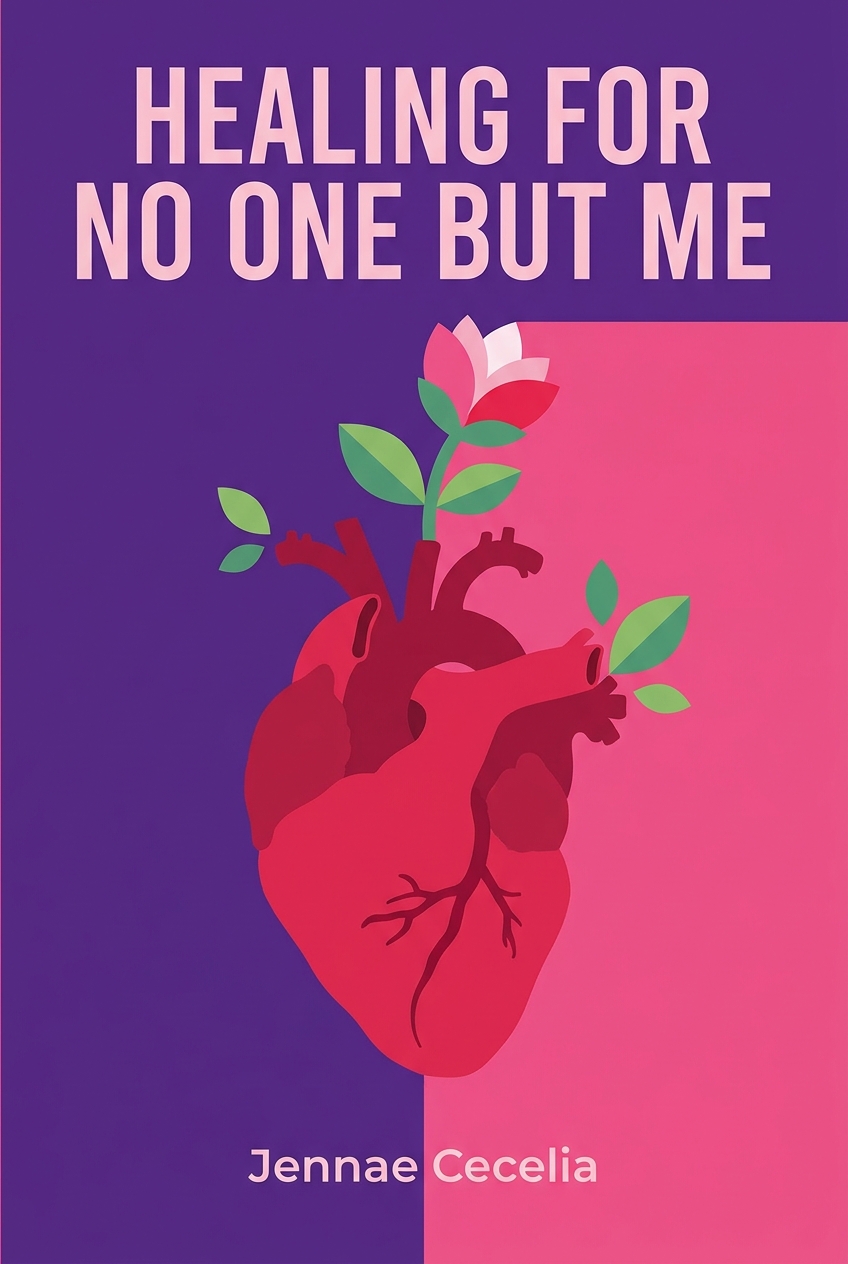
healing for no one but me
What's it about
Are you tired of people-pleasing and ready to put your own well-being first? This collection of poetry and prose is your personal guide to reclaiming your power. It’s time to stop healing for others and finally start your journey of self-love and acceptance, just for you. Discover how to set firm boundaries, celebrate your own progress without seeking external validation, and find strength in solitude. You'll learn to listen to your intuition, honor your emotions, and build a life that is authentically and unapologetically your own, one powerful piece at a time.
Meet the author
Jennae Cecelia is a bestselling poet and author of ten books who has guided millions of readers toward self-love, healing, and empowerment through her vulnerable and uplifting work. After beginning her journey by self-publishing poetry on social media, she quickly became a leading voice for a generation seeking authenticity and inner peace. Her writing stems from her own personal experiences with healing, transforming her private reflections into universally relatable lessons on finding strength from within.
Opens the App Store to download Voxbrief

The Script
The old woman’s home was a museum of healing. On her mantelpiece sat a small, chipped ceramic bird, its wing clumsily reattached with a thick line of golden epoxy. Next to it, a child’s drawing of a stick figure with a huge, scribbled-out black cloud over its head, now framed in elegant dark wood. Down the hall hung a mirror, a mosaic of shattered pieces carefully reassembled, the cracks forming a web of new, intricate patterns. Each object was a testament to repair. They were trophies from battles fought and survived. The bird could sit upright again. The drawing was no longer hidden in a drawer. The mirror reflected an image nonetheless—whole, complete, and uniquely beautiful in its reconstruction.
This quiet, personal process of mending is precisely what poet and author Jennae Cecelia champions. She noticed how often the journey of healing becomes a performance for others—a story to be told, an inspiration to be packaged, or a recovery to be proven. Tired of this external pressure, she began writing poems that served as private affirmations, tools meant only for the person holding the book. Cecelia crafted healing for no one but me as a quiet, internal dialogue. It’s a collection of reminders that your mending process doesn't need an audience, that it’s okay for your healing to be messy, private, and done for your own survival and peace, not for anyone else's approval.
Module 1: The Sovereignty of Self-Healing
The core idea of this book is radical in its simplicity. Healing is a deeply personal process. It belongs to you and you alone. It operates on your timeline, not one dictated by friends, family, or societal expectations. The author frames healing as a solitary act. It happens "between the silence and the breeze," for the self alone. This is about reclaiming ownership of your own emotional recovery.
So, how do we put this into practice? The first step is to recognize that your healing is an individual race. Cecelia uses the metaphor of a race you run by yourself. You can run, walk, stop, or even sit down whenever you want. There's no one to beat. There's no clock to watch. This reframes setbacks as necessary pauses. When you feel external pressure to "hurry up and just be ok," you can remind yourself that you are the sole participant in this race. Your pace is the only one that matters.
Next, you have to build a fortress of self-worth that is independent of external validation. The book offers a powerful affirmation: "i am worthy of being here today exactly as i want to be." This is a strategic tool. It decouples your value from others' comfort. The author follows this up by stating, "i do not need to change or mold myself just to make other people comfortable with me." In a professional context, this means showing up authentically. It means not softening your ideas or shrinking your presence to fit into a preconceived notion of what you "should" be. Your worth is inherent. It is granted by a manager, a promotion, or a successful product launch.
And here’s the thing. This journey requires you to cultivate empathy for others by recognizing their hidden struggles. Cecelia points out how easily we judge. We honk at the slow driver. We sigh at the person fumbling for their wallet. We do this because we're focused on our own destination. But the author asks us to consider what we don't see. The slow driver might be processing devastating news. The person in line might be wracked with anxiety. The book suggests that "we do not know" the paths of pain others walk. By acknowledging this, we can replace impatience with patience. We can offer grace instead of judgment. This makes us better colleagues and leaders and also reinforces the compassion we need to show ourselves.