All BooksSelf-GrowthBusiness & CareerHealth & WellnessSociety & CultureMoney & FinanceRelationshipsScience & TechFiction
Download on the App Store

Hold on to Your Kids

Why Parents Need to Matter More Than Peers

17 minGabor Maté,Gordon Neufeld

What's it about

Do you ever feel like you're losing your child to their friends, their phone, or the internet? This summary reveals why kids are becoming more attached to their peers than their parents and gives you a powerful framework for rebuilding that essential, loving connection. Learn how to reclaim your natural role as your child's guide and anchor in a distracting world. You’ll discover the six stages of attachment, understand the damaging effects of "peer orientation," and get practical advice to restore your influence and bring your child back home, emotionally.

Meet the author

Dr. Gabor Maté is a renowned physician and bestselling author specializing in addiction, stress, and childhood development, with Gordon Neufeld being a leading authority on developmental psychology. Their collaboration combines Maté’s extensive clinical experience with traumatized individuals and Neufeld’s decades of insight into the parent-child bond. This powerful partnership emerged from a shared understanding that modern peer orientation is undermining family connections, leading them to create a vital guide for parents to reclaim their natural influence.
Listen Now
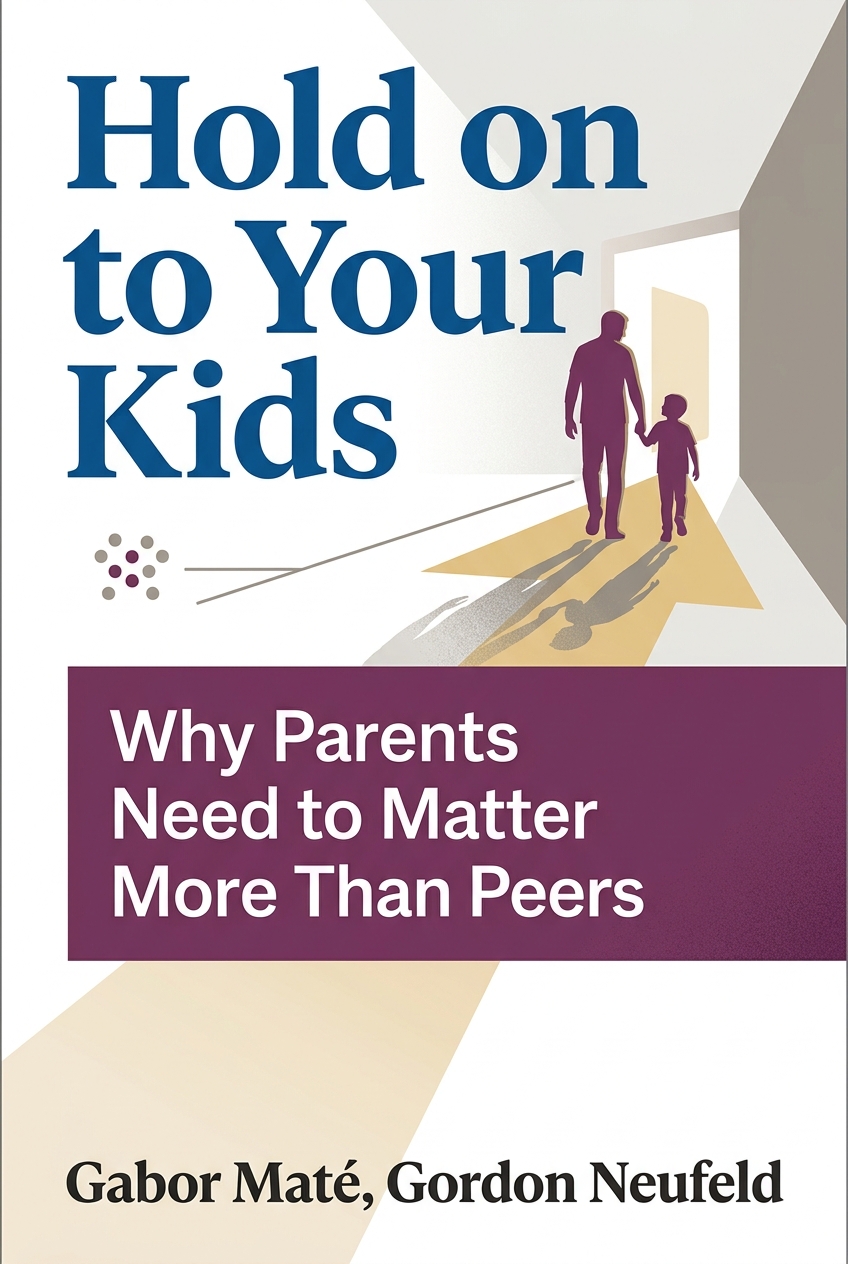
Hold on to Your Kids book cover

The Script

We believe we know what a child needs: love, safety, food, and shelter. But what if the most crucial ingredient for healthy development is one we are actively, if unintentionally, sabotaging? Consider the modern child, more connected to friends through screens than to the adults in their own home. They adopt the slang, the attitudes, and the values of their peers, not their parents. We see this as a normal, even necessary, part of growing up—a harmless rite of passage into independence. The devastating truth, however, is that this is a symptom of a deep relational void, a desperate search for attachment in a world where the parent-child bond has become frayed and fragile. This transfer of allegiance from family to peers is a modern crisis masquerading as normalcy, leaving children emotionally adrift and parents feeling powerless.

This alarming shift is what developmental psychologist Gordon Neufeld observed over decades in his clinical practice. He saw children who were emotionally shut down to their parents yet desperately loyal to their peers, and he recognized a pattern that defied conventional parenting wisdom. Teaming up with physician and author Dr. Gabor Maté, who had seen the devastating long-term consequences of this broken attachment in his work with adults struggling with addiction and mental illness, they set out to explain this phenomenon. "Hold on to Your Kids" emerged from a shared urgency to sound an alarm—to show parents that the battle they feel they are losing for their child's heart and mind is real, and it is a battle against the pervasive, but not invincible, influence of peer culture.

Module 1: The Great Reversal—When Peers Replace Parents

Imagine your relationship with your child is like a magnetic force. It’s meant to be the strongest pull in their life, guiding their development. But what happens when a competing magnet, the peer group, becomes more powerful? This is the central crisis the authors identify.

The core idea is that children are biologically wired to attach to and take their cues from nurturing adults. This is how culture, values, and maturity have been passed down for millennia. But in modern society, this vertical transmission has been broken. It’s been replaced by a horizontal one, where kids learn how to be human from other kids. This is peer orientation.

Here’s the first insight. Peer orientation is a relationship problem, not a behavior problem. When your fourteen-year-old daughter, Cynthia, becomes secretive, hostile, and obsessed with her friends, her primary attachment has shifted. The authors compare it to an emotional affair. Her need for closeness, belonging, and significance is now being met by her friends, not her family. Consequently, parents start to feel like intruders in their own child's life. This explains why attempts to control the behavior through punishment or lectures often fail. You're treating a symptom, not the root cause, which is a fractured relationship.

This brings us to a critical point. Children cannot serve two masters. A child’s brain is not wired to handle conflicting signals from two primary attachment sources. Think of it like a compass. A sailor can’t navigate with two North Poles. The brain will instinctively suppress one signal to avoid confusion. When a child is peer-oriented, they will align with peer culture and instinctively reject parental culture. This is a sub-cortical, instinctual process. The child’s brain, seeking to avoid disorientation, locks onto the most dominant source of connection.

And here's the thing. This shift hijacks a child's natural instincts. Attachment has a bipolar nature: attraction and repulsion. Infants naturally shy away from strangers while clinging to parents. In a peer-oriented child, this instinct flips. The parent becomes the "stranger." This is why a child might drop your hand or shrug off a hug the moment their friends appear. Their attachment brain is signaling them to distance themselves from a competing attachment figure, which is now you. They mock your music or clothes to conform more tightly to the peer group.

So what happens next? This reversal has devastating effects on a child's growth. Peer relationships are inherently insecure. They lack the unconditional love and commitment of a healthy parent-child bond. This constant insecurity keeps a child in a state of arrested development, a topic we'll explore more deeply in the next module.

Read More