All Books
Self-Growth
Business & Career
Health & Wellness
Society & Culture
Money & Finance
Relationships
Science & Tech
Fiction
Topics
Blog
Download on the App Store

The Danish Way of Parenting

What the Happiest People in the World Know About Raising Confident, Capable Kids

19 minJessica Joelle Alexander, Iben Sandahl

What's it about

Tired of power struggles and tantrums? Discover how Danish parents raise some of the happiest, most well-adjusted kids in the world. This summary reveals the simple, effective parenting philosophy that can transform your family life, fostering resilience and genuine happiness from the inside out. You'll learn the six core principles behind the Danish method, known by the acronym PARENT. Uncover the secrets to using authentic praise, reframing challenges into learning opportunities, and prioritizing unstructured play to build confidence and empathy. Get ready to leave stress behind and embrace a more connected, joyful way of parenting.

Meet the author

Jessica Joelle Alexander is an American author and cultural researcher who, after marrying a Dane and raising her children in Denmark, dedicated herself to uncovering the secrets of Danish parenting. Together with Danish psychotherapist and family counselor Iben Sandahl, she co-authored the international bestseller The Danish Way of Parenting. Their combined expertise, blending firsthand cross-cultural experience with professional therapeutic insight, offers a powerful, proven framework for raising happier, more resilient children by embracing time-tested Danish wisdom.
Listen Now

Opens the App Store to download Voxbrief

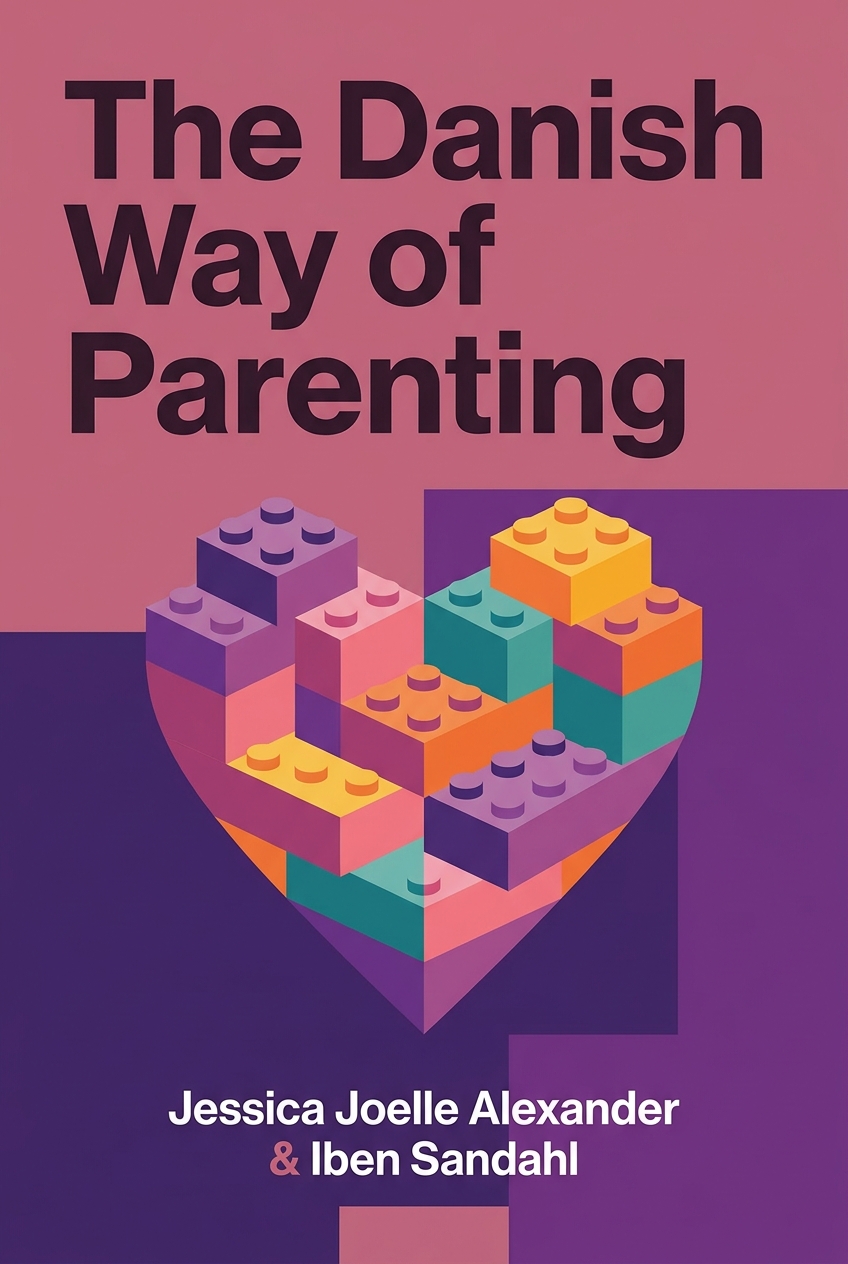
The Danish Way of Parenting book cover

The Script

Two families arrive for a playdate at a local park. The first mother, an American, hovers near the jungle gym, her voice a constant soundtrack of encouragement and caution: “Good job climbing! Be careful, sweetie, that’s too high! Don’t forget to share the slide!” Her child, sensing the parental spotlight, performs for the audience of one, occasionally looking back for approval or intervention. The second mother, a Dane, finds a bench a comfortable distance away. She chats with a friend, her attention relaxed but available. Her child, meanwhile, negotiates the social landscape of the playground alone, navigating a minor squabble over a shovel, testing the limits of the climbing wall, and tumbling onto the wood chips, brushing himself off without a glance toward his mom. To the American observer, the Danish parent might seem aloof, even neglectful. To the Danish parent, the American’s constant coaching might seem anxious and intrusive, stripping the child of the chance to develop their own resilience and social skills.

This exact cultural collision is what American author Jessica Joelle Alexander experienced after marrying a Dane and starting her own family in Denmark. She was struck by the remarkable confidence, happiness, and emotional security she saw in Danish children and the calm, trusting atmosphere in their homes. Confused by the contrast with her own upbringing, she began asking questions, seeking to understand the philosophy behind this seemingly effortless approach. Her quest led her to Iben Sandahl, a Danish psychotherapist and family counselor who had spent her career putting these implicit cultural values into practice. Together, they decided to decode this parenting style, to translate the unspoken wisdom of the world’s happiest country into a clear framework that parents anywhere could understand and apply. The result was a bridge between two different worlds of childhood.

Module 1: P is for Play — Building Resilience Through Freedom

The Danish approach begins with a simple, powerful idea. Unstructured play is essential for a child's development. In many modern parenting cultures, there's immense pressure to schedule every moment. We fill our kids' lives with soccer practice, music lessons, and tutoring. We want to see tangible progress. We want them to have a competitive edge. The Danes see this differently. They believe free play is the primary way children build resilience and learn to cope with stress.

This is a belief backed by science. Studies show that the amount of free play for children has plummeted over the last fifty years. During that same period, anxiety and depression rates among young people have soared. The authors connect these two trends. When children invent their own games, they are running simulations for life. They learn to negotiate rules with friends. They learn to manage frustration when things don't go their way. They test their physical and emotional limits in small, manageable doses. This process helps them develop a strong internal locus of control. That's the belief that they have agency over their own lives, rather than being victims of external forces. A child who feels in control is less likely to suffer from anxiety.

So, how does this work in practice? Danish schools are a great example. Children under ten often finish their formal classes by 2 p.m. Afterward, they can attend "free-time school," where the main activity is simply playing. This is a structured environment designed to facilitate unstructured activity. This brings us to a key insight for parents. You should provide "scaffolding" for play, not direct it. The idea comes from psychologist Lev Vygotsky's concept of the "zone of proximal development." This is the sweet spot between what a child can do alone and what they can do with help. Think of a child trying to climb a log. You don't lift them over it. You might offer a hand for balance, but you let them do the work. Over-intervening undermines their confidence. It teaches them to look to adults for solutions. By stepping back, you communicate trust. You show them you believe in their ability to figure things out.

And it doesn't stop there. This philosophy extends to social interactions. Allow children to resolve their own minor conflicts. When another child takes a toy, our instinct is often to jump in and mediate. The Danish approach suggests observing first. Let the children try to work it out. This is how they learn crucial social skills like negotiation, compromise, and self-control. They learn to read others' emotions and manage their own. These are skills that are far more predictive of adult success and happiness than knowing how to read at age four. The goal is to raise a well-adjusted human, not just a high-achieving student.

Module 2: A is for Authenticity — Fostering a Growth Mindset

Now, let's move to the second habit: Authenticity. This principle is about being real with your children. It means being honest about your own feelings and teaching them to trust theirs. It's also about how you praise them. The Danish culture values humility. They are very careful about not overpraising children. This might sound cold, but it's rooted in a deep psychological insight.

The key idea here is to focus praise on effort and process, not on innate ability. This is the foundation of what Stanford psychologist Carol Dweck calls a "growth mindset." Let's say your child aces a test. The typical response might be, "You're so smart!" This seems harmless, but it promotes a "fixed mindset." It sends the message that intelligence is a static trait you either have or you don't. When these children face a real challenge later, they often crumble. They fear failure because it might prove they aren't so smart after all.

But flip the coin. A Danish parent might respond differently. They might say, "Wow, you worked really hard to prepare for that test. Your effort paid off." This is process praise. It reinforces the idea that abilities can be developed through dedication and hard work. It builds resilience. Children praised for effort are more likely to seek out challenges. They see failure as a learning opportunity, not a verdict on their worth. This approach builds true, durable confidence.

Authenticity also means being honest about the full spectrum of human emotion. In many Western cultures, there's pressure to maintain a facade of happiness. We shield children from sadness, tragedy, and discomfort. The Danes believe this does a disservice. For example, the original Hans Christian Andersen fairy tales are often quite dark. "The Little Mermaid" dissolves into sea foam. Danes read these stories to their children. They believe that discussing difficult emotions helps build empathy and gratitude. It prepares children for the reality that life isn't always a fairy tale. When a parent is sad or frustrated, they don't hide it. They model how to handle difficult feelings constructively. This teaches children that all their emotions are valid.

Furthermore, this principle extends to how we answer our children's questions. Provide honest, age-appropriate answers instead of fabricating them. When a child asks a tough question you don't know the answer to, it's better to say, "That's a great question. I'm not sure. Let's find out together." This models intellectual humility and curiosity. More importantly, it builds a foundation of trust. Children have a very keen sense for insincerity. When they feel they can trust you to tell them the truth, they are more likely to come to you when they face real problems later in life, especially during their teenage years.

Module 3: R is for Reframing — The Art of Realistic Optimism

We've covered Play and Authenticity. Next up: Reframing. This is one of the most powerful tools in the Danish parenting approach. Reframing is the conscious act of changing your perspective to find a more constructive or positive way to view a situation. It is about choosing what you focus on. Danes are masters of this. Ask a Dane about the miserable, gray, rainy weather, and they might say, "There's no such thing as bad weather, only bad clothing!" Or, "Now we can get cozy inside!" This is reframing in action.

The core principle is this: The language you use creates the reality you experience. When you use limiting labels, you box yourself and your children in. Calling a child "shy" or "picky" can become a self-fulfilling prophecy. The child starts to see themselves that way. A Danish parent would reframe it. Instead of "She's so shy," they might say, "She likes to observe a situation before jumping in." It's a subtle shift, but it's profound. It changes the narrative from a negative trait to a thoughtful strategy. This separates the child's identity from their behavior. The behavior is temporary; their identity is not.

This leads to a powerful technique for handling difficult behaviors. Use reframing to externalize the problem, not internalize it in the child. For instance, instead of saying, "You are being lazy," you could say, "Laziness seems to have taken over this afternoon. How can we fight it off?" This turns you and your child into a team allied against a common enemy, the "laziness." It's a lot more effective than making the child feel they are the problem. It empowers them to act against the negative behavior without shame.

But here's the thing. This is about realistic optimism. Acknowledge the negative, but consciously choose to focus on the positive or the possible. Let's say your child played terribly in a soccer game. A forced-positive parent might say, "You were great!" which the child knows is untrue. A purely negative parent might agree, "Yes, you were awful." A reframing parent acknowledges the reality but shifts the focus. They might say with a bit of humor, "Well, at least you didn't break your leg!" Then they would guide the conversation toward learning. "Remember last week when you scored that great goal? What was different today? What can we practice?" This validates the child's feelings of disappointment while immediately moving them into a constructive, growth-oriented mindset. It teaches them that setbacks are opportunities for growth, not evidence of failure.

Read More