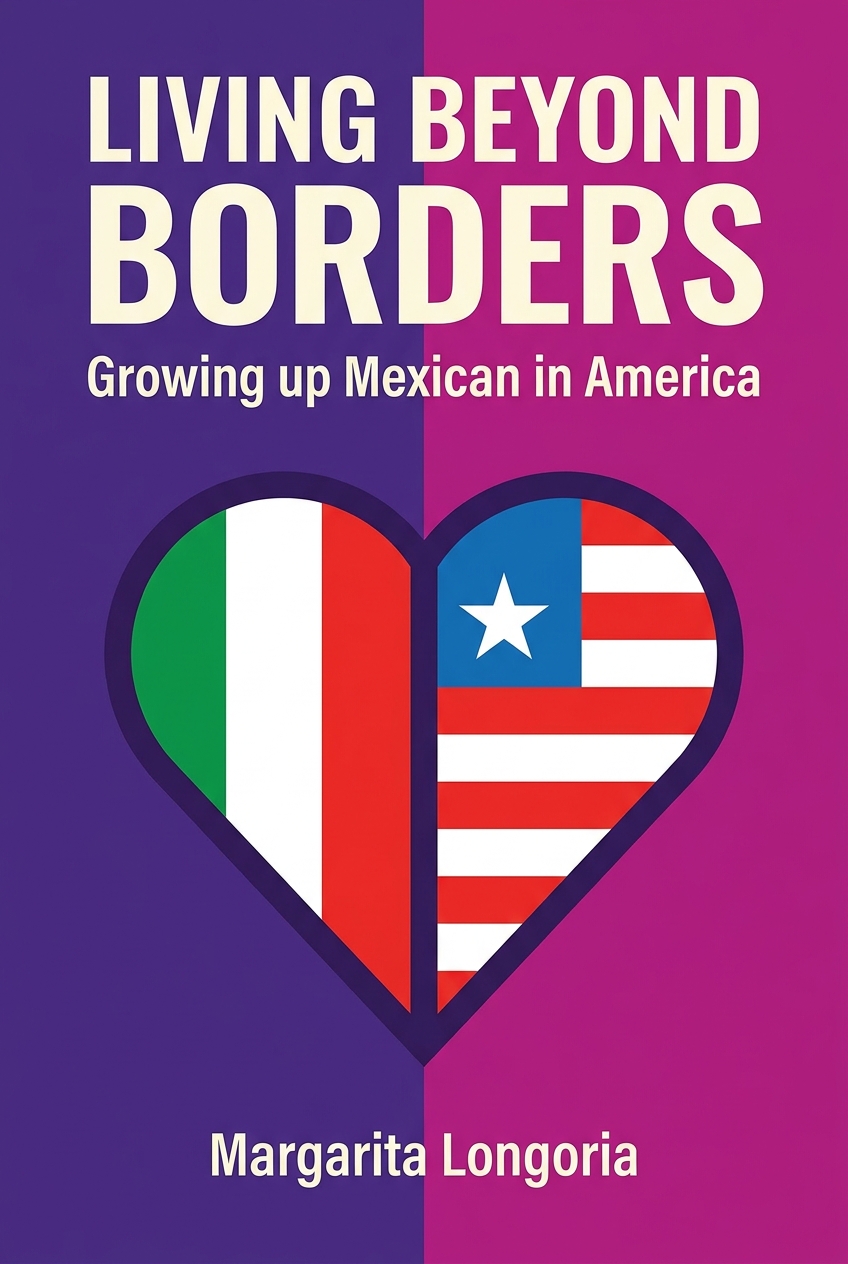
Living Beyond Borders
Growing up Mexican in America
What's it about
Ever wonder what it's like to live between two worlds, not fully belonging to either? Discover how to navigate the complex feelings of being a "ni de aquí, ni de allá" neither from here, nor from there and find strength in your unique identity. This collection of stories, poems, and comics from Mexican American authors offers a powerful look into the challenges of straddling two cultures. You'll learn how to embrace your heritage, overcome stereotypes, and celebrate the beautiful, messy reality of growing up beyond borders.
Meet the author
Margarita Longoria is an award-winning high school librarian and educator whose work champions authentic representation and empowers young readers to embrace their cultural identity. Drawing from her own experiences growing up in a bicultural, bilingual world straddling the U.S.-Mexico border, she curated this anthology to give voice to the multifaceted Mexican American experience. Her passion is rooted in creating spaces where all students see themselves and their stories reflected, celebrated, and understood.
Opens the App Store to download Voxbrief

The Script
Two people are given identical balls of masa. One, following a family recipe passed down through generations, instinctively adds water, lard, and salt, feeling for the right consistency to make tamales for a holiday feast. The other, an award-winning culinary student, consults a textbook, measuring each ingredient with scientific precision to create a deconstructed, avant-garde dish for a competition. Both start with the same raw material—the same cultural inheritance—but their hands, guided by different knowledge systems and life experiences, shape it into something entirely new. The final products are equally valid, yet profoundly different, each telling a unique story of tradition, innovation, and personal history.
This act of shaping a shared inheritance into a personal one is a lived reality for millions. Margarita Longoria experienced this firsthand, growing up in the Rio Grande Valley of South Texas. She constantly navigated the space between two languages, two cultures, and two sets of expectations. She saw how a single cultural element, like a piece of music or a specific food, could hold vastly different meanings for her and her friends, depending on their individual family stories. This feeling—of being both fully part of two worlds and sometimes an outsider in both—sparked a desire to collect the diverse stories she knew existed. She began to gather the voices of other writers and artists who were also shaping their own unique identities from the rich, complex material of a life lived across cultural lines, resulting in the vibrant collection that is Living Beyond Borders.
Module 1: Redefining Home and Identity
The concept of "home" seems simple. But for many, it's a complex battleground of identity. This book argues that home is a tapestry woven from memory, language, and family history. And sometimes, you have to fight for your right to claim it.
One of the most powerful ideas explored is that your personal history is your deepest claim to a place. A legal document, like a deed or a border treaty, is just a piece of paper. It can't compete with the lived experience of a place. One author describes home through visceral childhood memories: picking oranges from a backyard tree, the smell of her mother's cooking, and chasing fireflies in the humid air. These sensory details are what truly root a person to the land. This perspective challenges the idea that belonging can be granted or revoked by an external authority. It suggests our most profound connection to a place is built through the small, intimate moments that shape our lives.
This leads to a crucial insight about identity. Many stories in the collection expose the pressure to choose a side. To be either Mexican or American. But the authors refuse this false choice. Instead, you can claim a blended identity without hyphenating or apologizing. One character, Yoli, puts it plainly: "I’m a Mexican American. I don’t hyphenate it... By calling myself Mexican American, I choose to claim Mexico—not reject it... Same with the United States. It’s mine too. I don’t have to choose one or the other." This is a powerful act of self-definition. It’s about creating a space where you can be whole, integrating all parts of your heritage without feeling like you're "not enough" of either.
And here's the thing. This internal sense of identity constantly clashes with external perceptions. The book is filled with examples of microaggressions. Characters are told their English is "great for a Mexican" or are praised for having an "extensive" vocabulary. These moments, while seemingly small, chip away at a person's sense of belonging. They reveal a societal bias that constantly questions their Americanness. The lesson here is subtle but critical for anyone in a leadership position. It’s a reminder that our words, even when well-intentioned, can reinforce harmful assumptions about who belongs and who is an outsider.