All Books
Self-Growth
Business & Career
Health & Wellness
Society & Culture
Money & Finance
Relationships
Science & Tech
Fiction
Topics
Blog
Download on the App Store

Loose Woman

Poems (Vintage Contemporaries)

14 minSandra Cisneros

What's it about

Ready to unleash the unapologetic, "loose" woman within? This collection of poems is your invitation to break free from societal expectations and embrace every facet of your being—the passionate, the rebellious, and the divine. Explore what it means to live a life of audacious self-love and fierce independence. Through Sandra Cisneros's fiery and tender verses, you'll discover how to celebrate your own sensuality, challenge outdated norms, and find power in vulnerability. These poems are a roadmap to reclaiming your narrative, honoring your desires, and dancing to the rhythm of your own heart, wild and untamed.

Meet the author

Sandra Cisneros is a MacArthur "Genius Grant" recipient and a pivotal figure in Chicana literature, celebrated for her groundbreaking explorations of identity, sexuality, and cultural belonging. Drawing from her experiences growing up between Chicago and Mexico, Cisneros gives voice to the working-class Latina experience with fierce honesty and lyrical power. Her work, including the acclaimed The House on Mango Street, challenges conventions and celebrates the defiant, complex lives of women who refuse to be confined by societal expectations.
Listen Now

Opens the App Store to download Voxbrief

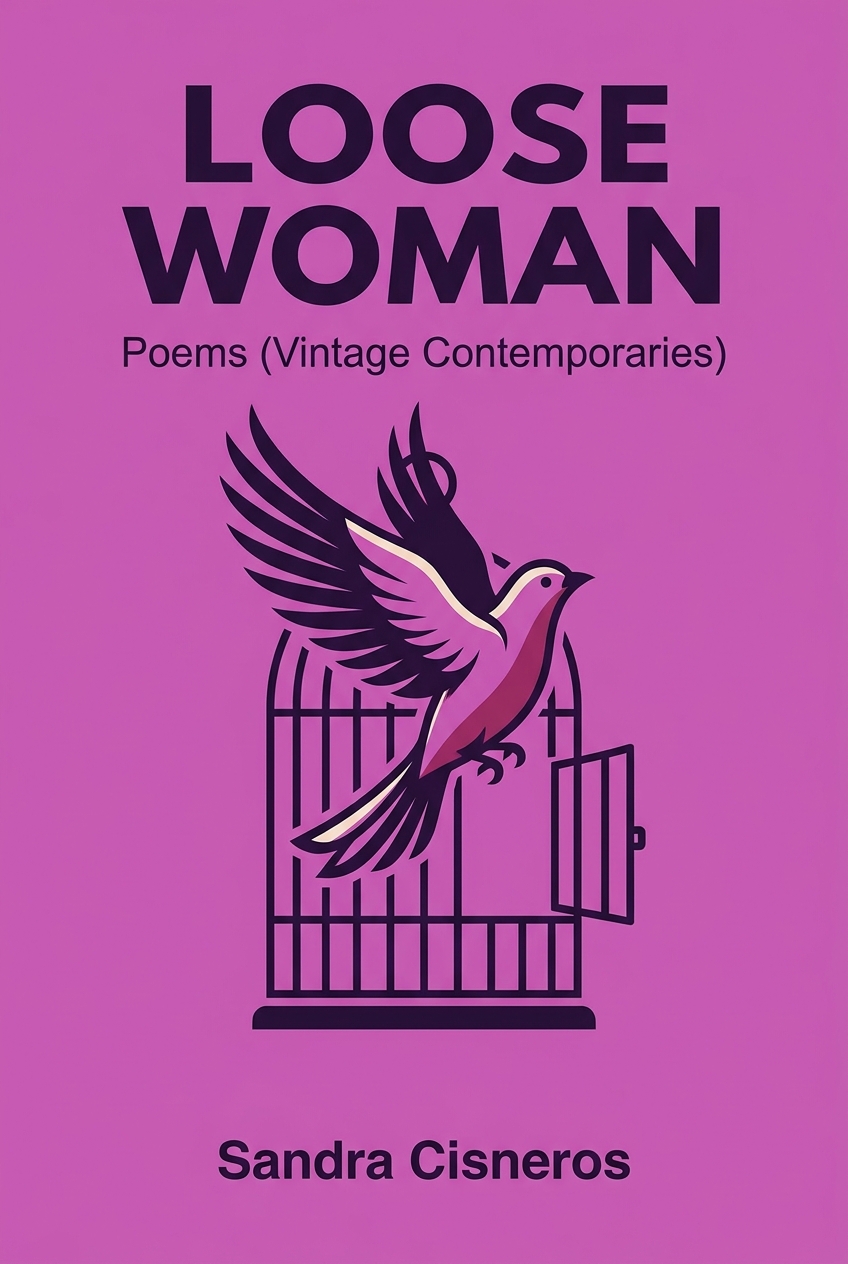
Loose Woman book cover

The Script

Think of two identical, blank-paged journals, gifted to two different women. The first woman fills hers with meticulous, daily entries. Each page is a careful record of obligations met, appointments kept, and favors done. Her script is neat, her language proper. The journal becomes a ledger of her duties as a daughter, a partner, a good woman. It is a testament to a life lived for others, its spine straight and unbroken on the shelf.

The second woman’s journal tells a different story. Its pages are smeared with wine, stained with tears, and filled with poems scrawled in the middle of the night. There are ticket stubs glued to the margins, phone numbers scribbled diagonally, and entire pages ripped out in fits of passion or frustration. It’s a catalog of desires, mistakes, and fierce declarations. It doesn’t sit neatly on a shelf; it’s tossed in a bag, its spine cracked, its pages dog-eared from being lived in. This journal is a record of a life lived fully, on its own terms.

This is the energy Sandra Cisneros channels in her poetry collection, Loose Woman. After the monumental success of The House on Mango Street, which cemented her as a vital voice in Chicano literature, Cisneros felt the weight of expectation. She was supposed to be a certain kind of writer, a certain kind of woman. Instead, she chose to unleash the second journal. Written over a decade, these poems are her defiant, joyful, and unapologetic declaration of independence—as an artist and as a woman claiming her own body, her own desires, and her own power, free from the world's ledgers.

Module 1: The Power of the Unapologetic Voice

The core of "Loose Woman" is a radical act of reclamation. It’s about taking the words used to diminish women and turning them into badges of honor. The speaker in these poems is not ashamed. She is bold, sensual, and refuses to be silent. This is a direct challenge to the quiet propriety often expected of women.

One of the first things you notice is the raw energy. Reviewer Julia Alvarez said the poems give voice to "all we girls were taught not to say out loud." This is about creating a new set of rules. You must define your own terms of engagement. In the title poem, "Loose Woman," the speaker lists the labels thrown at her: "beast," "bitch," "witch." Instead of defending herself, she claims them. She says, "I’m Bitch. Beast. Macha." She transforms these insults into a source of power. For a professional, this is a lesson in owning your narrative. When someone tries to label you as "too aggressive" or "too ambitious," you can reframe it. That aggression is drive. That ambition is vision.

From this foundation, Cisneros shows that this voice must be deeply personal. Your identity is a fusion of all your parts, not a curated selection. The poems weave Spanish and English together seamlessly. Words like "corazón" and "querida" aren't just decorative. They carry the weight of culture, family, and a specific worldview. In the poem "You Bring Out the Mexican in Me," love isn't a simple emotion. It awakens a complex heritage. It summons everything from the iconic actress Dolores del Río to the Aztec love of war. The speaker isn't just a woman in love; she is a Chicana woman in love, and that distinction is everything. This approach reminds us to bring our whole selves to our work. Our unique backgrounds and perspectives are competitive advantages that allow us to see problems and solutions others might miss.

And here's the thing: embracing this complexity means accepting contradiction. True strength lies in embracing your own paradoxes. The poems don't offer a simple, sanitized version of love or life. They are messy, contradictory, and deeply human. One poem describes love with the ferocity of "firecrackers and tequila." Another portrays the heart as both a "little clown" and a source of deep sorrow. The speaker can be a "pathetic bitch" one moment and a powerful "bruja," or witch, the next. She is both at once. This is a powerful model for leadership. It’s okay to be both data-driven and intuitive, both compassionate and demanding. The most effective leaders leverage their full, paradoxical nature.

Read More