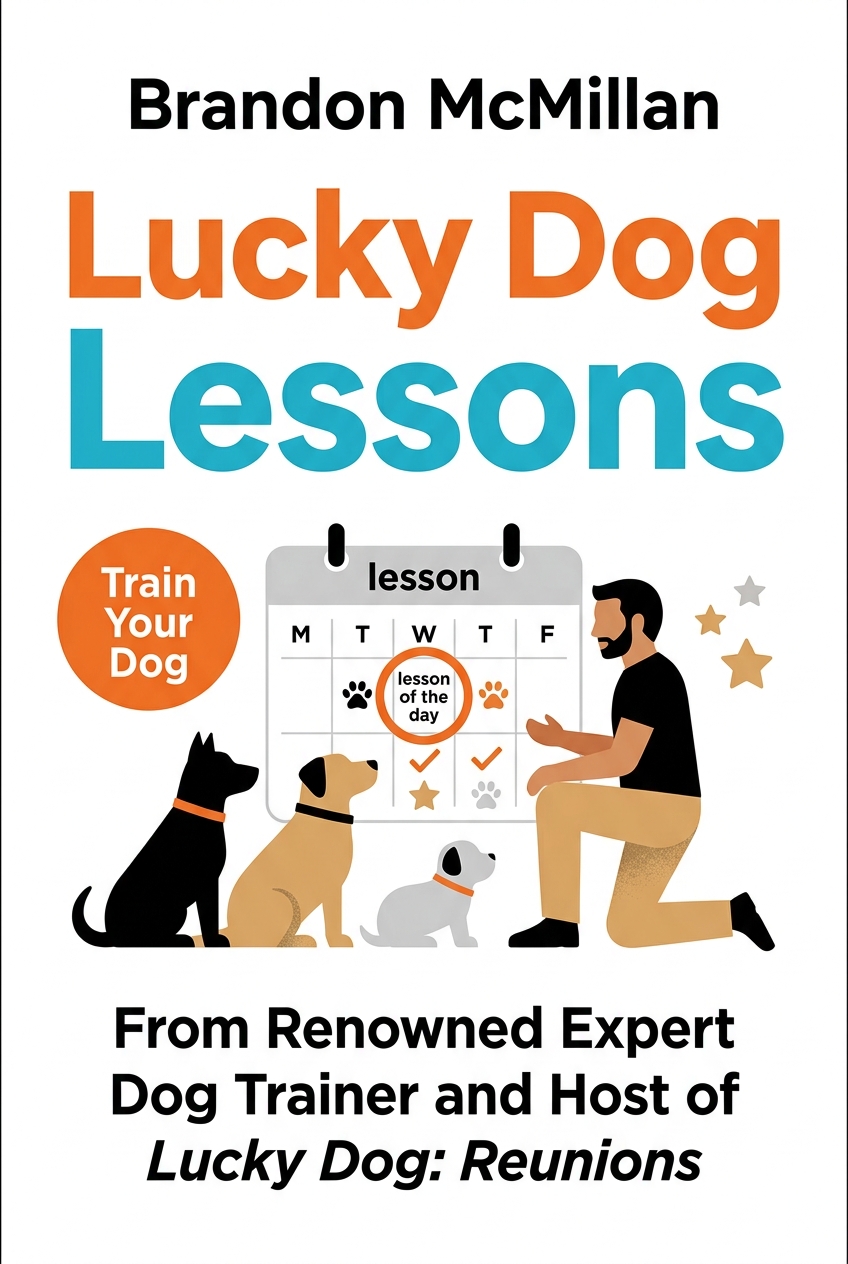
Lucky Dog Lessons
From Renowned Expert Dog Trainer and Host of Lucky Dog: Reunions
What's it about
Ready to transform your dog into a well-behaved companion? Learn the 7 Common Commands that form the foundation of a happy, healthy relationship with your pup. This guide from a celebrity trainer makes it simple for any owner to achieve amazing results. You’ll discover Brandon McMillan's unique training system, developed from his experience working with shelter dogs. Go beyond basic commands to tackle common behavioral problems like chewing, barking, and house-soiling. Build trust and communication with your dog using these proven, positive techniques.
Meet the author
As the Emmy-winning host of CBS's Lucky Dog, Brandon McMillan is one of the most trusted dog trainers in the world, responsible for rescuing and training hundreds of shelter dogs. He comes from a family of animal entertainers, growing up with everything from tigers to bears, which gave him a unique foundation for understanding animal behavior. This lifetime of experience has shaped his revolutionary training system, designed to build trust and transform any dog into a well-behaved companion.
Opens the App Store to download Voxbrief

The Script
The dog arrives at the shelter, a whirlwind of nervous energy and unknown history. For one trainer, the goal is simple: make the dog adoptable. Fast. This means teaching a sit, a stay, maybe a clean walk on a leash—a checklist of behaviors designed to look good for a five-minute meet-and-greet. The dog learns the tricks, a performance polished just enough to pass the audition. It gets adopted. A week later, the phone rings. The dog is chewing the furniture, barking incessantly, pulling on every walk. The performance has ended, and the underlying anxiety, the confusion, the lack of genuine connection, has taken center stage. The dog is returned, its file now stamped with the label 'failed.'
Another trainer sees the same dog as a partner in a new conversation. The training is about building trust, one small, quiet moment at a time. This trainer focuses on communicating confidence, on establishing leadership through clarity. The sit is a moment of focus. The stay is about shared calm. The dog that emerges is participating. It understands its place, feels secure, and trusts the human leading the way. When this dog gets adopted, the phone doesn't ring. The bond holds because it was built on something real.
This exact scene played out countless times for Brandon McMillan. As a professional animal trainer for film and television, he was an expert at getting animals to perform. But when he began volunteering at a local animal shelter, he saw the tragic gap between a dog that could perform tricks and a dog that could truly be a companion. He realized the quick-fix methods weren't working for these abandoned, often traumatized animals. McMillan started from scratch, developing his own system—built on trust, control, and focus—to transform the most 'unadoptable' dogs into confident, loving family members. "Lucky Dog Lessons" is the result of that mission, a distillation of the seven core commands he perfected in the noisy, desperate reality of the shelter, one rescued dog at a time.
Module 1: The Foundation of Trust and Leadership
Before you teach a single command, you need to build a relationship. McMillan argues that effective training is about becoming a leader your dog wants to follow. This is especially true for rescue dogs, who often arrive with a history of neglect or fear.
So, the first step is to establish trust as the prerequisite for all effective training. A dog can't learn from someone it fears. Think of it like onboarding a new team member. You wouldn't start by barking orders. You'd build rapport. McMillan tells the story of Skye, a terrified shepherd in a shelter. Instead of forcing interaction, he simply sat quietly nearby for twenty minutes. He avoided eye contact. He let her make the first move. This patient, non-threatening approach was the first deposit in their trust account. It allowed him to eventually leash her and begin her journey to a new life.
From this foundation, you can then build leadership through calm consistency. McMillan contrasts two roles: the warden and the teacher. A warden forces compliance. A teacher inspires cooperation. Your goal is to be the teacher. This means projecting calm confidence. When you meet a new dog, get down on its level. Avoid intimidating postures. Let the dog approach you. This creates a safe, predictable environment where the dog feels secure enough to learn. It’s a quiet authority that dogs instinctively respect.
Finally, you must actively bond with your dog through shared activities. Trust is the sum of many small, positive interactions. McMillan suggests five simple bonding activities.
- Exercise: Walk or explore new places together.
- Play: Engage in games like fetch or tug-of-war.
- Socialize: Introduce your dog to new, safe experiences with you there for support.
- Quiet Time: Simply sit together, petting your dog calmly.
- Food: Offer treats and meals to build positive associations.
These activities reinforce that you are a reliable source of safety, fun, and comfort. This is the bedrock upon which all successful training is built.