All Books
Self-Growth
Business & Career
Health & Wellness
Society & Culture
Money & Finance
Relationships
Science & Tech
Fiction
Topics
Blog
Download on the App Store

Matilda

14 minRoald Dahl

What's it about

Ever feel like your unique talents are overlooked or unappreciated? Discover how a brilliant young girl uses her extraordinary mind not just to survive, but to triumph over neglectful parents and a tyrannical headmistress, proving that intelligence and kindness are the ultimate superpowers. Learn how to stand up to bullies, find allies in unexpected places, and use your inner strength to change your own story. This summary reveals Matilda's secrets to turning injustice into an opportunity for growth and finding the family you deserve, not just the one you were born into.

Meet the author

Roald Dahl is celebrated as one of the greatest storytellers for children of the 20th century, with his books selling more than 250 million copies worldwide. A former fighter pilot and intelligence officer, Dahl began writing for children after inventing bedtime stories for his own daughters. His experiences with cruel headmasters and a love for mischief fueled his darkly comic tales, creating unforgettable characters like Matilda who champion fairness and the power of imagination against injustice.
Listen Now

Opens the App Store to download Voxbrief

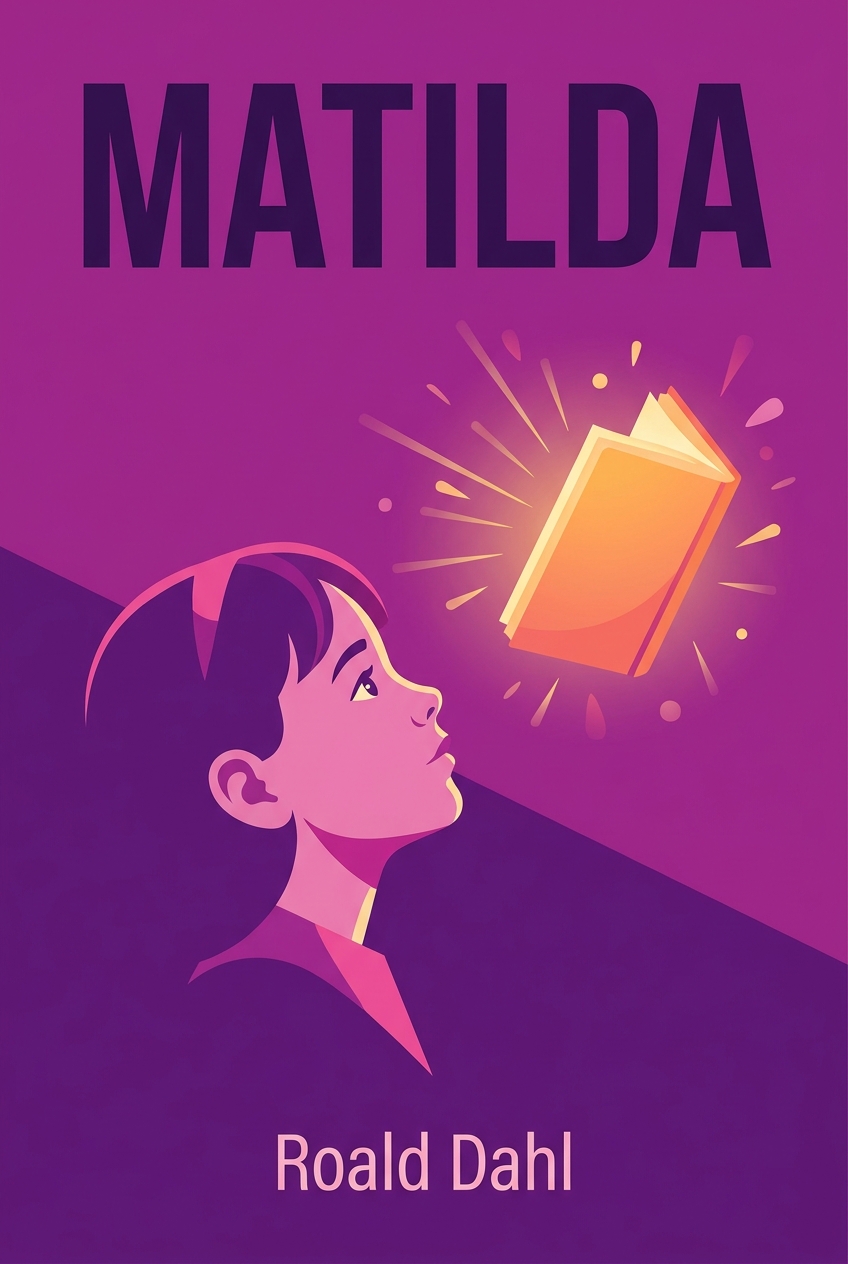
Matilda book cover

The Script

In a small, quiet town, there's a local library, a sturdy brick building that smells of paper and polish. For most residents, it’s a place for practical things: tax forms, a quiet hour, a book for a school report. But for one little girl, it is something else entirely. For her, the library is an armory. Each spine on the shelf is a weapon, each story a strategy, each character a potential ally. She is a soldier in a silent war, fought in the suffocating quiet of a living room, against tyrants who mistake ignorance for authority and cruelty for discipline. She discovers that words have weight, that stories can build fortresses, and that a mind sharpened on Dickens and Hemingway can become a shield against the loudest, most brutish forces in her world.

This fierce belief in the power of the small against the mighty was a lifelong obsession for Roald Dahl. A former fighter pilot and intelligence officer who had seen real-world tyrants up close, Dahl was fascinated by the clash between corrupt, oversized authority figures and the clever, often overlooked individuals who dared to defy them. He had a particular disdain for adults who were bullies, especially towards children, and a deep, abiding respect for the magic of storytelling. From his small writing hut in his garden, surrounded by his own strange collection of personal artifacts, he channeled his indignation and his wonder into creating a hero for anyone who has ever felt small, unheard, or powerless. He wrote a story to prove that with enough courage and a few good books, even the smallest person can become a giant.

Module 1: The Environment Is Everything

The story opens with a sharp contrast. We see parents who are either "blinded by adoration" or completely neglectful. Matilda's parents, the Wormwoods, fall into the second category. They see her as a nuisance, "nothing more than a scab" to be flicked away. This sets the stage for a critical insight: Your environment will either fuel your growth or starve it. Matilda’s home is a wasteland for intellectual curiosity. When she begs for a book, her father retorts, "What's wrong with the telly?" He actively sabotages her learning, calling her spoiled for wanting to read. This is an active suppression of talent. For any leader or professional, this is a cautionary tale. Are we creating environments where our team's best ideas can thrive? Or are we, like Mr. Wormwood, unknowingly telling them to just watch TV?

This brings us to the power of self-directed action. Despite the hostility, Matilda doesn't give up. She recognizes the toxicity of her immediate surroundings. So, she seeks out a new one. By age four, she's walking to the public library by herself. This is where she meets Mrs. Phelps, the librarian. Mrs. Phelps represents a different kind of environment. It’s a space of quiet support. She doesn't interfere or try to fix Matilda's family situation. Instead, she provides access. She gives Matilda books. This simple act opens up new worlds. You must actively seek out environments that nurture your strengths. Matilda couldn't change her family, so she expanded her world. She found a place that valued what her family scorned. This is a powerful lesson. If your current project or team isn't the right fit, don't just endure it. Find a "library"—a mentor, a side project, a new department—that allows you to exercise your true abilities.

Finally, the story introduces the idea of intellectual arbitrage. Matilda reads books meant for adults. She consumes Dickens, Hemingway, and Orwell. This gives her a perspective far beyond her years. The contrast between her inner world and her family's shallow existence is stark. While they're obsessed with TV dinners and dishonest business schemes, she's grappling with complex human emotions from classic literature. So here's the takeaway: Consume information outside your immediate domain to gain a unique advantage. Matilda's advanced reading gives her the vocabulary and moral framework to understand just how broken her family's world is. For us, this means reading beyond industry blogs and business books. It means seeking out art, history, and science. This cross-pollination of ideas creates true innovation. It allows you to see patterns and solutions that others, trapped in their narrow domains, will completely miss.

Read More