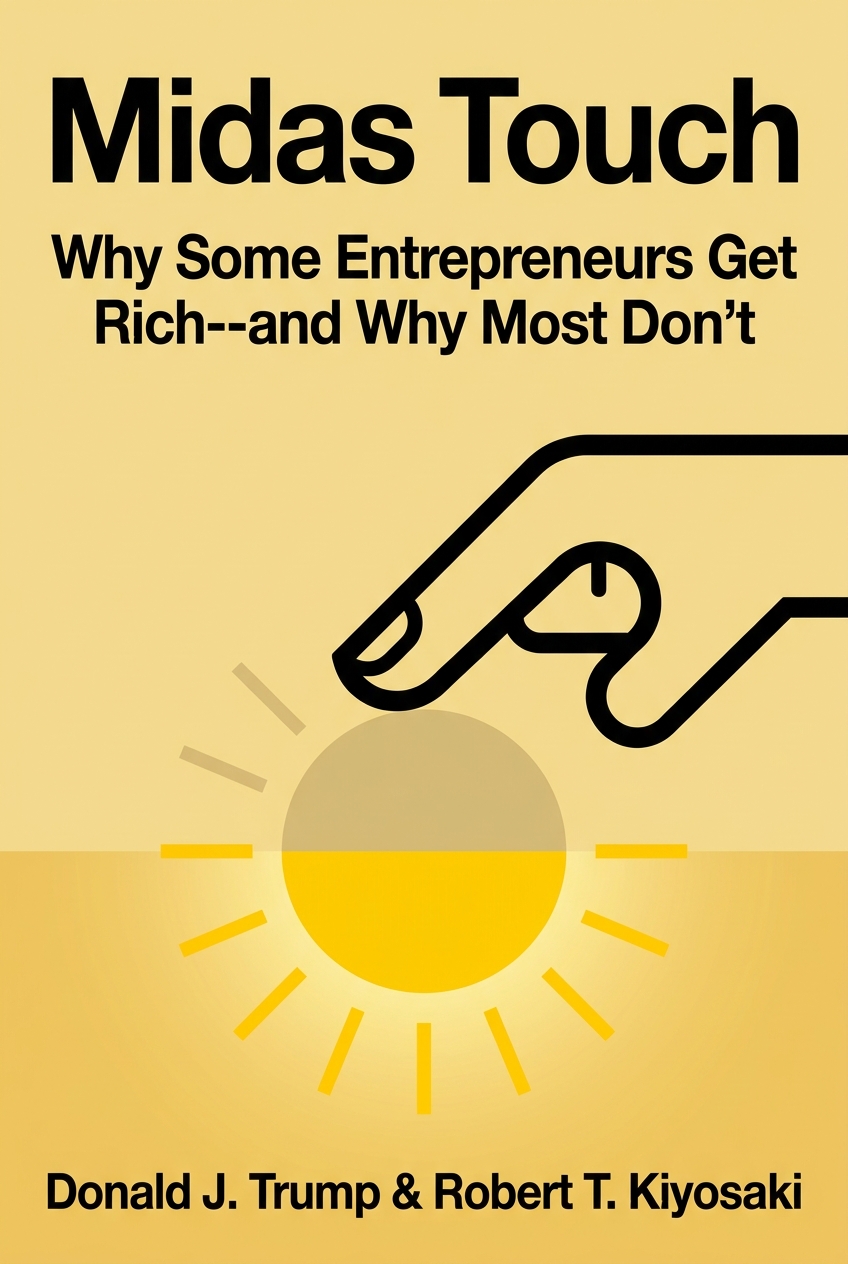
Midas Touch
Why Some Entrepreneurs Get Rich--and Why Most Don't
What's it about
Ever wonder why some entrepreneurs strike gold while others barely break even? Discover the five key ingredients of the Midas Touch. This isn't about luck; it's a specific formula for turning your business ideas into massive, sustainable wealth. Learn to master the strength of your character, focus your energy, build a winning brand, cultivate crucial relationships, and handle the small details that make all the difference. Trump and Kiyosaki reveal how these five points separate the ultra-successful from everyone else.
Meet the author
Donald J. Trump and Robert T. Kiyosaki are two of the world's most successful and influential entrepreneurs, with decades of experience building billion-dollar brands and real estate empires. Trump, a celebrated real estate mogul and media personality, and Kiyosaki, the acclaimed author of Rich Dad Poor Dad, combine their formidable business acumen in this book. Their collaboration offers a rare look into the mindset that separates wildly successful entrepreneurs from the rest, born from years of high-stakes deals and unparalleled financial success.
The Script
In the world of professional sports, one of the most fascinating paradoxes is the 'sophomore slump'—that baffling drop in performance after a stellar rookie season. An athlete bursts onto the scene, seemingly unstoppable, only to falter when expectations are highest. Is it pressure? Have opponents figured them out? Or did they simply lose the hunger that got them there in the first place? This is a core puzzle in every high-stakes arena. We see it with one-hit-wonder musicians, flash-in-the-pan tech founders, and restaurateurs who can't replicate the magic of their first location. The real question is how to sustain success. What separates the fleeting stars from the enduring dynasties is an intangible quality, a kind of operational grit that turns a single victory into a legacy.
This exact puzzle—the gap between a one-time win and repeatable success—brought two titans of business and branding together. One, Donald J. Trump, had spent decades turning his name into a global symbol of luxury real estate and high-stakes deal-making. The other, Robert T. Kiyosaki, had transformed financial literacy with his 'Rich Dad Poor Dad' series, creating a worldwide movement around financial education. They noticed that while many people had great ideas, few possessed the five key elements required to turn those ideas into profitable, lasting enterprises. They decided to combine their distinct experiences—one from the world of tangible, monumental projects and the other from the world of financial philosophy—to write a book that defines this essential entrepreneurial quality: the Midas Touch.
Module 1: The Foundation — Character and Focus
The authors introduce a framework called the Midas Touch. It's represented by the five fingers of a hand. Each finger symbolizes a core entrepreneurial quality. The first two, the thumb and index finger, are the most critical. They represent Strength of Character and Focus.
Your emotional fortitude is your most valuable asset. The authors call this Strength of Character. It's the thumb of the Midas Touch hand. It provides the foundational strength to grip and hold on. Without it, every other skill is useless. Entrepreneurship is a brutal arena. It’s filled with failure, betrayal, and immense pressure. Your ability to withstand failure determines your capacity for success. Robert Kiyosaki shares a painful story. He invested $27,000 with a friend who promised a quick return. The money vanished. The friend blamed someone else. Kiyosaki, afraid of losing his investment, wanted to believe the excuse. This emotional weakness, this lack of character, led to a cascade of bad decisions. It cost him nearly a million dollars and his marriage. He learned a hard lesson. Business is about managing your own fear, greed, and impatience.
Now, let's turn to the other side of that coin. In the early 1990s, Donald Trump faced billions in personal and corporate debt. The market had turned. He had lost focus. But instead of blaming the economy or his bankers, he took responsibility. He owned the failure. He regained his focus and rebuilt his empire, becoming more successful than before. This is Strength of Character in action. It’s the ability to look disaster in the face and see it as a classroom.
Building on that idea, you must learn to see failure as tuition. Traditional education punishes mistakes. Entrepreneurship demands them. The authors are clear on this. The fastest way to succeed is to fail, learn, and adapt—quickly. Thomas Edison famously said he didn't fail 10,000 times. He found 10,000 ways that didn't work. This is the mindset. Every "no" is data. Every flop is a lesson. Kiyosaki's first major venture, a nylon wallet company called Rippers, was a masterclass in failure. He dealt with bad products, failed marketing, and partner betrayal. But the "expensive but priceless" knowledge he gained from that disaster directly led to his next, wildly successful venture: the CASHFLOW board game. The failure was the prerequisite for success.
So what happens next? You develop the skill of turning bad luck into good luck. This is a conscious choice fueled by character. Resilient entrepreneurs reframe setbacks as opportunities. When Kiyosaki’s wallet business was collapsing, he designed a small shoe pocket for runners out of sheer desperation. That product, born from fear, became a hit. He turned a crisis into an innovation. Likewise, Trump saw New York City's six-year, $12 million failure to renovate a public skating rink as his opportunity. He took over the project. He finished it under budget and ahead of schedule. He turned a public embarrassment into a personal triumph and a gift to the city. That’s the Midas Touch. It's about transmuting problems into opportunities.