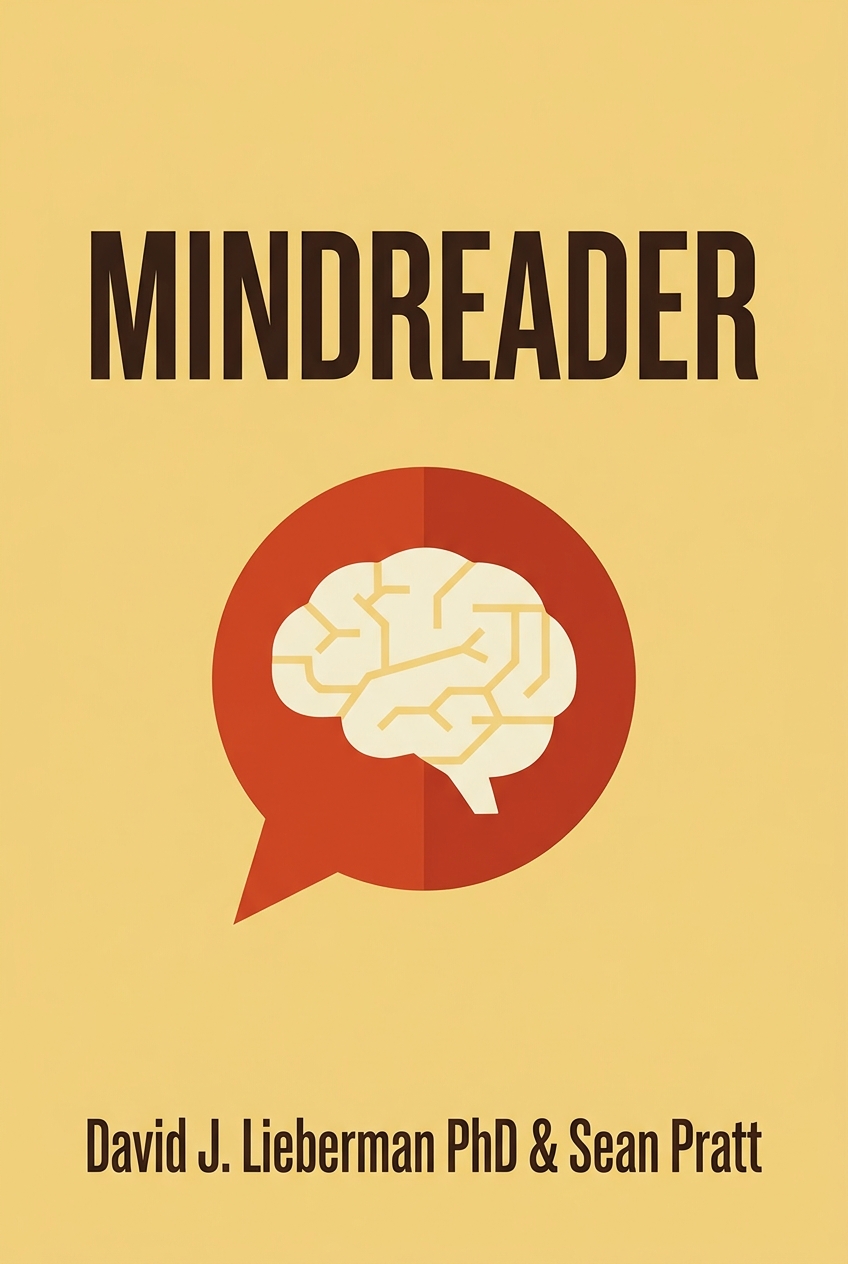
Mindreader
The New Science of Deciphering What People Really Think, What They Really Want, and Who They Really Are
What's it about
Ever wondered if someone is lying, or what they truly think about you? Learn to decode anyone's real thoughts and intentions. This guide gives you the power to cut through deception and see the truth in any situation, from a first date to a business negotiation. Based on cutting-edge psychological research, you'll discover specific verbal and non-verbal cues that reveal hidden motives. Dr. David Lieberman provides practical, step-by-step techniques to determine honesty, assess trustworthiness, and understand what people really want—giving you a decisive advantage in your personal and professional life.
Meet the author
David J. Lieberman, PhD, is an award-winning author and internationally recognized leader in the fields of human behavior and interpersonal relationships, with his work translated into 28 languages. For over two decades, he has trained personnel in the military, the FBI, and Fortune 100 companies to see through deception and get to the truth. Dr. Lieberman's groundbreaking research in psychology and human dynamics provides the foundation for the revolutionary techniques found in Mindreader, making his expert insights accessible to everyone.
The Script
We believe our primary social challenge is making ourselves understood. We spend countless hours crafting the perfect email, rehearsing a difficult conversation, and polishing our presentations, all in a desperate bid to transmit our thoughts accurately into the mind of another. But this entire effort is based on a flawed premise. The real high-stakes game is about receiving the one your counterpart is trying to hide. The most critical information in any human interaction is rarely spoken aloud. It’s concealed behind polite smiles, vague answers, and confident assertions. We are all fluent speakers of our own intent, yet we remain functional illiterates in the universal, unspoken language of others.
This gap between what is said and what is true has fascinated Dr. David J. Lieberman for decades. As a leader in the fields of human behavior and interpersonal relationships, he saw a recurring pattern: brilliant, successful people were consistently being misled, manipulated, and blindsided, not because they were unintelligent, but because they had never learned to decode the subtle psychological signals that betray true intentions. This book is the culmination of his work, condensing complex psychotherapeutic techniques and his experience as a consultant for the FBI and military into a set of direct, actionable methods. He wrote it to give anyone the ability to cut through the noise and understand what people are really thinking, moving them from a state of guesswork to one of profound clarity.
Module 1: Deconstructing the Spoken Word
Traditional body language is often a trap. We're taught that crossed arms mean defensiveness or that a lack of eye contact signals a lie. But these are superficial cues. They are easily misinterpreted. Someone might cross their arms because they're cold, not because they disagree with your proposal. This is why the book's first major shift is to move beyond the visual and focus on the auditory. The words people choose, and the words they omit, are far more revealing.
The core idea here is that personal pronouns reveal psychological ownership and commitment. When someone is being sincere, they take ownership of their statements with words like "I," "me," and "my." For example, a genuine compliment sounds like, "I really loved your presentation." An insincere one sounds like, "Nice presentation." The "I" is missing because the speaker is psychologically distant from the statement. Law enforcement sees this with false reports. Someone reporting a fake car theft often refers to "the car," not "my car." The lack of ownership is a subconscious leak.
This brings us to the next layer: the active versus passive voice. The active voice signals responsibility, while the passive voice deflects it. Think about the difference between "I made a mistake" and "Mistakes were made." The first is direct and takes ownership. The second is vague and distances the speaker from the action. This is a window into accountability. A person who consistently uses the passive voice may be trying to avoid responsibility for their actions.
Furthermore, the order in which someone presents information reveals their subconscious priorities. Our brains are wired to mention what is most important to us first. Lieberman shares a powerful example from the story of King Solomon. Two women claimed the same baby. The true mother said, "My son is the live one, and the dead one is your son." The liar said, "Her son is dead. Mine is alive." The true mother prioritized her living child. The liar focused on the other woman's loss first. This principle applies in business, too. If you ask an employee about their work environment and they talk about the free snacks and the coffee machine before mentioning their team or their projects, it might signal social isolation or a lack of connection to their colleagues.
So what's the next step? We can also analyze how people create emotional distance. Euphemisms and distancing language signal discomfort with a topic. Salespeople ask you to "okay the paperwork" to soften the perceived risk of signing a contract. Similarly, someone might say "that marriage" instead of "our marriage" when discussing problems. The linguistic shift from "our" to "that" creates a psychological buffer, revealing a desire to detach from the issue. By tuning your ear to these subtle linguistic markers, you can start to build a more accurate picture of a person's true feelings.