All Books
Self-Growth
Business & Career
Health & Wellness
Society & Culture
Money & Finance
Relationships
Science & Tech
Fiction
Topics
Blog
Download on the App Store

Miss Peregrine's Home for Peculiar Children

13 minRansom Riggs

What's it about

Ever felt like you don't quite fit in? Discover how embracing your unique strangeness can unlock a hidden world of adventure and purpose. This summary reveals how one boy's quest to understand his grandfather's past leads him to an extraordinary, secret orphanage. You'll learn how Jacob Portman uncovers the truth behind mysterious old photographs, leading him to a time loop protecting children with astonishing abilities. Find out how he confronts monstrous creatures and discovers his own peculiar power, proving that what makes you different is what makes you essential.

Meet the author

Ransom Riggs is the 1 New York Times bestselling author whose Miss Peregrine’s Home for Peculiar Children series has sold millions of copies worldwide. A lifelong collector of strange, antique photographs, Riggs found that the haunting, anonymous snapshots he’d gathered over the years seemed to tell a story. He used these found photos as a creative prompt, weaving them into a unique narrative that became the unforgettable world of the peculiars, blending vintage photography with fantastical fiction.
Listen Now

Opens the App Store to download Voxbrief

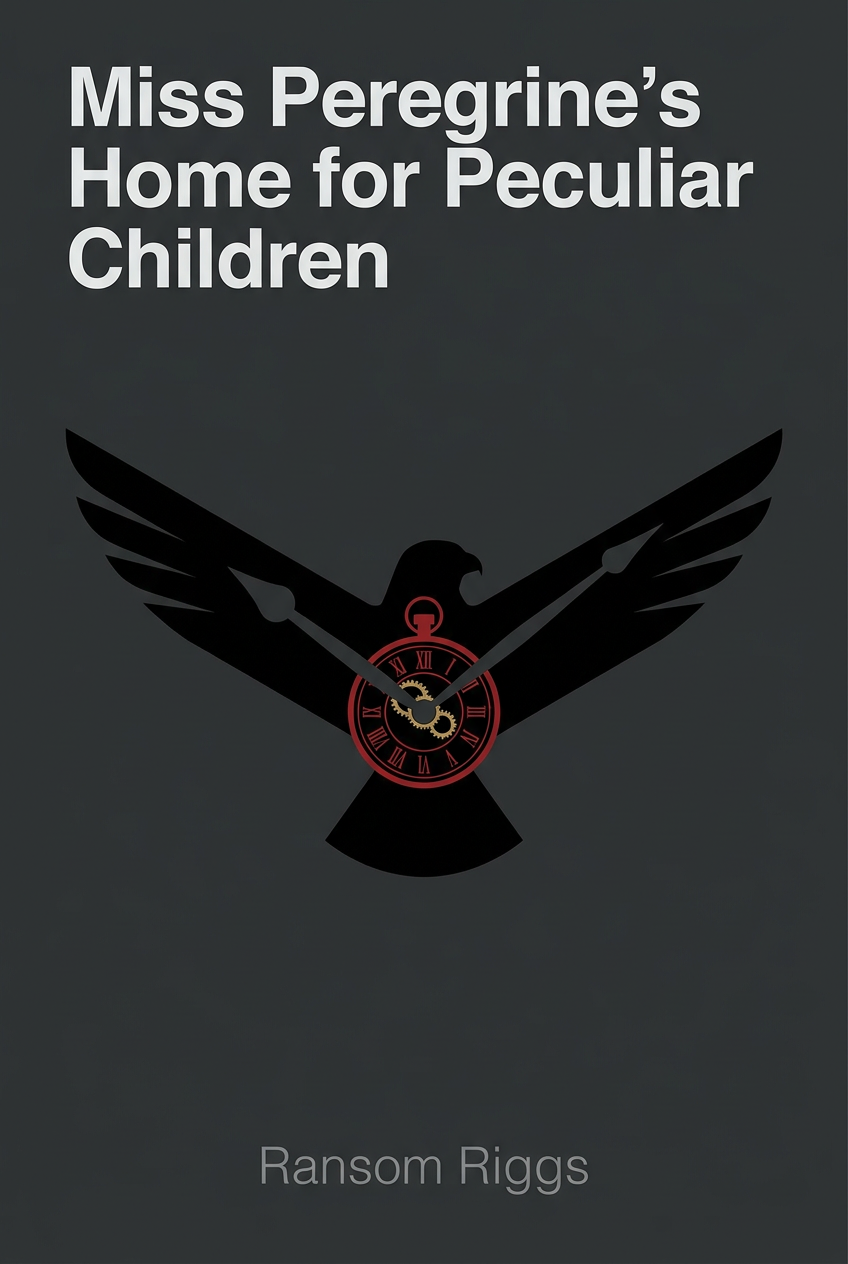
Miss Peregrine's Home for Peculiar Children book cover

The Script

You’re in an antique store, the air thick with the smell of dust and old paper. You find a box of discarded photographs, each a tiny, monochrome window into a forgotten life. One shows a girl floating a few feet off the ground. Another shows a boy covered in bees. A third, a pair of twins in identical white dresses, their faces pale and unsettling. Your first thought is that they’re clever fakes, early attempts at trick photography from a century ago. You can almost see the wires, the double exposures, the careful staging required to create the illusion. It’s a fun, solvable puzzle.

But as you keep looking, a different feeling creeps in. The images are too earnest, too mundane in their strangeness. The floating girl looks bored. The boy with the bees seems calm, as if this is just another Tuesday. The details don't feel like a punchline; they feel like a life. The line between a clever hoax and a documented, unbelievable truth begins to blur, and you start to wonder if the world you see is the only one that's real. This exact experience—of finding a strange, compelling photograph and letting his imagination ask, “What if it’s real?”—is what led aspiring filmmaker and author Ransom Riggs to write this story. He had become a collector of these orphaned snapshots, fascinated by the untold stories they seemed to hold. Instead of dismissing them as fakes, he decided to build a world where they were genuine, weaving them together to create a narrative that gives these lost children a history, a home, and a purpose.

Module 1: The Power and Peril of Childhood Belief

We begin with Jacob Portman, a kid who grew up on his grandfather’s incredible stories. His grandfather, Abe, told him about a secret island. An orphanage filled with children who had amazing abilities. One girl could float. Another could start fires with her hands. A boy had bees living inside him. To a young Jacob, these were thrilling truths, backed by a box of strange, old photographs.

This brings us to our first insight. Childhood imagination is a powerful engine for belief, but it’s vulnerable to social pressure. Jacob didn't just listen to the stories; he inhabited them. The photos of a levitating girl and an impossibly strong boy were his evidence. They were proof of a world more exciting than his own. He believed completely. But this belief was fragile.

Then, a shift happened. In second grade, a classmate mocked him for believing in "fairies." The shame was immediate and intense. Suddenly, the magical world his grandfather built seemed childish and foolish. This is a moment many of us recognize. The moment the world tells you to put away fantastic things and embrace the "real." Jacob's wonder turned to resentment. He decided his grandfather was a liar.

So, what does this mean for us? It highlights how quickly we're socialized to dismiss the extraordinary. We learn to color inside the lines. We trade wonder for practicality. Jacob's journey starts here, with the loss of belief. He packs the stories away, just like the old photos, and resigns himself to a boring, predictable life in Florida. This sets the stage for the entire story. His journey is about rediscovering a magic he was told to forget.

Module 2: Decoding Trauma Through Metaphor

Now, let's explore why Abe Portman told these stories in the first place. As Jacob gets older, his family offers a more rational explanation for his grandfather's tales. They were metaphors.

This leads to a crucial concept in the book. Fantastical stories can serve as a coping mechanism to process profound trauma. Jacob's father reveals the truth, or what he thinks is the truth. Abe Portman was a Polish Jew. His entire family was murdered in the Holocaust. He was the sole survivor, sent to an orphanage in Wales as a war refugee. The "monsters" his grandfather described, with their tentacles and rotting skin, were symbols. They represented the Nazis—the real-world monsters in uniforms who destroyed his family.

Building on that idea, the magical orphanage was a representation of the refuge Abe found. The enchanted island was the relative safety of Wales. The peculiar children were his fellow orphans, all displaced and scarred by the war. By reframing his horrific experiences this way, Abe could talk about his past without reliving its full horror. He could share it with his grandson in a way a child could understand. It was a story of peculiarity and paradise, built on a foundation of tragedy.

And here's the thing. This reframing has a profound effect on Jacob. When he learns the "truth" behind the stories, he feels a deep sense of shame. He had envied his grandfather's adventurous life. Now, he understands the terrible price of that "adventure." Understanding the real-world source of a story can completely reframe its meaning and our relationship to it. Jacob begins to appreciate his own "safe and unextraordinary" life. He sees it as a gift his grandfather never had. The stories shift from being a source of childhood wonder to a heavy legacy of historical trauma.

Read More