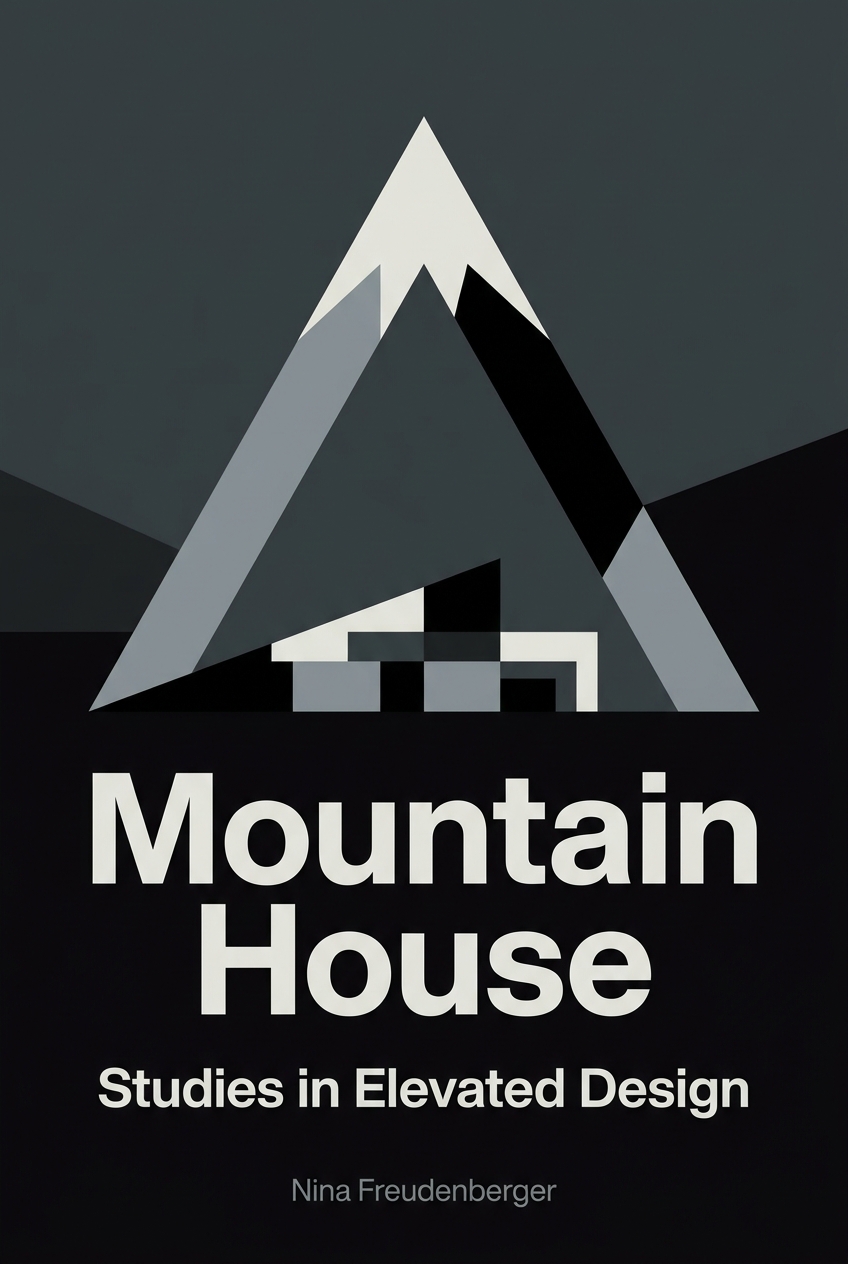
Mountain House
Studies in Elevated Design
What's it about
Ever dreamed of a cozy, modern escape nestled in the mountains? Discover how to blend stunning architecture with the wild beauty of nature. This guide offers the ultimate inspiration for creating your own serene, elevated retreat, whether you're building from scratch or just dreaming. You'll explore 17 unique mountain homes across the globe, uncovering the secrets of architects who masterfully integrate natural materials, panoramic views, and sustainable design. Learn how to choose the perfect site, maximize light, and create interiors that feel both rustic and refined, turning your high-altitude vision into a breathtaking reality.
Meet the author
Nina Freudenberger is the acclaimed founder of Haus Interior, an AD100 and Elle Decor A-List design firm celebrated for its sophisticated, livable spaces. Her passion for architecture and design began in childhood, further honed by her studies at the Rhode Island School of Design. This lifelong dedication, combined with her extensive professional experience, led her to explore the unique challenges and beauty of high-altitude homes, culminating in the expert insights found within the pages of Mountain House.
Opens the App Store to download Voxbrief

The Script
Two people are given identical, newly built houses. Same floor plan, same finishes, same view. The first owner fills it immediately, buying furniture sets from catalogs, hanging art that matches the pillows, and installing a state-of-the-art security system. The house is ‘done’ in a week, a perfect replica of a showroom. The second owner lives in the house for a month with just a mattress and a chair. They watch how the light moves through the rooms from dawn to dusk. They notice the corner where the afternoon sun hits just right, the window that frames the oldest tree on the property, and the hallway that echoes in a particular way. Only then do they begin, piece by piece, to add things that resonate with the space and their life within it. One house is a container for living; the other becomes a part of it.
This fundamental difference—between a house as a product and a home as a process—is what fascinated Nina Freudenberger. As an interior designer, she saw clients increasingly disconnected from the very idea of sanctuary, driven instead by trends and speed. She felt a deep pull toward places that seemed to grow organically from their surroundings, structures that listened to the landscape before speaking. Her search led her to the mountains, where the dramatic environment forces a different kind of conversation between architecture and nature. "Mountain House" became her collection of these conversations, a visual exploration of homes that feel less like impositions on the land and more like a quiet, thoughtful response to it.
Module 1: Design as Dialogue with Time and Place
The most compelling mountain homes grow out of the landscape. They engage in a conversation with their surroundings, their history, and the elements themselves. This module explores how architecture can become a respectful dialogue with time.
A key idea is that architectural intervention should honor a site's history. Take Casa Raslei, a ruined farmhouse in Switzerland. Instead of a gut renovation, the architects stabilized the structure with a massive steel frame. They left the broken plaster and exposed wooden beams. The marks of time became a central feature. This approach treats history as a valuable layer. It shows that new design can coexist with the old, creating a richer story.
Furthermore, embracing natural elements is integral to the living experience. The same Swiss house is intentionally porous. Rainwater pours through open spaces where windows once were. It's collected by a channel in the floor. A dome over the bathtub has an oculus, a circular opening, that admits both light and rain. This connects the simple act of bathing directly to the sky. It reframes weather as an active participant in daily life. This philosophy forces a more mindful existence.
This leads to a powerful realization. Simplification fosters a deeper connection to place and self. The owner of Casa Raslei notes that to live there, you have to change your entire way of being. There's no modern kitchen. The pleasure comes from manual work. From cultivating grapes, foraging for food, and swimming in the river. This is about trading passive consumption for active engagement. It forces a joyful shift in mindset.
Finally, the book reveals that a home can be a living project where the process of creation is the true purpose. Brian Persico, a designer in the Catskills, built his family home on a tight budget with friends. He crafted the furniture himself from trees felled on their property. He and his wife have ongoing plans for the house. They plan to add studios and re-shingle the roof. Persico reflects that accomplishing these dreams isn't even the main point. Sometimes, you just need to make something. The home becomes a physical record of a family’s life, labor, and love.