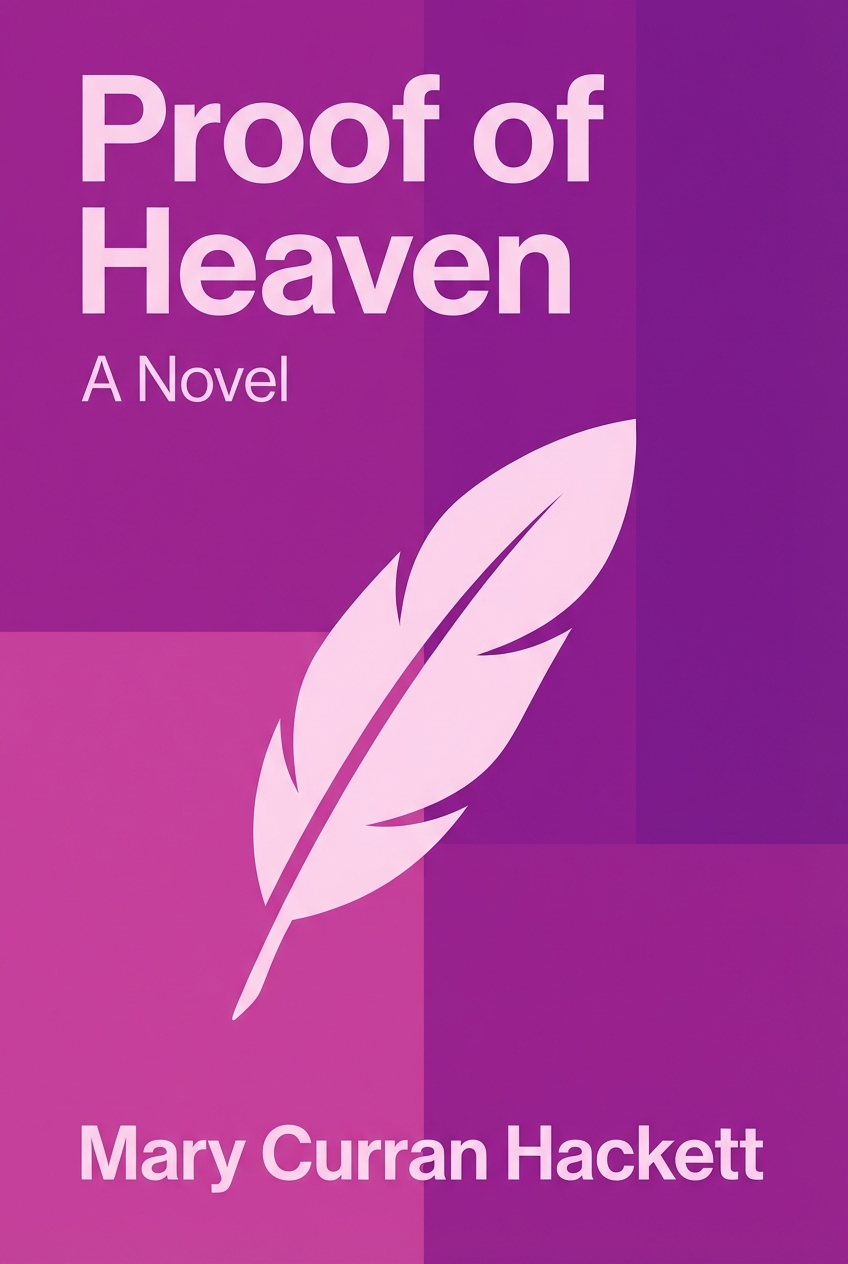
Proof of Heaven
A Novel
What's it about
What if the greatest proof of heaven wasn't a near-death experience, but the life you're living right now? This moving story invites you to discover how everyday moments of love, loss, and connection can reveal a glimpse of the divine, transforming your perspective on faith and family. You'll follow Colm, a young man with a unique gift for seeing the spiritual in the ordinary. Through his journey with his mother, who is battling a difficult illness, you'll learn to recognize the profound beauty hidden in your own relationships and find comfort in the idea that heaven is closer than you think.
Meet the author
Mary Curran Hackett is a graduate of the prestigious Iowa Writers' Workshop and a former theology teacher at a Catholic high school in Des Moines. Her unique background, blending rigorous literary training with deep theological inquiry, provided the perfect foundation for exploring complex questions of faith, grief, and the afterlife. This expertise allowed her to craft a novel that is both emotionally resonant and intellectually profound, inviting readers to contemplate what lies beyond our known world with nuance and grace.
What's it about
What if the greatest proof of heaven wasn't a near-death experience, but the life you're living right now? This moving story invites you to discover how everyday moments of love, loss, and connection can reveal a glimpse of the divine, transforming your perspective on faith and family. You'll follow Colm, a young man with a unique gift for seeing the spiritual in the ordinary. Through his journey with his mother, who is battling a difficult illness, you'll learn to recognize the profound beauty hidden in your own relationships and find comfort in the idea that heaven is closer than you think.
Meet the author
Mary Curran Hackett is a graduate of the prestigious Iowa Writers' Workshop and a former theology teacher at a Catholic high school in Des Moines. Her unique background, blending rigorous literary training with deep theological inquiry, provided the perfect foundation for exploring complex questions of faith, grief, and the afterlife. This expertise allowed her to craft a novel that is both emotionally resonant and intellectually profound, inviting readers to contemplate what lies beyond our known world with nuance and grace.
The Script
You've reached the end of the free preview.