All Books
Self-Growth
Business & Career
Health & Wellness
Society & Culture
Money & Finance
Relationships
Science & Tech
Fiction
Topics
Blog
Download on the App Store

September 11

An Oral History

15 minDean Murphy

What's it about

Do you think you know the full story of September 11th? This groundbreaking oral history takes you beyond the headlines and into the heart of the crisis. You'll hear the unfiltered, minute-by-minute accounts from the people who lived it, from inside the Twin Towers and the Pentagon. Discover the untold stories of courage, chaos, and split-second decisions that day. Through the raw, first-person testimonies of survivors, first responders, and officials, you'll gain a visceral understanding of the human experience at the center of a world-changing event, revealing the resilience that emerged from the rubble.

Meet the author

Dean Murphy is a Pulitzer Prize-winning journalist and former New York City bureau chief for The New York Times, where he led the paper's 9/11 coverage. From his unique vantage point at the heart of the tragedy, he meticulously gathered the firsthand accounts of survivors, first responders, and officials. His extensive interviews, conducted in the days and years that followed, form the powerful foundation of this definitive oral history, preserving the human stories of that fateful day for future generations.
Listen Now

Opens the App Store to download Voxbrief

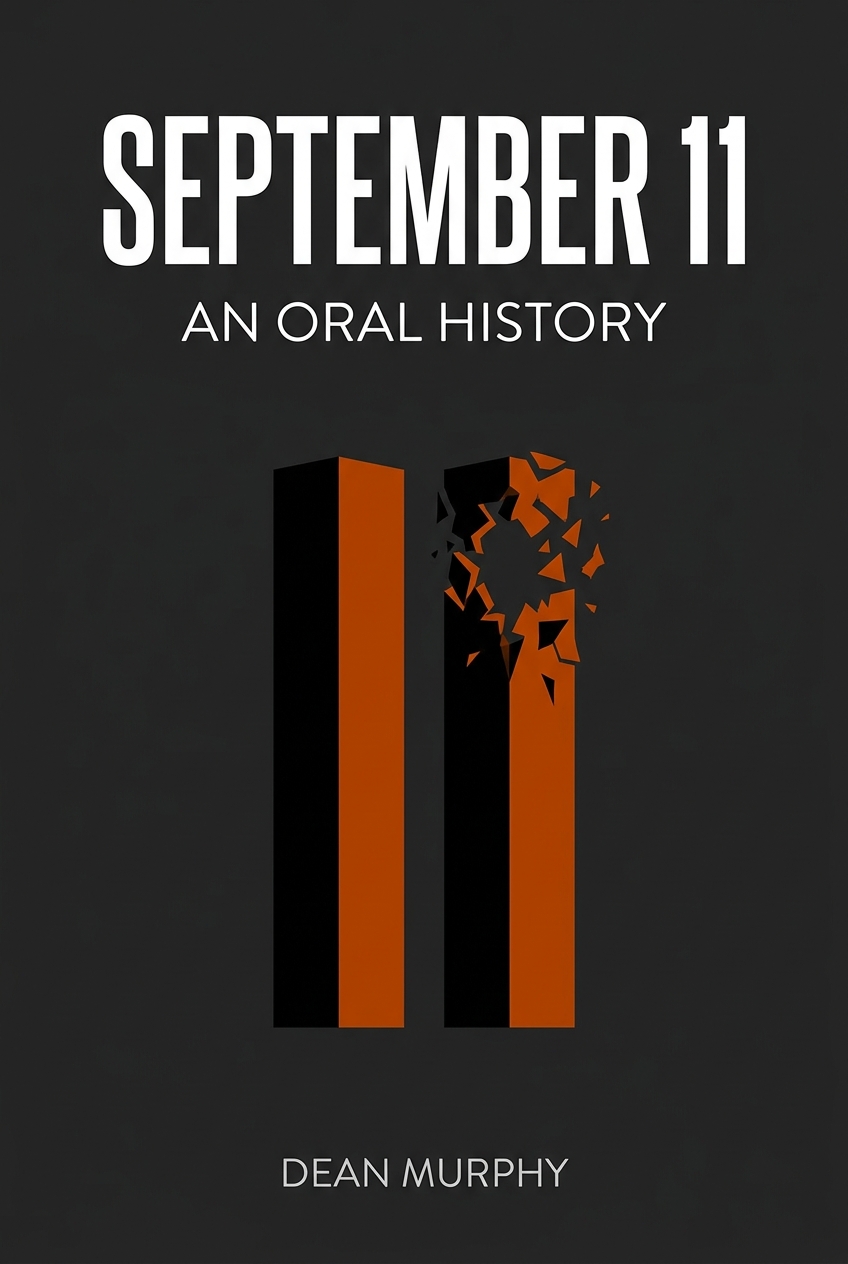
September 11 book cover

The Script

On any given day, a city's air traffic control tower is a symphony of managed foresight. A voice speaks a flight number, an altitude, a runway assignment, and a complex metal tube carrying hundreds of people gracefully complies. This system relies on a shared, unspoken agreement: that the sky operates on a set of rules, that the voices are trustworthy, and that the intentions are peaceful. For decades, this system worked. But what happens when that trust is weaponized? What happens when the instruments of routine—the transponders, the flight plans, the standard radio calls—are hijacked and twisted into tools of chaos? The symphony doesn't just stop; it shatters into a million dissonant pieces, each one a story of disbelief, confusion, and sudden, terrifying improvisation.

On the morning of September 11, 2001, that shattering happened in real time. The familiar language of aviation became a stream of incomprehensible threats, and the system built to prevent collisions was used to create them. One of the people tasked with making sense of that incomprehensible day was Dean E. Murphy, a reporter for The New York Times. He and his colleagues weren't just covering a story; they were living inside the epicenter of a world-altering event, collecting the fragments of countless individual experiences—from firefighters in the stairwells to officials in secure bunkers. This book is the result of that monumental effort, an attempt to assemble those shattered pieces into a coherent, human-scale narrative of what happened, as it happened, minute by minute.

Module 1: The Anatomy of Survival

When disaster strikes, what separates those who live from those who die? The stories from September 11 suggest it's a complex interplay of instinct, knowledge, and sheer luck. The line between a normal day and the end of your life can be measured in minutes, or even seconds.

Consider the story of Richard Moller, a risk management consultant. Survival often hinges on tiny, random deviations from routine. Moller worked on the 100th floor of the North Tower. That morning, he forgot his coffee, delaying his departure by four minutes. He missed his usual ferry. He chose a later elevator. Each minor delay felt like an annoyance. But these small moments placed him in a lower lobby, not his office, when the plane struck. Those four minutes were the difference between life and death.

Then there is the role of specialized knowledge. Michael Hingson, who was blind, worked on the 78th floor. When the building was hit, he didn't panic. Prior emergency training provides a critical framework for action when chaos erupts. Hingson had participated in fire drills every six months. He knew the protocol. Avoid elevators. Use the nearest stairwell. Stay calm. He trusted his guide dog, Roselle, and followed her lead. His training and his bond with Roselle allowed them to navigate 78 flights of stairs through smoke and chaos. His composure even helped calm others around him.

But sometimes, survival isn't about following a plan. It’s about knowing when to break it. Stephen Miller, a financial worker, heard an official intercom announcement after the first impact. The voice said the South Tower was secure. It told people to return to their offices. Many did. But Miller was skeptical. In a crisis, critically assessing official information against your own observations can be a life-saving act. He saw people jumping from the North Tower. His gut told him the situation was far more dangerous than the announcement suggested. He ignored the official instruction and kept evacuating. His colleague, who initially boarded an elevator to go back up, only survived because the occupants collectively changed their minds and went down instead. This story reveals a powerful truth. In moments of extreme crisis, trusting your gut can be more valuable than trusting a disembodied voice on a speaker.

Module 2: The Human Response to Chaos

In the face of unimaginable horror, how do people behave? The narratives from September 11 paint a picture of human nature under extreme pressure. It's a spectrum of reactions, from paralyzing fear to extraordinary acts of courage and compassion.

First, the experience itself was a sensory and psychological assault. Survivors describe a world turned upside down. The building shakes "like an earthquake." Day turns to night as dust clouds obliterate the sun. The sound of a collapsing tower is a "thunderous roar" like a freight train. For Tonya Young, who was on the street, the scene unfolded in slow motion. Trauma often distorts the perception of time and reality. She saw debris, blood, and bodies, but her mind was still fixed on her routine. She was "trying to get to work." This cognitive dissonance, the inability to process the scale of the disaster, was a common experience.

And yet, amidst this chaos, something remarkable happened. Order emerged. In stairwell after stairwell, survivors describe a slow but orderly descent. People helped each other. They shared water bottles passed up from lower floors. Officer Bill Beaury of the NYPD recalled the evacuation as being almost like "Catholic school, it was so orderly." This brings us to a crucial insight: Collective calm and mutual aid are powerful forces against panic. Strangers instinctively looked out for one another. Louis Lesce, descending 86 flights, felt tired. A stranger offered to carry his briefcase. Another group carried a man having an asthma attack. These small acts of humanity prevented a stampede.

This impulse to help was most powerfully embodied by the first responders. The stairwells became a two-way channel of human drama. While thousands of civilians descended toward safety, hundreds of firefighters ascended toward the inferno. They were laden with 75 pounds of gear. They were exhausted. They were silent, conserving energy. But their faces showed grim determination. Louis Lesce made eye contact with one firefighter who paused on a step. The firefighter's simple explanation for his actions was, "This is my job." Duty and camaraderie compel individuals to move toward danger when every instinct screams to run away. For these responders, their commitment to their colleagues and their city overrode their instinct for self-preservation. Many of them never came back down.

Read More