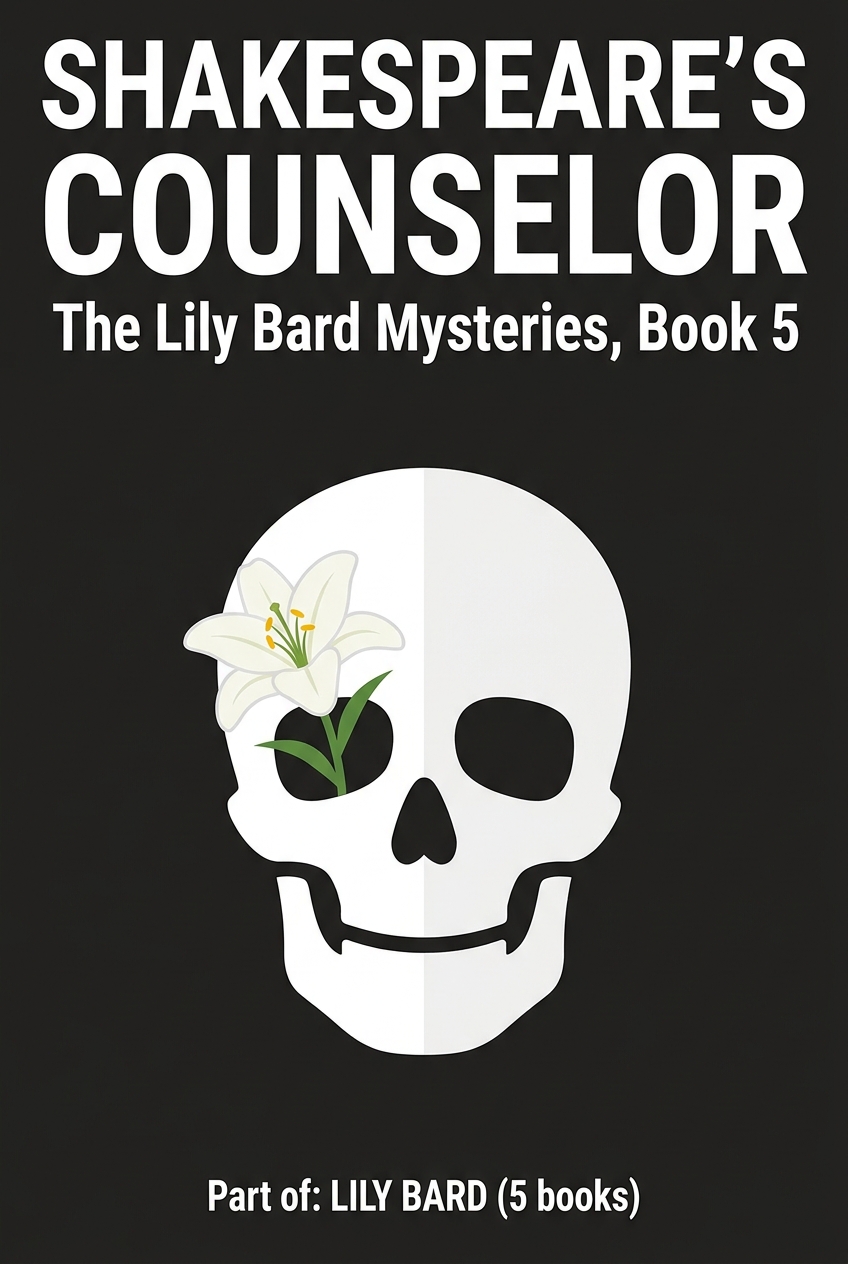
Shakespeare's Counselor
The Lily Bard Mysteries, Book 5
What's it about
Ever wonder what happens when your past refuses to stay buried? For Lily Bard, a quiet life is all she wants, but when a client is murdered and a Shakespearean scholar is the prime suspect, her hard-won peace is shattered and dark secrets threaten to resurface. You’ll join Lily as she navigates a complex web of academic rivalries, hidden motives, and personal demons. Discover how she uses her sharp instincts and martial arts skills to uncover the truth, confronting a killer who knows far too much about her own violent history. This case isn't just about justice; it's about survival.
Meet the author
Charlaine Harris is a 1 New York Times bestselling author whose Sookie Stackhouse series became the basis for the HBO show True Blood. With a career spanning decades and genres, Harris created the formidable and resilient character of Lily Bard, a cleaning woman with a dark past who solves crimes in her small Arkansas town. Her unique ability to blend suspense with deeply personal character struggles has earned her a global following and established her as a master of the modern mystery.
Opens the App Store to download Voxbrief

The Script
In the chaotic final moments before a wedding, the head caterer faces a crisis. The heirloom wedding cake, a towering masterpiece, has a catastrophic lean after the van ride over. One assistant, a culinary school prodigy, immediately starts calculating structural support, suggesting dowel rods and a deconstruction. The other assistant, who learned to bake in her grandmother’s kitchen, simply walks over, places a gentle hand on the cake board, and rotates it forty-five degrees. The lean is gone, now appearing as a graceful, intentional sweep in the design. What she saw was a problem of perspective—a flaw that could be reframed into a feature.
This ability to see the hidden turn, to find the elegant solution in a simple, insightful shift, is a rare form of genius. It’s the kind of wisdom honed through years of quiet observation. It’s also the central fascination for Lily Bard, the author of the five-book series that includes Shakespeare's Counselor. Bard spent years as a professional mediator, watching brilliant people talk past each other, stuck on the obvious problem. She wrote this series after realizing that the most effective solutions often came from the person in the room who understood the emotional architecture of the conflict. Her work explores how this intuitive reframing can resolve disputes that seem utterly intractable.
Module 1: The Echoes of Trauma in Daily Life
Lily Bard’s life is a carefully constructed fortress. She works as a cleaning woman in the small town of Shakespeare, Arkansas. This job gives her a unique window into the lives of others. It also gives her a sense of control. She likes order. She brings structure to chaotic homes. This physical act of cleaning is her way of fighting the internal chaos left by her trauma. But the past never stays buried. It bleeds into her present in terrifying ways.
One night, she has a violent nightmare. She relives her assault. In her sleep, she attacks her partner, Jack, mistaking him for her attacker. This is a turning point. The fear of harming the person she loves most forces her to confront what she’s been avoiding. She realizes her coping mechanisms, like walking late at night to prove she isn't afraid, are just temporary fixes. This leads to a critical decision. You must seek help when your coping mechanisms start to harm you or those you love. The incident with Jack makes it clear. Her old ways of dealing with her pain are no longer working. They are becoming dangerous.
So here's what that means for someone in a high-stakes environment. We often build elaborate systems to manage stress. Long hours, intense focus, compartmentalization. But when those systems start to crack, when the stress spills over and affects our relationships or well-being, it’s a signal. It's time to find a new approach. For Lily, this means considering something she dreads: group therapy.
And here's the thing. The path to healing is rarely linear and often requires an outside push. Lily is fiercely independent. She hates the idea of talking about herself in a group. She resists it completely. Her initial call to the therapist is cold and practical. She asks about cost, not about healing. What finally pushes her to go? A child. A little girl in her neighborhood innocently asks why she walks so much at night. This simple question from an outsider breaks through her defenses. It makes her see her own behavior through a different lens. It’s this small, human moment that convinces her to walk into that therapy room. It's a powerful reminder that sometimes the catalyst for change comes from the most unexpected places.