All BooksSelf-GrowthBusiness & CareerHealth & WellnessSociety & CultureMoney & FinanceRelationshipsScience & TechFiction
Download on the App Store

The Cuckoos

16 minRobert B. Payne

What's it about

Have you ever wondered how some creatures thrive by deceiving others? Explore the shadowy world of brood parasitism and discover the ingenious, often ruthless, strategies cuckoos use to trick other birds into raising their young, revealing a masterclass in evolutionary deception. You'll learn the specific tactics cuckoos employ, from mimicking the eggs of their hosts to the shocking behavior of their newly hatched chicks. Uncover the secrets of this high-stakes evolutionary arms race, where hosts develop counter-strategies and cuckoos are forced to constantly adapt to survive.

Meet the author

Robert B. Payne is the world's foremost authority on avian brood parasitism, having dedicated five decades to the field study of cuckoos and their hosts across Africa. His unparalleled long-term research, combining behavioral observation with genetic analysis, has fundamentally shaped our understanding of coevolutionary arms races. This lifelong passion began with a simple curiosity about the birds he encountered in the wild, growing into a monumental scientific quest to unravel the intricate strategies of nature's most clever cheats.
Listen Now
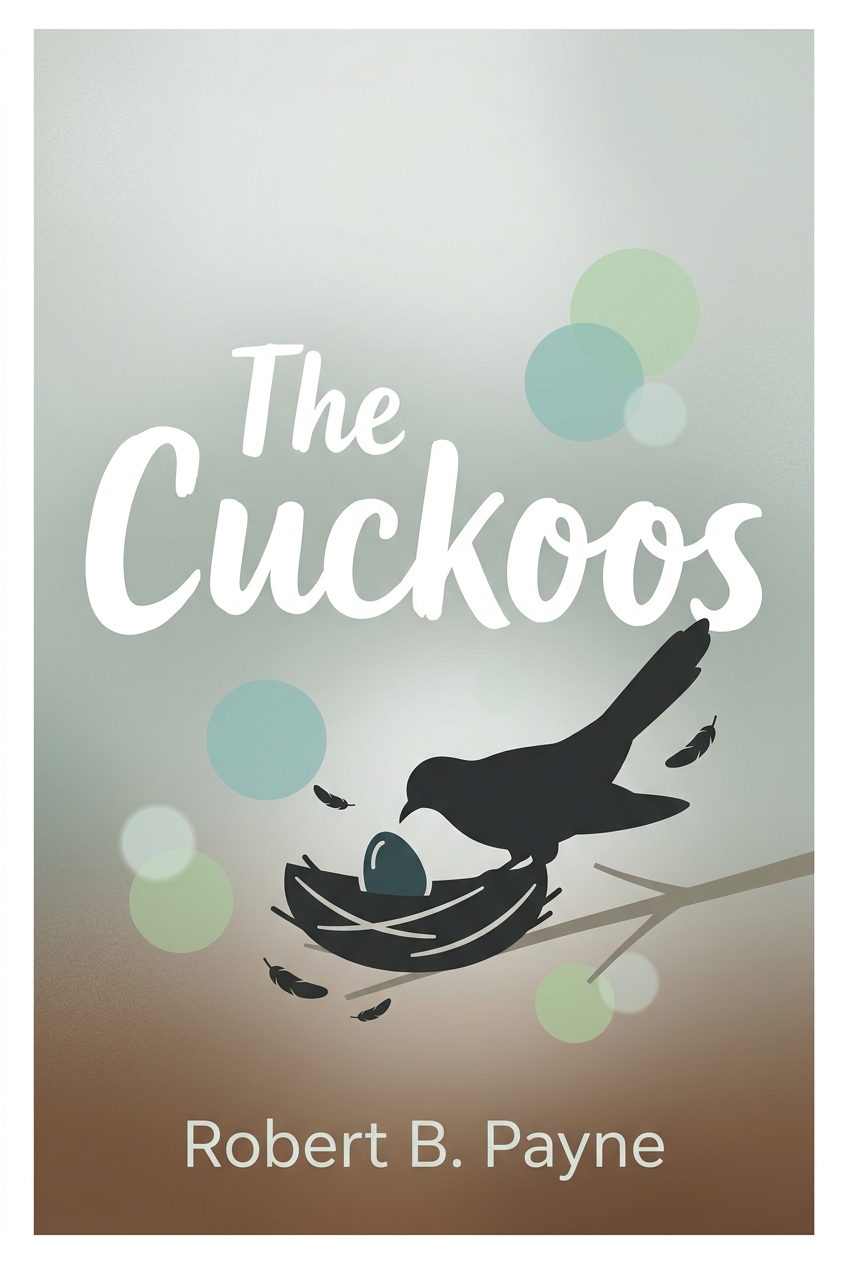
The Cuckoos book cover

The Script

In a quiet suburban neighborhood, two very different families move in next door to each other. On one side, a pair of robins diligently builds a nest, twig by twig. They are meticulous, devoted, and fiercely protective of their future. On the other side, a cowbird couple watches. They don't gather twigs. They don't scout for safe branches. Their strategy is entirely different: wait for the robins to finish their work, and then, in a moment of opportunity, deposit their own egg into the unguarded nest. The robin parents, returning, don't notice the foreign egg. They incubate it, feed the chick that hatches, and exhaust themselves raising a child that is not their own—often at the expense of their actual offspring, who are outcompeted or pushed from the nest entirely. This is a biological strategy refined over millennia, a quiet drama of deception and exploitation playing out in backyards all over the world.

This very scene, this ancient con, is what captivated ornithologist Robert B. Payne. For decades, he dedicated his life to understanding these brood parasites—the cuckoos, cowbirds, and honeyguides of the world. As a professor and curator at the University of Michigan's Museum of Zoology, Payne wasn't just cataloging species; he was chasing the 'why' behind this extraordinary evolutionary arms race. He spent countless hours in the field, from the American Midwest to the African savanna, observing the intricate tricks of the parasites and the desperate, evolving defenses of their hosts. The Cuckoos is the culmination of a lifetime's obsession with nature's most successful cheats and the victims they depend on for their very survival.

Module 1: The System of Control

The story unfolds in a psychiatric ward, but it's really a microcosm of any rigid system. Our narrator is Chief Bromden, a towering Native American man who pretends to be deaf and dumb to survive. Through his eyes, we see the ward as a factory. Its purpose is to "fix" people who don't fit in. The system is run by Nurse Ratched, a figure of calm, chilling authority. She doesn't need to shout or use brute force. Her power is more insidious.

The first thing to understand is that control is maintained through psychological manipulation, not just physical force. Nurse Ratched’s primary tool is the daily Group Therapy session. It sounds therapeutic, but it’s a weapon. She encourages patients to expose each other's deepest fears and insecurities. This is a "pecking party." She turns the patients against one another, making them complicit in their own oppression. For example, she prods a man named Harding about his wife's infidelity until he breaks down, to remind everyone of their own fragility.

Next, this system enforces conformity through rigid, meaningless routines. Everything is scheduled. From the moment the patients wake to when they can brush their teeth. McMurphy, the story's protagonist, is denied toothpaste because it's not 6:45 AM yet. The aide’s justification is telling: if people brushed their teeth whenever they wanted, it would be chaos. The rules exist to eliminate personal choice. This creates an environment where individuality withers. Chief Bromden sees it clearly. He describes the patients moving "like arcade puppets," controlled by unseen forces.

A key part of this is how the system divides people to maintain power. The ward is split into two groups. The "Acutes," who are considered treatable. And the "Chronics," who are seen as beyond repair. The Chronics are living warnings. They are former Acutes who resisted and were broken by treatments like electroshock therapy. They sit in a vegetative state, a constant, silent reminder of the price of defiance. This segregation instills fear and hopelessness. It tells the Acutes: "This is your fate if you step out of line."

Finally, Chief Bromden's perspective reveals a crucial survival tactic. To survive an oppressive system, individuals may retreat into an internal world. The Chief sees a thick "fog" that rolls into the ward. This fog is both a hallucination and a metaphor. It's a product of the "Combine," designed to keep everyone disoriented and docile. But the Chief also welcomes it. Hiding in the fog means he doesn't have to face the ward's harsh reality. It's a psychological escape. His feigned deafness is another layer of this defense. By appearing broken, he becomes invisible. He survives by convincing the system he is no threat. This sets the stage for the arrival of someone who is anything but invisible.

Read More