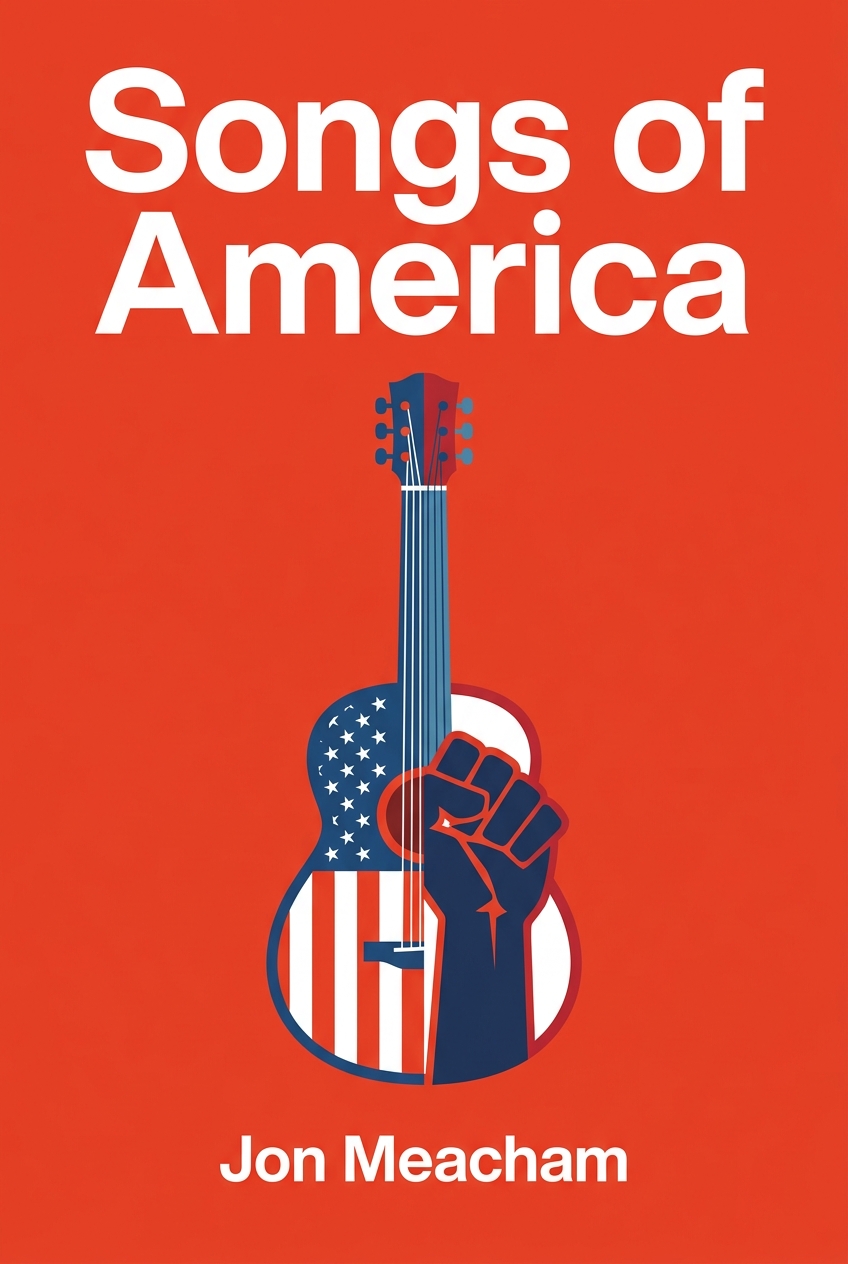
Songs of America
Patriotism, Protest, and the Music That Made a Nation
What's it about
Ever wondered how a simple song could change the course of a nation? Discover the hidden history of America, told not through speeches or battles, but through its most powerful and controversial anthems. This is the soundtrack to the American experiment, from patriotism to protest. You'll explore how songs like "The Star-Spangled Banner" and "My Country, 'Tis of Thee" united a fragile republic, and how artists from Billie Holiday to Bob Dylan used music as a weapon for social change. Uncover the stories behind the songs that have defined who we are and who we aspire to be.
Meet the author
Jon Meacham is a Pulitzer Prize-winning presidential historian and contributing writer to The New York Times Book Review, renowned for his insightful chronicles of American life. A respected commentator on politics, religion, and current affairs, Meacham has long been fascinated by the nation’s past. In Songs of America, he partners with musician Tim McGraw to explore how the lyrics and melodies of our most iconic songs have shaped the American story, from the Revolution to the Civil Rights Movement and beyond.
Opens the App Store to download Voxbrief

The Script
Think of a campfire. As the flames rise, someone pulls out a guitar. The first few chords are tentative, maybe a little out of tune, but soon a familiar melody takes shape. One person starts to hum, another joins in on the chorus they remember from childhood, and a third, younger camper, hears the tune for the first time, learning the words as they go. The song might be a simple folk ballad, a protest anthem from a past generation, or a spiritual hummed for comfort. For that brief moment, the diverse group—strangers and friends, young and old—are connected by a shared sound, even if they interpret its meaning through the lens of their own unique lives. The fire crackles, the song fades, but the feeling of connection, of participating in a tradition larger than oneself, lingers in the quiet that follows.
This very dynamic—the way a single song can hold the complicated, often contradictory, story of a nation—is what captivated historian Jon Meacham. He noticed that the anthems of hope and the hymns of struggle were the very pulse of the nation's unfolding drama. Teaming up with Grammy-winning musician Tim McGraw, Meacham set out to trace this auditory history. As a Pulitzer Prize-winning biographer known for his sweeping narratives of American presidents and pivotal moments, Meacham saw a new way to understand the country's soul: through the songs its people sang in times of both division and unity, despair and celebration.
Module 1: The Revolution's Playlist — Forging a Nation in Song
The American Revolution was fought with melodies as much as muskets. Meacham shows that from the very beginning, music was a powerful tool for shaping a national identity. It translated complex political arguments into emotionally resonant anthems that everyone could understand and share. This was a core part of the revolutionary strategy.
A key insight here is that early American leaders intentionally used music to unify and mobilize the public. George Washington himself emphasized the importance of "good music" for the morale of the Continental Army. He knew that a shared song could build esprit de corps better than a dozen speeches. This idea comes to life with "The Liberty Song," written by John Dickinson in 1768. Its lyrics, "By uniting we stand, by dividing we fall," were a direct and powerful call for colonial unity. By setting it to a familiar British tune, "Heart of Oak," Dickinson made it instantly accessible. The song spread like wildfire, creating a sense of a common cause against British overreach.
But the story gets more complex. The colonists first framed their struggle as a defense of their rights as Englishmen. They believed the British government was denying them liberties that were their birthright. This is clear in songs like "The Pennsylvania Song" from 1775, which declares, "We’ll not give up our birthright." The music of the era was about reclaiming a heritage. This framing helped justify their resistance as a conservative act to protect established freedoms.
Of course, not everyone was singing the same tune. The conflict was, in many ways, a civil war. Loyalist songs reveal a deep and opposing narrative, portraying the patriots as misguided rebels. For instance, a Loyalist captain wrote a song called "The Rebels," dismissing the patriots as "mock-patriots" and "Yankees" who were "all in the wrong." This musical counter-narrative reminds us that history is a heated argument, and in the 18th century, that argument was often set to music. These competing anthems show a society fiercely divided, with music serving as propaganda for both sides.
Ultimately, this period gave us a foundational vision. The Declaration of Independence established universal ideals that would become a central theme in American music for centuries to come. Abraham Lincoln later called its assertion that "all men are created equal" an "abstract truth, applicable to all men and all times." This promise, embedded in the nation’s founding document, created a standard. It set up a tension between America's ideals and its reality, a tension that would be explored, challenged, and sung about for the next 250 years. From the Revolution onward, American music would constantly ask: are we living up to the promises we made to ourselves?