All Books
Self-Growth
Business & Career
Health & Wellness
Society & Culture
Money & Finance
Relationships
Science & Tech
Fiction
Topics
Blog
Download on the App Store

Spellbound

How Charisma Shaped American History from the Puritans to Donald Trump

13 minMolly Worthen

What's it about

Ever wondered why some leaders can captivate a nation while others fall flat? Discover the secret ingredient that has defined American history: charisma. This summary unpacks how this powerful, often mysterious quality has been the driving force behind America's most influential figures, from religious prophets to political firebrands. You'll learn to identify the key traits of charismatic leaders and understand how they use language, emotion, and performance to win hearts and minds. Explore how figures like Billy Graham and Donald Trump harnessed this spellbinding power, and gain insights into how you can apply these principles of influence in your own life.

Meet the author

Molly Worthen is an associate professor of history at the University of North Carolina at Chapel Hill and a leading voice on North American religious and intellectual history. Her expertise grew from a deep curiosity about the figures who command public attention and shape cultural movements. By examining centuries of American life through the lens of charisma, Worthen reveals the surprising and powerful forces that have guided the nation's spiritual and political destiny, connecting the past directly to our present moment.
Listen Now
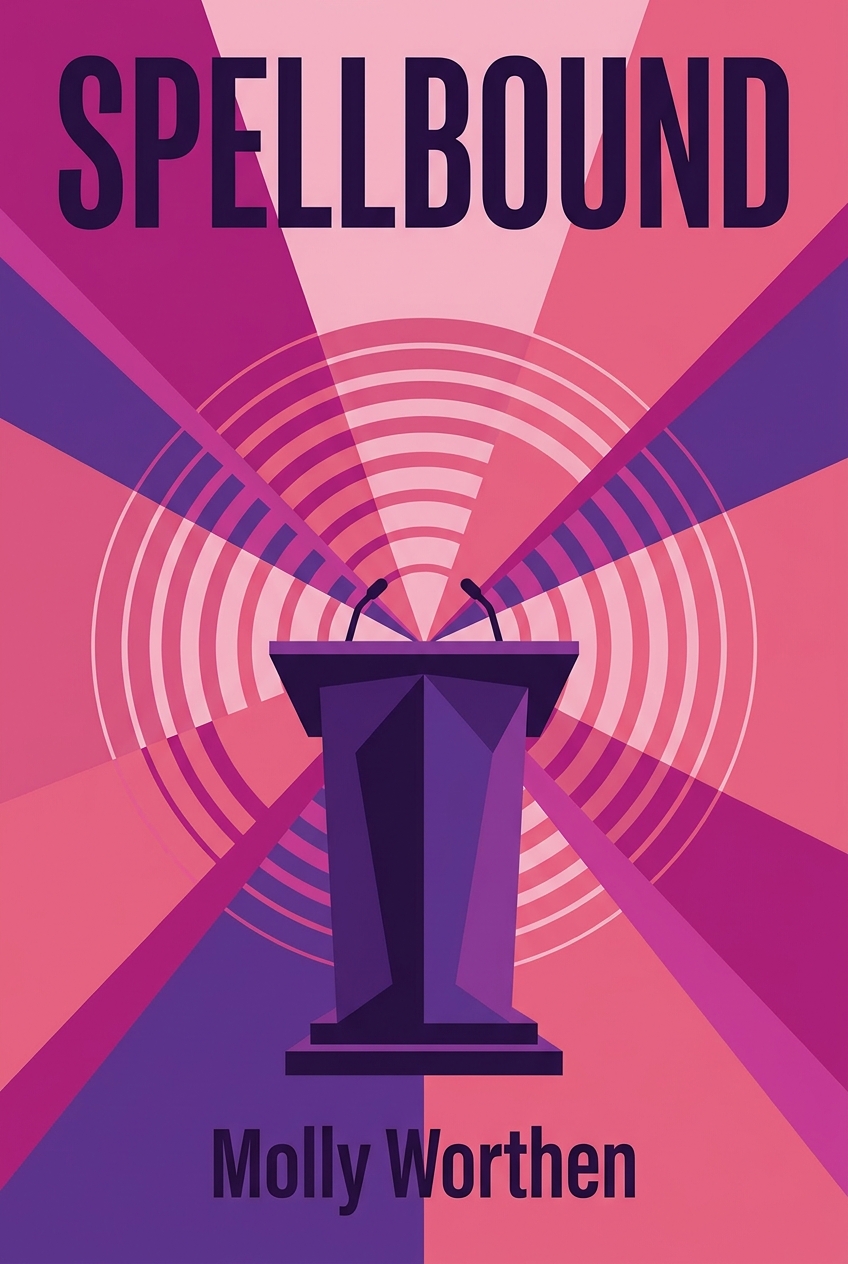
Spellbound book cover

The Script

We see spirituality as a quiet, internal affair—a matter of private reflection, silent prayer, or solitary meditation. Our culture prizes the rational, the orderly, and the intellectual path to the divine. Yet, the most explosive and enduring spiritual movements in American history were anything but quiet. They were loud, ecstatic, and profoundly public, filled with believers speaking in tongues, falling into trances, and claiming direct, supernatural encounters. The modern, sanitized version of faith often treats these displays as historical artifacts or embarrassing fringe behavior. We’ve come to believe that genuine spiritual maturity means taming the soul’s wilder impulses, containing the divine within neat theological boxes.

But what if this effort to domesticate faith is the very thing that leaves it powerless? What if the raw, untamed, and sometimes frightening experience of the supernatural is the central, driving engine of faith? This question became a central obsession for historian Molly Worthen. As a journalist covering modern American religion for outlets like The New York Times, she noticed a profound disconnect. The leaders and theologians she interviewed often spoke in careful, intellectual terms, yet the movements gaining the most traction were fueled by ecstatic, charismatic experiences that defied easy explanation. Worthen realized that to understand the true spiritual landscape of America, she had to stop looking at the tidy doctrines and start examining the messy, powerful, and spellbinding history of supernatural belief that continues to shape millions of lives.

Module 1: The Charismatic Paradox

Charisma is a relationship. It's a two-way street between a leader and their followers, built on a fundamental human paradox. We crave individual freedom. But we also yearn to surrender to something bigger than ourselves. Charismatic leaders thrive in this tension. They offer followers a deal: give me your loyalty, and I will give your life meaning. You will become part of a grand story.

This dynamic has been a disruptive force throughout history. Charisma consistently challenges established institutions. Think of Anne Hutchinson in the 1630s. She was a Puritan midwife, not a minister. But she held meetings in her home, attracting followers by claiming direct revelation from God. She told them they didn't need the clergy to find salvation. This was a direct threat to the religious and political order of the Massachusetts Bay Colony. The authorities didn't banish her because she was wrong. They banished her because she was powerful. Her charisma created a new center of authority, one that the establishment couldn't control.

This brings us to a key insight. Charismatic authority is inherently unstable because it requires constant proof. Max Weber, the sociologist who secularized the term, noted this fragility. A king rules by birthright. A president rules by law. But a charismatic leader rules only by the continued belief of their followers. This belief must be validated. It needs miracles, victories, or at least the feeling of progress. Marcus Garvey, the Black nationalist leader of the 1920s, understood this. When he survived an assassination attempt, his followers saw it as divine protection. His survival became proof of his mission. His charisma was consecrated by the event.

So what's the difference between charisma and simple charm or celebrity? Charisma creates collective transcendence. Charm helps you persuade one person. Celebrity makes you known to millions. But charisma makes a group of people feel they are part of a world-changing mission. A celebrity like Taylor Swift offers fans an illusion of intimacy. A charismatic leader like Martin Luther King Jr. offered followers a role in bending the moral arc of the universe. One is about passive escape; the other is about active, often demanding, participation. This distinction is critical. Charisma is about believing in the world a leader promises.

Read More