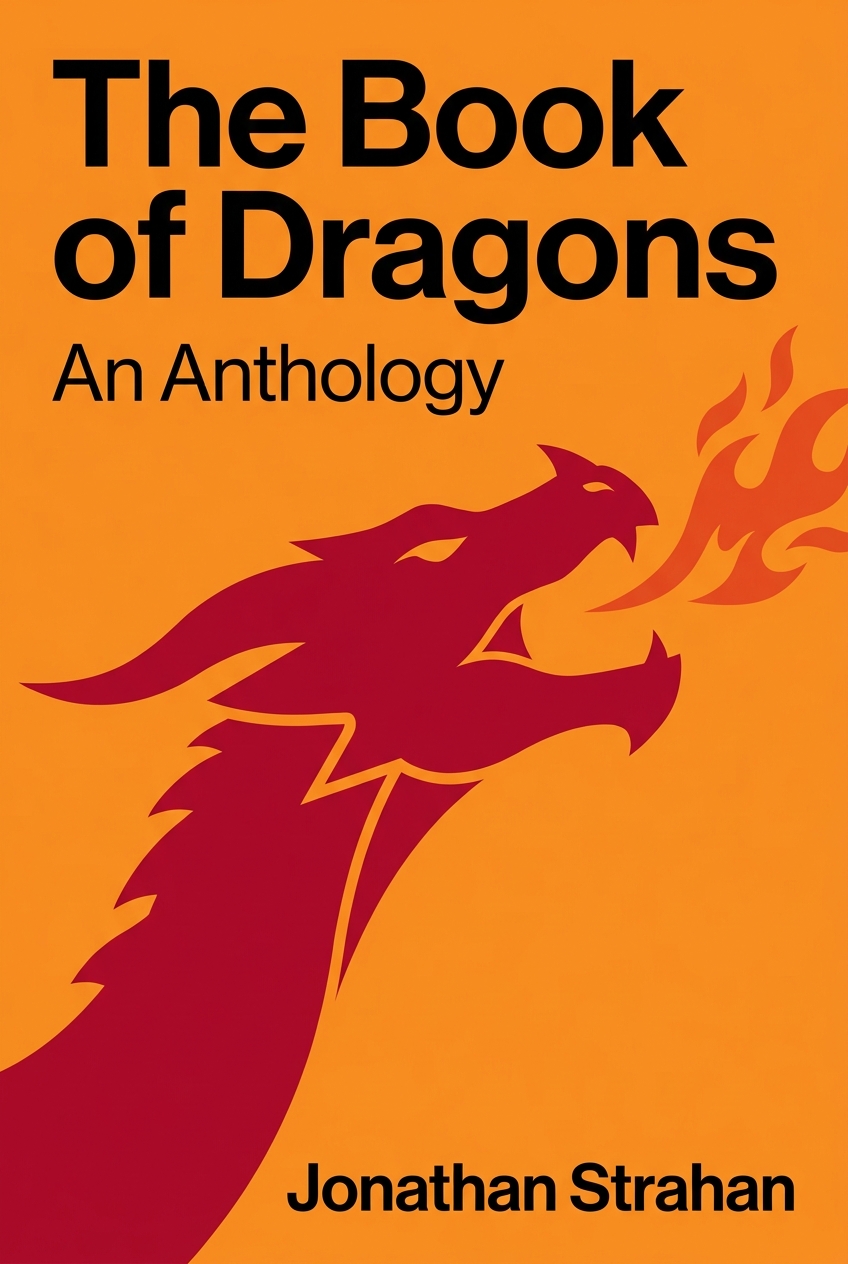
The Book of Dragons
An Anthology
What's it about
Ever wondered why dragons continue to capture our imagination, from ancient myths to modern fantasies? This collection explores the enduring power of these legendary creatures, revealing how they reflect our greatest fears, deepest desires, and the untamed aspects of the human spirit. Dive into a treasure trove of stories from fantasy's greatest authors. You'll encounter dragons as wise companions, terrifying beasts, and even misunderstood heroes. Discover how each unique tale reimagines the dragon archetype, offering fresh perspectives on what these mythical beings truly represent.
Meet the author
Jonathan Strahan is one of the world's most acclaimed and awarded editors of science fiction and fantasy, with multiple Locus and Aurealis Awards to his name. For over two decades, his passion for finding brilliant new stories has made him a leading voice and taste-maker in the genre. This lifelong dedication to curating the best in speculative fiction is what allowed him to assemble the legendary authors and breathtaking tales found within The Book of Dragons.
Opens the App Store to download Voxbrief

The Script
Deep in an old-world scriptorium, a master illuminator works on a bestiary. Beside him, an apprentice grinds pigments from lapis lazuli and malachite, watching the master paint the familiar beasts of the world: the lion, the stag, the eagle. But when the master turns to a new page, he doesn't reach for his reference sketches. Instead, he closes his eyes. From the azure and emerald powders, he begins to paint a creature he has never seen, one born from a collective, whispered memory. It has the scales of a serpent, the wings of a bat, the breath of a furnace. The apprentice, confused, asks where this animal lives. The master, without opening his eyes, simply replies, “Everywhere. And nowhere.”
This is the creature that has haunted our myths and dreams for millennia. It is the monster in the cave and the guardian of the palace, the embodiment of greed and the giver of wisdom, the apocalyptic terror and the noble companion. Dragons are a paradox, a species that exists only in our minds yet feels more real than many that walk the earth. Exploring this paradox is what drove World Fantasy Award-winning editor and anthologist Jonathan Strahan to assemble this collection. For decades, Strahan has been a preeminent voice in speculative fiction, a curator of the fantastic and the impossible. He saw that while our stories of elves, dwarves, and goblins have shifted and faded, the dragon remains—constantly being reinvented, endlessly fascinating, and always soaring just at the edge of our vision.
Module 1: The Dragon as a Mirror of the Human Condition
Dragons in these stories often serve as powerful symbols. They reflect our own nature, our societies, and our deepest psychological struggles. They are internal forces to be understood.
A key insight here is that dragons embody the duality of human nature, from wisdom and protection to greed and destruction. In the introduction, Strahan contrasts two iconic dragons. First is Marmaduke, the wise and brave companion from his own bedtime stories. This dragon represents friendship and empowerment. But then there's Smaug from The Hobbit, a creature of immense greed and clever malice. He represents our capacity for destruction. These stories show that dragons are a flexible archetype. They can be whatever the narrative needs them to be. This makes them a perfect vehicle for exploring our own internal conflicts.
This idea deepens with the concept that dragons act as catalysts for confronting hidden truths and personal trauma. In one story, a former mercenary named Yuli lives a quiet life haunted by his violent past. His grandson plays a tabletop game about dragons guarding treasure. This fantasy world directly mirrors Yuli's reality. He hides millions in stolen gold, a treasure that ties him to a history of violence. When old enemies resurface, Yuli’s dormant, predatory instincts reawaken. He feels a power like "vast wings" unfurling. The dragon, both in the game and as a metaphor, forces him to confront the killer he once was. It reveals how trauma never truly leaves us. It just lies dormant, waiting for a trigger.
Furthermore, these stories suggest that a dragon can be a physical manifestation of a person's soul or emotional core. In one tale, a lonely girl named Lucky accidentally creates a tiny dragon in a science experiment. This dragon is symbiotically linked to her. When she's sad, the dragon weeps. When she feels a surge of emotion, the dragon grows in size. Lucky realizes, "The dragon is me. It’s my soul." This concept externalizes the internal world. It gives a physical form to complex feelings of grief, love, and loneliness, making them tangible and manageable. The dragon becomes a tool for self-awareness and emotional regulation.
So what does this mean for us? These narratives suggest we can use the "dragon" as a mental model. We can identify the "dragons" in our own lives. These might be unresolved traumas, hidden ambitions, or difficult emotions. By "naming the dragon," we can begin to understand it, rather than simply fearing it.