Fight Club
What's it about
Tired of feeling trapped by consumer culture and the endless grind of modern life? Discover how a secret, underground club offers a radical, if brutal, path to reclaiming your authentic self and finding true freedom in a world designed to keep you numb and compliant. This summary unpacks the powerful philosophical ideas behind the infamous Fight Club. You'll learn why breaking society's rules can be a profound act of self-discovery, how embracing your primal instincts can shatter feelings of alienation, and why sometimes you have to destroy your life to rebuild it.
Meet the author
Thomas E. Wartenberg is a Professor of Philosophy at Mount Holyoke College whose work explores the intersection of philosophy and popular culture. His unique expertise allows him to uncover the profound philosophical questions about consumerism, identity, and rebellion hidden within mainstream films. By analyzing movies like Fight Club through a philosophical lens, Wartenberg reveals how these popular stories engage with some of the most important ideas in Western thought, making complex concepts accessible to everyone.
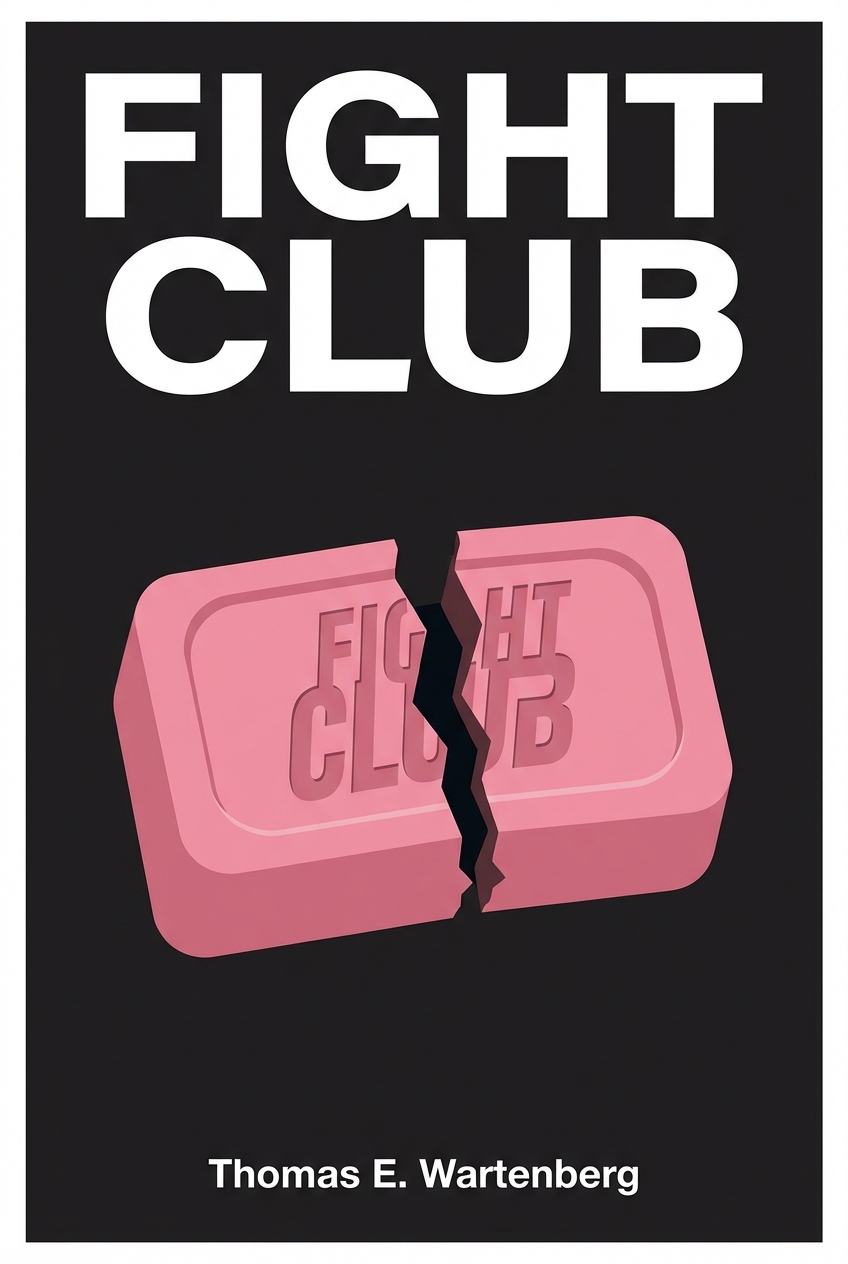
The Script
We believe that boredom is a void, an absence of stimulation that we must fill with entertainment, work, or distraction. We treat it as a modern malady, a symptom of a life not lived to its fullest. But what if boredom is an active, suffocating presence? What if it's the feeling of being trapped in a life that is perfectly functional but utterly meaningless—a life where every choice, from the furniture in your apartment to the job in your cubicle, has been pre-selected from a catalog of acceptable options? This kind of oppressive boredom isn't cured by a new hobby; it's a deep existential protest against a life where you have everything you're supposed to want, but feel nothing at all. It’s the silent scream against a world that has traded genuine experience for comfortable simulation, leaving you a spectator in your own existence. When the script of a meaningful life feels like a lie, some people don't just get bored; they start looking for a way to feel something real, even if it hurts.
This profound sense of alienation in modern life is precisely what captured the attention of Thomas E. Wartenberg. As a professor of philosophy at Mount Holyoke College, Wartenberg has dedicated his career to exploring how mainstream films can serve as powerful vehicles for complex philosophical ideas. He noticed that "Fight Club" was a deeply philosophical film grappling with the crisis of identity and meaning in a consumer-driven world. Wartenberg recognized that the film was conducting a thought experiment on screen, asking what happens when a person's rebellion against a hollow existence becomes its own form of tyranny. His book, a part of his series on the philosophy of film, was written to dissect this experiment, revealing how a blockbuster movie could articulate critiques of capitalism and masculinity more powerfully than many dense philosophical texts.
Module 1: The Modern Cage and the Search for Feeling
The story begins with a man who has no name. We know him only as the Narrator. He is the perfect product of our modern world. He works a soulless corporate job. He travels constantly, forming "single-serving friendships" on airplanes. His real passion is furnishing his apartment. He is an "IKEA-boy," obsessed with creating the perfect consumer lifestyle. But this perfect life has left him hollow. He suffers from chronic insomnia. He feels nothing. This is the starting point of the film's critique. Modern consumer society creates a profound sense of alienation and emotional numbness.
The Narrator is so desperate to feel something, anything, that he starts attending support groups. He goes to groups for testicular cancer, for parasites, for people with terminal illnesses he doesn't have. Faking sickness allows him to cry. Crying allows him to sleep. This desperate act highlights a core problem. Our society has become so sterile that we must seek out manufactured suffering just to feel human.
This leads to the book's next major insight. When emotional numbness becomes the norm, physical pain becomes a pathway to authentic experience. The Narrator meets Tyler Durden. Tyler is everything the Narrator is not. He is charismatic, rebellious, and free. After the Narrator's apartment mysteriously explodes, Tyler makes him a strange offer. He can stay with him, but first, the Narrator has to hit him. Their first fight in a parking lot is brutal and bloody. But for the Narrator, it's a revelation. The pain is real. It cuts through the numbness. For the first time in years, he feels alive. This experience gives birth to Fight Club, an underground space where men can shed their corporate skins and reconnect with something primal and real, even if it's just through violence.
Now, let's turn to the critique of masculinity. The book argues that the men who join Fight Club are reacting to a crisis. The traditional roles for men, like the warrior or the provider, have been eroded by a commercial, "gender-neutral" society. They feel tamed, "effete," and purposeless. Fight Club is a nostalgic attempt to reclaim a lost warrior ethos. The men wear their bruises and broken teeth like badges of honor. They are retrieving an "age-old ethos of the warrior" that modern life has tried to erase. They are defining themselves by their ability to endure pain and face combat.
And here's the thing. The film introduces Marla Singer, a woman who is just as lost as the Narrator. She is also a "tourist" at the support groups. She steals clothes from laundromats and lives by the philosophy that she could die at any moment. Her presence shatters the Narrator's fragile peace. The book suggests Marla represents a different kind of authenticity. While the men create a secret, violent world to find themselves, Marla confronts her own emptiness directly, embodying a chaotic but honest form of self-coherence. She is trying to "hit bottom" without the elaborate rituals of Fight Club. Her character forces us to ask if the men's violent solution is the only way out of the modern cage, or just another form of self-deception.