The Feminine Mystique
What's it about
Ever feel like you're supposed to be happy with a perfect home and family, but secretly feel unfulfilled? Discover the groundbreaking 1963 classic that gave a voice to millions of women and sparked a revolution by exposing "the problem that has no name." This summary unpacks Betty Friedan's explosive investigation into the "feminine mystique"—the myth that women could only find fulfillment through marriage and motherhood. You'll learn how post-war culture, media, and education trapped women in the suburbs and what it takes to reclaim your identity beyond societal expectations.
Meet the author
Betty Friedan was a writer, activist, and leading figure of second-wave feminism whose groundbreaking 1963 book, The Feminine Mystique, ignited a revolution for women across America. A suburban wife and mother herself, Friedan gave voice to the widespread unhappiness she called "the problem that has no name," drawing from her own experiences and interviews with other homemakers. Her work challenged the post-war ideal of female domesticity and inspired millions to seek personal and professional fulfillment beyond traditional roles.
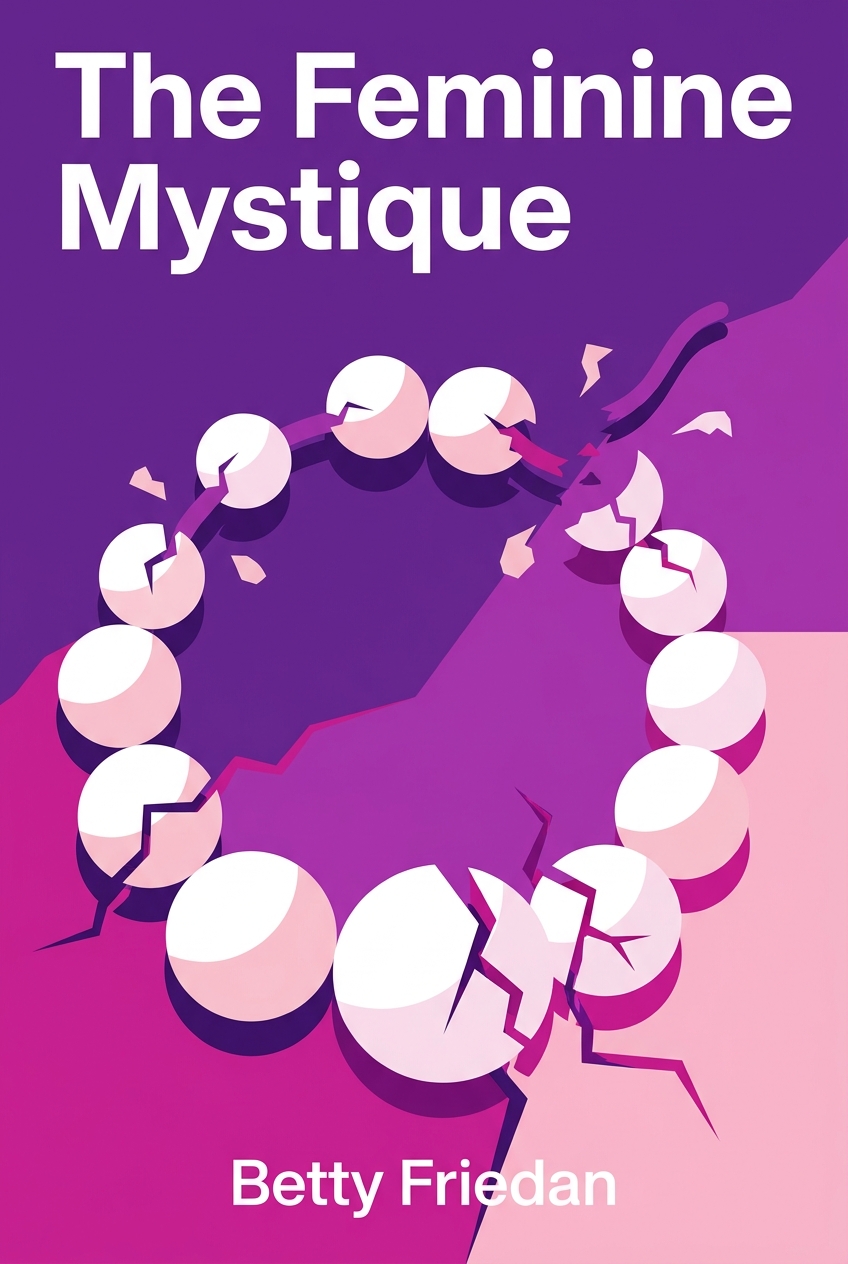
What's it about
Ever feel like you're supposed to be happy with a perfect home and family, but secretly feel unfulfilled? Discover the groundbreaking 1963 classic that gave a voice to millions of women and sparked a revolution by exposing "the problem that has no name." This summary unpacks Betty Friedan's explosive investigation into the "feminine mystique"—the myth that women could only find fulfillment through marriage and motherhood. You'll learn how post-war culture, media, and education trapped women in the suburbs and what it takes to reclaim your identity beyond societal expectations.
Meet the author
Betty Friedan was a writer, activist, and leading figure of second-wave feminism whose groundbreaking 1963 book, The Feminine Mystique, ignited a revolution for women across America. A suburban wife and mother herself, Friedan gave voice to the widespread unhappiness she called "the problem that has no name," drawing from her own experiences and interviews with other homemakers. Her work challenged the post-war ideal of female domesticity and inspired millions to seek personal and professional fulfillment beyond traditional roles.
The Script
You've reached the end of the free preview.