All Books
Self-Growth
Business & Career
Health & Wellness
Society & Culture
Money & Finance
Relationships
Science & Tech
Fiction
Topics
Blog
Download on the App Store

The Feminist War on Crime

The Unexpected Role of Women's Liberation in Mass Incarceration

18 minAya Gruber

What's it about

Ever wondered if the fight for women's rights had an unintended dark side? Discover the provocative argument that mainstream feminism, in its quest to protect women, became a surprising ally in the rise of mass incarceration and aggressive policing in America. You'll explore how the well-intentioned "war on crime" championed by feminists ultimately led to harsher laws and policies that disproportionately harmed marginalized communities. Learn about the complex history behind this alliance and understand the urgent call for a new approach to justice that helps everyone.

Meet the author

Aya Gruber is a celebrated professor of law at the University of Colorado and a nationally recognized expert in criminal law, violence against women, and feminism. A former public defender, she witnessed firsthand how feminist-inspired reforms, while well-intentioned, often contributed to the over-policing of minority communities and the rise of mass incarceration. This experience on the front lines of the justice system drove her to re-examine the complex and often contradictory relationship between feminism and criminal justice, leading to the groundbreaking insights in her work.
Listen Now

Opens the App Store to download Voxbrief

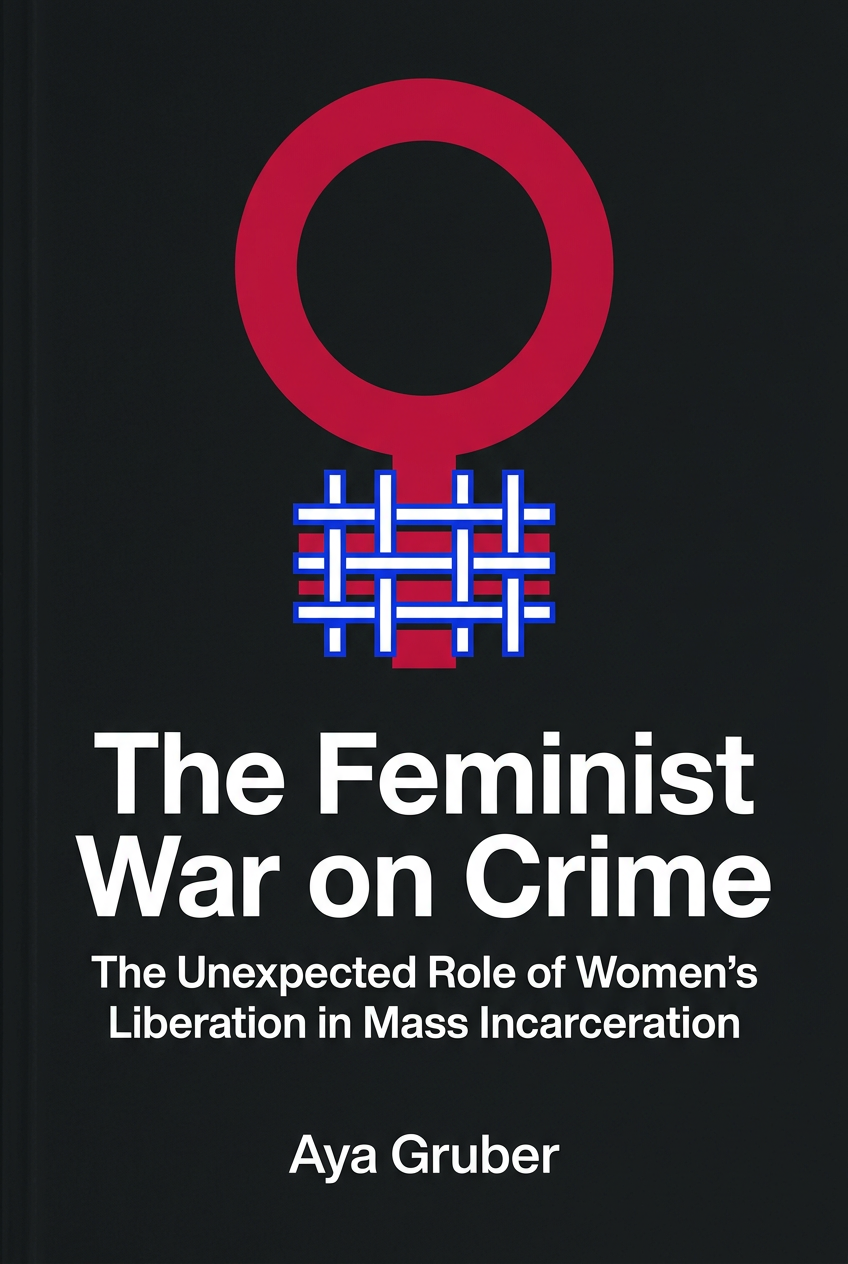
The Feminist War on Crime book cover

The Script

Think of a shelter designed to protect a rare species. Its walls are strong, its keepers vigilant. But over time, the keepers realize the only way to guarantee safety is to make the enclosure ever smaller, the rules ever stricter. The species is now perfectly safe, but it's also caged, its natural behaviors extinguished. The shelter, in its quest for absolute protection, has become a prison. This is the paradox of protective impulses: when a movement designed to liberate becomes so focused on eliminating threats, it can inadvertently build the very structures of confinement it once sought to dismantle. The tools of protection—harsher rules, bigger walls, more powerful guards—can become instruments of control, turning a sanctuary into a gilded cage.

Aya Gruber witnessed this paradox firsthand. As a public defender in Washington, D.C., she found herself on the front lines of the very system that mainstream feminism had helped build. She represented the men—often poor and men of color—who were being prosecuted under the tough new domestic violence laws she had once championed as a feminist. She saw how a well-intentioned crusade for women's safety had become a powerful engine for mass incarceration, often harming the very women and communities it was meant to protect. This jarring disconnect, where her feminist ideals clashed with the reality of her legal practice, sparked a two-decade-long inquiry. Gruber, now a professor of law at the University of Colorado, wrote "The Feminist War on Crime" to untangle this knot, revealing how a movement for liberation made a dangerous alliance with a punitive state, and why the tools of protection can sometimes become the architecture of oppression.

Module 1: The Carceral Feminist Turn

The modern feminist movement didn't start by demanding more police and prisons. In fact, it began with deep suspicion of the state. Early activists in the 1970s saw the criminal justice system as a racist, sexist, and oppressive institution. They called it "the Man." They built shelters and community networks to exist outside of it. So what changed?

The movement fractured. One group, the "legal feminists," gained dominance. They saw gender violence as a failure of criminal law. Their solution was simple. The law was too weak. It needed to be stronger. This led to a core strategic shift. Feminist advocacy moved from community-based support to a "law enforcement model" centered on punishment. This was a deliberate pivot. Activists began lobbying for new laws, tougher sentences, and mandatory police action. They argued that the only way to make the state take violence against women seriously was to force its hand through criminalization.

This new strategy found a powerful, if unlikely, ally: the "tough on crime" politics of the 1980s. As the Reagan administration dismantled the welfare state, it ramped up the carceral state. The feminist focus on punishing individual "bad men" fit perfectly with a political ideology that favored individual blame over structural solutions. This alignment created "carceral feminism," a version of feminism that relies on policing, prosecution, and prisons as its primary tools. It's a term coined by sociologist Elizabeth Bernstein, and it captures the essence of this historical turn. Feminists who once saw the state as the problem now saw it as the solution.

And the results were tangible. Take the case of Jamal and Britney from the book. They were a young, low-income Black couple. They had an argument. Britney called the police, wanting Jamal to leave for the night. She didn't want him arrested. But because of a feminist-backed mandatory arrest law, police had no choice. The "penal machine" took over. The prosecutor pursued the case even after Britney refused to cooperate. Jamal took a plea deal to avoid a worse sentence. He got probation he couldn't afford, which led to jail time. The conviction cost them their public housing. A policy designed to protect women ended up destroying a family's economic stability, making neither of them safer.

This single story reveals the core problem. Carceral feminist policies often inflict severe collateral damage on the very communities they claim to help, especially poor and minority families. The logic is simple but brutal. When you define a problem as a crime, the solution becomes punishment. And when the primary tool is a hammer, every problem starts to look like a nail. This focus on punishment crowded out other approaches. It overshadowed efforts to provide economic support, housing, or mental health services. The movement for women's safety became a movement for more cages.

Module 2: The Battle Over Rape and Consent

Now let's turn to one of the most contentious areas: sexual assault. The feminist war on crime also fundamentally reshaped how the law understands and prosecutes rape. Here, the central conflict was about defining the harm itself. Was rape about force, or was it about a lack of consent?

The legal system historically focused on force. To prove rape, a victim often had to show she resisted "to the utmost." This standard was notoriously difficult to meet. It placed the burden on the victim to prove her non-consent through physical struggle. Feminist reformers rightly saw this as a barrier to justice. They argued that the focus should be on the victim's lack of consent. This led to a major legal and cultural shift. The legal standard for rape evolved from proving "forcible compulsion" to proving a "lack of consent." This was a monumental change. It meant that sex without consent could be rape, even without overt violence.

But this new focus on consent created its own set of problems. It shifted the legal inquiry from the defendant's actions to the victim's state of mind. Did she truly consent? How can you prove what someone was thinking or feeling? This led to the rise of what Gruber calls the "traumatized victim" narrative. To make a case stick, prosecutors often had to explain why a victim might not have said "no" clearly, or why she might have behaved in ways that seemed inconsistent with being assaulted. The answer, frequently, was trauma. Feminist legal theory began to use psychological trauma as a key tool to explain victim behavior and secure convictions. Expert witnesses would testify about "tonic immobility" or "frozen fright" to explain a victim's passivity. This narrative helped prosecutors win cases. But it also risked pathologizing women's responses, creating a new stereotype: the credible victim is the one who is psychologically shattered.

The debate then moved to an even more radical concept: affirmative consent, or "Yes means yes." If "No means no" wasn't enough, then the law should require a clear, enthusiastic "yes." This standard, popularized on college campuses, aimed to eliminate ambiguity. But Gruber points out a critical flaw. When you translate this social goal into criminal law, you risk overcriminalization. The "Yes means yes" standard could technically make a wide range of normal, wanted sexual encounters illegal if they proceed on nonverbal cues. Think about the Aziz Ansari "bad date" story. The encounter was described as coercive and unpleasant, but it didn't involve force. Under a strict affirmative consent standard enforced by criminal law, it could be prosecuted as a felony. Gruber's point is to ask: who will this law actually be used against? It won't be celebrities. It will be the same marginalized men who are already over-policed.

Ultimately, these reforms converged with the broader tough-on-crime movement. The Violence Against Women Act, or VAWA, is a perfect example. Celebrated as a landmark feminist achievement, it was passed as part of the infamous 1994 Clinton Crime Bill. That bill was the single largest driver of mass incarceration in modern American history. Feminist anti-violence advocacy became a progressive justification for a deeply punitive and carceral political agenda. Politicians could support a bill that expanded prisons and mandatory minimums by pointing to the "good parts" that protected women. The war on crime and the feminist movement had found common ground, with devastating consequences.

Read More