All Books
Self-Growth
Business & Career
Health & Wellness
Society & Culture
Money & Finance
Relationships
Science & Tech
Fiction
Topics
Blog
Download on the App Store

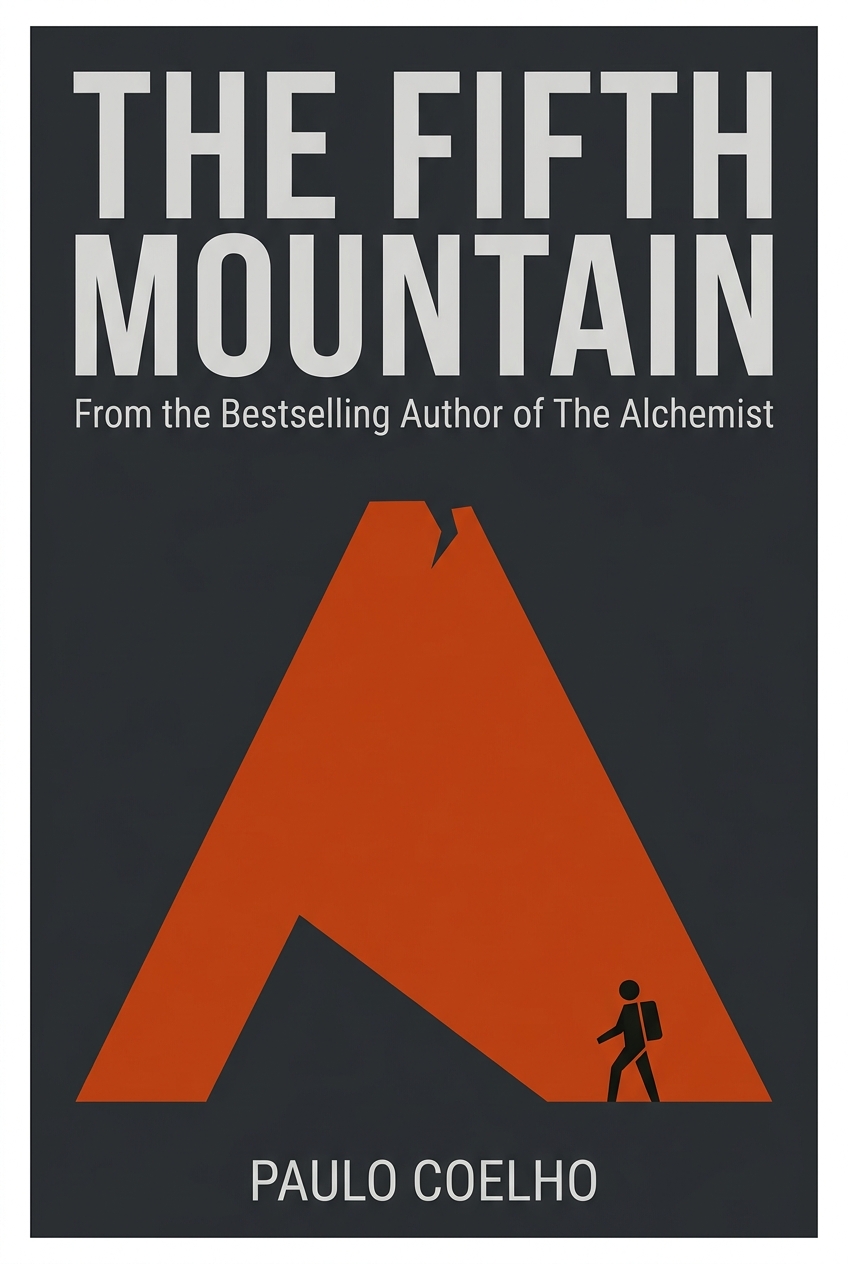
The Fifth Mountain

From the Bestselling Author of The Alchemist

11 minPaulo Coelho

What's it about

What do you do when your world crumbles and your faith is tested? Discover how to find strength in tragedy and rebuild your life from the ashes. This powerful story reveals that even in our darkest moments, we have the power to forge a new destiny. Based on the biblical story of the prophet Elijah, you'll follow a young man forced into exile after a devastating loss. Learn how to listen to your heart, overcome despair, and transform immense suffering into a source of profound wisdom and purpose.

Meet the author

Paulo Coelho is one of the most influential authors of our time, with his masterwork, The Alchemist, having sold over 150 million copies worldwide. Before his phenomenal success, Coelho embarked on a life-changing pilgrimage along the Camino de Santiago, a spiritual journey that profoundly shaped his perspective. This experience, combined with his deep exploration of faith and perseverance, provides the powerful foundation for the story of prophecy and hope found within The Fifth Mountain.
Listen Now
The Fifth Mountain book cover

The Script

A master blacksmith stands before his forge, a piece of raw iron glowing in the coals. He knows its potential, but also its hidden imperfections—the invisible fractures that could shatter the blade with a single, ill-timed strike. He can follow the known process, hammering it into a familiar shape, a tool he has made a hundred times before. Or, he can listen to the metal itself, letting its unique resistance guide his hand, turning a potential weakness into a source of unexpected strength. This second path is uncertain. It requires trust, not just skill. The fire will test the iron, and in doing so, it will test the smith. He must be willing to see his work break, to lose everything he has labored over, in the belief that what is reforged in the ashes will be stronger than what was first planned.

This intense dialogue between creation and destruction, between a divine plan and human struggle, is the forge where Paulo Coelho shaped The Fifth Mountain. In the early 1990s, Coelho was grappling with a profound crisis of faith, a personal winter where his own spiritual convictions felt like they were shattering under pressure. He felt a deep need to understand how a person can rebuild their world when God seems to have abandoned them. Turning to the biblical story of the prophet Elijah, Coelho didn't just retell an ancient tale; he wrestled with it, pouring his own doubts and questions into the prophet's journey. The result is a story born from a period of intense personal searching, an exploration of how the most devastating losses can become the very ground upon which a new life, and a new faith, is built.

Module 1: The Paradox of Power and Peace

We often associate national strength with military might. But Coelho's narrative, set in the ancient world, challenges this idea from the very beginning. He introduces us to Phoenicia, a nation that thrived through a different kind of power. This brings us to a crucial insight about survival. True resilience comes from strategic adaptation, not brute force.

The Phoenicians were surrounded by warring empires. They were not a military superpower. Yet, they enjoyed nearly three centuries of peace and prosperity. How? They mastered the art of negotiation. They built alliances. For example, their partnership with King Solomon of Israel helped them modernize their fleet and expand trade across the known world. They turned their vulnerability into a strategic advantage. They became indispensable partners, not rivals.

This principle extends far beyond geopolitics. In any competitive environment, whether it's a startup ecosystem or a corporate ladder, the ability to negotiate, adapt, and form alliances is a powerful asset. It's about playing a long game. It's about understanding that influence is often more sustainable than dominance.

But here's the thing. This peace is fragile. The story quickly introduces a counterpoint. The city of Akbar, where the prophet Elijah seeks refuge, is part of this peaceful Phoenician tradition. Its leaders prioritize trade and custom over military readiness. The governor resists calls to fight the approaching Assyrian army, clinging to the belief that their long history of peace will protect them. This reveals a dangerous complacency. And it sets the stage for a devastating lesson. Tradition, when followed blindly, can become a fatal weakness.

The Assyrians don't play by the same rules. They attack at night, breaking the established customs of warfare. They had been training their soldiers with innovative, long-term methods, like having them jump over growing trees each day to build their strength and agility. Akbar’s commander, blinded by vanity, underestimates the threat. He withholds accurate intelligence, convinced his army can win a glorious, conventional battle. The city's adherence to "the way things have always been done" leaves it catastrophically unprepared.

The result is swift and total destruction. This is a stark reminder for any organization. Past success guarantees nothing. Relying on an old playbook while the world changes around you is a recipe for irrelevance. The skills that brought you peace and prosperity yesterday might be the very things that make you vulnerable tomorrow. You have to stay alert. You must be willing to question your own traditions.

Read More