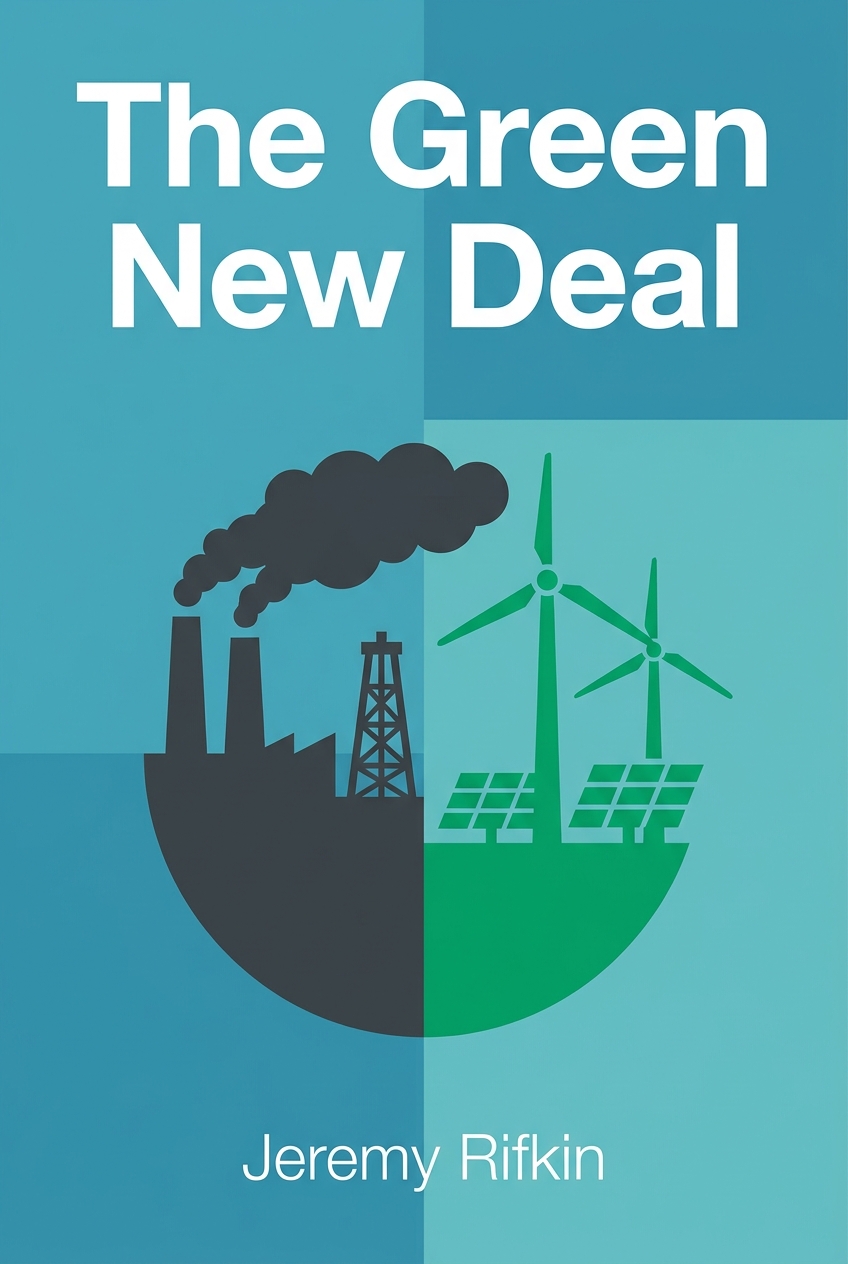
The Green New Deal
Why the Fossil Fuel Civilization Will Collapse by 2028, and the Bold Economic Plan to Save Life on Earth
What's it about
Are you worried about the climate crisis but feel overwhelmed by the scale of the problem? Discover a bold, actionable plan that argues we can transition to a green economy faster than you think, creating millions of jobs and saving the planet in the process. This summary unpacks Jeremy Rifkin’s groundbreaking vision for a post-carbon future. You'll learn why the fossil fuel industry is on the verge of a rapid collapse and how we can leverage new technologies and economic models to build a sustainable and prosperous civilization before it's too late.
Meet the author
Jeremy Rifkin is an economic and social theorist who has served as an advisor to the European Union, the People's Republic of China, and numerous heads of state. His extensive work with global leaders on sustainable economic transitions provides the foundation for his urgent analysis of our fossil fuel civilization. For decades, Rifkin has been at the forefront of policy and economic planning, uniquely positioning him to architect the bold, actionable plan required to navigate the coming industrial revolution and secure a livable future on Earth.
What's it about
Are you worried about the climate crisis but feel overwhelmed by the scale of the problem? Discover a bold, actionable plan that argues we can transition to a green economy faster than you think, creating millions of jobs and saving the planet in the process. This summary unpacks Jeremy Rifkin’s groundbreaking vision for a post-carbon future. You'll learn why the fossil fuel industry is on the verge of a rapid collapse and how we can leverage new technologies and economic models to build a sustainable and prosperous civilization before it's too late.
Meet the author
Jeremy Rifkin is an economic and social theorist who has served as an advisor to the European Union, the People's Republic of China, and numerous heads of state. His extensive work with global leaders on sustainable economic transitions provides the foundation for his urgent analysis of our fossil fuel civilization. For decades, Rifkin has been at the forefront of policy and economic planning, uniquely positioning him to architect the bold, actionable plan required to navigate the coming industrial revolution and secure a livable future on Earth.
The Script
You've reached the end of the free preview.